
Sea Trout Casting
Sea trout casting, also known as surf fishing. The name reflects the fact that during the season it is almost always windy and the waves are high. This article takes a look at trout casting equipment and at places where you can set out in search of sea trout.
What equipment should you use to fish for sea trout?
When fishing for sea trout, it is important to use the right equipment if you want to get the most enjoyment out of your fishing. You can fish for sea trout with an ordinary pike rod because of its length, but its characteristics are then not fully suited to trout fishing. The best choice for sea trout casting is a sensitive rod that still has enough backbone to tire the fish. The sea trout is a soft-mouthed fish with the movements typical of salmonids, so it is important that the rod has enough action to follow the sea trout's furious movements. With a rod that is too stiff, the trout can easily thrash itself free. Our range includes the perfect rod for this style of fishing from the new Ruthless Pro Series rod range.
-
Product on sale
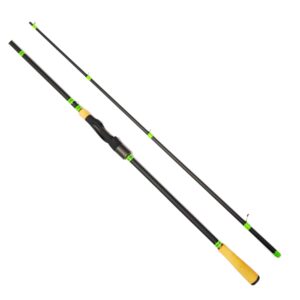 Ruthless Pro Series – Sea Trout 9’0″/275cm 10-30g (baitcasting rod)Original price was: 289.00 €.140.00 €Current price is: 140.00 €.−51%
For line, you can use either traditional monofilament or braided line. Stretchy monofilament may work better when tiring a trout, but with the right kind of rod the line does not need to stretch, as the flexible rod tip follows the movements of the sea trout. A leader is not necessarily needed or advisable, because the sea trout is a very sensitive fish that may notice the leader and reject the lure because of it. In sea trout fishing, everything comes down to the small details, as they say.
A long-handled landing net is also a very good piece of equipment, if not even a necessity. A normal-length net also works perfectly well when fishing from a boat.
Various spoons, pilkers and coastal plugs are used as lures. Colored hooks can also be used on the lures as a strike point, which enhance the sea trout's strike reflex.
What technique should you use, and where are sea trout found?
In sea trout casting, one of the most important technical factors is that the lure must not be allowed to run too close to the surface; it is important to keep it deep enough. However, it should not be so deep that the lure collects all the debris from the bottom. While reeling in, you can occasionally make small pauses, which awaken the fish's instincts. The lure should also be retrieved slowly enough to give the fish enough time to react. When tiring the fish, the drag should be kept tight enough that, for example, when landing the fish with a net, it can be "forced" closer, but when it starts to pull away, it must be able to take line from the reel.
Autumn trout spots are the tips of islands that point toward the open sea. These are places where the water moves and is replaced, and the rocky areas at the tips create a current in which it is easy for a sea trout to hold its position. Sea trout casting spots are usually rocky, so it is worth approaching them from the direction of the wind. The boat should not be taken too close to the reefs, as this creates a risk of, for example, damaging the propeller. Even so, you must dare to approach the trout spot closely enough to get within casting distance of the hot spots. It is also not worth spending too much time in one place; as a general rule, 10-30 casts are enough for one spot, after which you move on to a new one.


Jarno Kangas, Fishing Content Creator / Blog Writer
Latest Posts
-
 BLACK FRIDAY – THE MOST ANTICIPATED SALE WEEK OF THE YEARNovember 6, 2026/0 Comments
-
 CHRISTMAS GIFT IDEAS FOR ANGLERS – DISCOVER OUR SELECTIONNovember 6, 2026/
-

-
 Ruthless Fishing Hard Lures for SummerJune 26, 2026/