
How long should a rod be? Is there an all-round rod that can be used to fish for all species? What are the differences between rods? What would make a good jig fishing rod? These are the most common questions when buying a new rod. This article looks at rods suited to casting and jig fishing, and goes through some of the Ruthless series rods available in our range.
This season's new rods are now also available in our online shop!
-
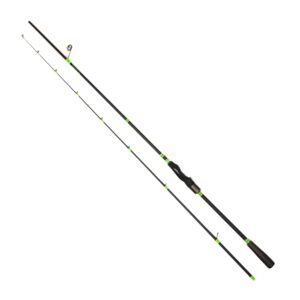 Ruthless Pro Series – Perch 7’0″/214cm 4-17g249.00 €
-
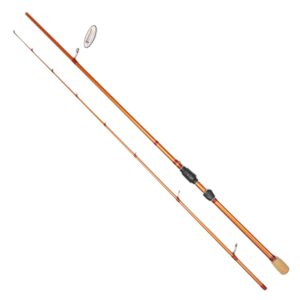 Ruthless Glass Series 6’10″/208cm 8-28g199.00 €
-
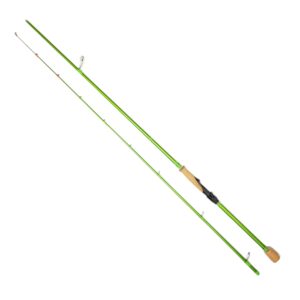 Ruthless Rods Drop Shot 7’5″/228cm 5-28g (baitcasting rod)149.00 €
-
Product on sale
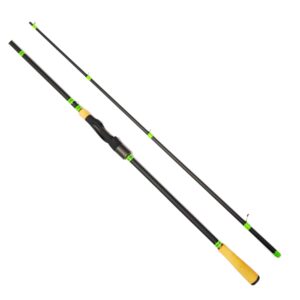 Ruthless Pro Series – Sea Trout 9’0″/275cm 10-30g (baitcasting rod)Original price was: 289.00 €.140.00 €Current price is: 140.00 €.−51%
This summer, the Ruthless Rods range is complemented by the new Pro Series and Glass Series rods, and the traditional green blank now also comes in a rod model designed for Dropshot jig fishing. The rods are now available in our online shop and will soon be available from our retailers as well. More detailed presentations of the new rod series will follow after mid-July, both on our blog and on our YouTube channel.
This article explains how to find the rod that is right for you for casting and jig fishing. We look at how rods work and the key factors that make choosing a rod easy. However, rods also have many so-called cosmetic features that come down purely to the angler's personal preferences. These include, among other things, the design and material of the rear grip. Length, too, is partly a matter of the angler's own preferences, although rod length also has technical significance.
For many occasional anglers, the first thought is often that they would like just one so-called all-round rod for catching every possible fish species. However, this raises a problem: every rod is designed to work optimally with a particular fish species and particular lures. We discuss this in more detail further down in the text. The first deciding factor when choosing a rod is whether you fish with a spinning reel or a baitcasting reel. Each reel type has its own rods.
Lure Weight Recommendation and Rod Action
The lure weight recommendation indicates the weight of lures the rod is designed for. So the first thing to consider when choosing a rod is knowing what kinds of lures and what weights you will be casting. With a rod with a light lure weight rating, it is almost impossible to cast heavy pike rubber lures or jerkbaits, and conversely, casting smaller hard lures and jigs with a heavier pike rod feels very unpleasant. The table below gives you an outline of the intended uses of rods with different lure weight recommendations.
| Rod type | Lure weight recommendation | Lures used | Application | Target fish | Line recommendation |
|---|---|---|---|---|---|
| Ultralight rod (UL) | 0-8g | Micro jigs & UL spoons | Open water | Perch | 0.08 – 0.10 |
| Light fishing rod | 3-15g | Jigs, spoons, spinners, casting flies | Open water & stream fishing | Perch & predatory fish | 0.08 – 0.13 |
| Perch rod | 5-25g | Jigs & hard lures | Open water & stream fishing | Perch & predatory fish | 0.10 – 0.15 |
| Zander rod | 10-35g | Jigs & hard lures | Open water & stream fishing | Zander, predatory fish, sea trout / lake trout | 0.14 – 0.25 |
| Pike rod | 20-80g | Pike jigs, jerkbaits, spinnerbaits | Open water | Pike | 0.20 – 0.30 |
| Heavy pike rod | Up to 250g | Pike jigs & jerkbaits | Open water | Pike | 0.22 – 0.40 |
You now have a rough idea of the purposes, lures and fish species for which rods with different lure weight recommendations are intended. This allows us to move on and look at how rods perform, which will also make clear why a so-called all-round rod does not exist.
Blank action
Moderate-fast, medium-fast, fast, extra-fast. One of these terms is very often found on the blank itself or in the product details on various websites. They describe the action of the blank, that is, how quickly the rod returns to straight after being loaded. Fast and extra-fast action rods in particular make it easy to cast even the lightest jigs, spoons and crankbaits a long distance. Fast and extra-fast action rods are especially popular in jig fishing. Fast-action rods may feel a little challenging at first for those less experienced, but once you have become accustomed to the rod, your casting distances and accuracy will improve. The action of a blank is also affected by the quality of the material used in it, which goes hand in hand with the price.

Rod action and stiffness
The stiffness and action of a rod are very often confused with the action of the blank, although stiffness and action often follow each other. The stiffness of a rod is a factor in playing the fish, setting the hook and controlling the cast. Action and stiffness are described with the terms tip action, medium-tip action, medium action and full action.
A tip-action rod bends only at the tip section and is intended for fishing soft-mouthed fish, mainly perch and other predatory fish. A tip-action rod delivers hook sets that are soft enough for soft-mouthed fish and follows, for example, the perch's shaking movements while it is being played. If perch are fished with a rod that is too stiff, the problem may be that the hook tears out of the perch's mouth when setting the hook, or the perch manages to wriggle free with its shaking swimming style because the rod does not follow its movements at all.
A medium-tip-action rod bends over a longer distance than a tip-action rod, but the tip is not as sensitive and the blank has more power. Medium-tip-action rods are largely aimed at zander fishing, because these rods still retain good feel, while at the same time the blank has enough power to play a somewhat larger fish, and, for example, a hard-mouthed zander can be given sufficiently firm hook sets because the tip does not yield too much. A medium-tip-action zander rod with a lure weight recommendation of about 10-30g comes closest to the definition of an “all-round rod”, but even with this the feel in perch fishing disappears quite noticeably.
A medium-action rod bends along half the length of the blank, as its name suggests. Medium-action rods are very commonly rods designed for somewhat heavier pike fishing. Medium-action rods retain good feel even with the heaviest pike lures, and they deliver sufficiently firm hook sets for a large pike or zander. Playing a larger fish is also easier when the blank has enough power for it.
A full-action rod, in turn, bends along its entire length. In casting fishing today, however, full-action rods are very rare and are hardly suitable at all for jig fishing, for example. With a full-action rod the casting motion must be very long and calm. In fact, the only use for which a full-action rod can be recommended today is fishing soft-mouthed predatory fish. A full-action rod works excellently for playing a fish, because the fish has to fight against the action of the rod along its entire length all the time, and it is difficult for the fish to shake itself free because the blank follows every movement of the fish at all times.
How much does rod length matter?
Length is mostly a matter of the angler's own preference and feel. However, when considering rod length, it is worth thinking about what kind of fishing the rod will be used for. If you fish from the shore, it is not necessarily wise to grab the longest rod on the shelf, because you may soon find the rod tangled in bushes and tree branches. When fishing with float tubes or fishing kayaks, a shorter rod may also be a smarter solution in terms of storage and usability. In open space, such as when fishing from a boat, the length should be chosen according to your own feel.
Length does, however, also have a few concrete effects on how the rod performs and how well it casts. A longer rod can add a few metres to your casts, and it provides more power for playing the fish, as the blank section is longer.
What else should you consider when buying a rod?

In addition to action, rod type, lure weight recommendation and other essential factors, many matters of personal taste also come into play, such as the weight of the rod and the role of the rear handle.
The weight of a rod has hardly any concrete significance, but for more active anglers in particular, light weight is a major criterion for a rod, especially for lighter setups. For many, fishing with a lighter setup is a very pleasant pastime, while others may find a slightly heavier setup more comfortable in their own hand. It is also an unfortunate fact, so to speak, that lightness costs money. So if you want a rod from the very lightest end of the range, you must be prepared to pay more than for a “basic rod”.
The role of the rear handle is purely a matter of taste. Some like cork handles and some like a short and slim rear handle. A longer and thicker rear handle may of course offer more leverage for playing large fish, but being accustomed to lighter setups myself, I find a longer and thicker rear handle in pike fishing even slightly clumsy.
You can find our entire range of rods at this link!
If you have any questions about fishing equipment, or rods in particular, please do not hesitate to ask the staff of fishing tackle shops or other professionals in the field. The undersigned is also happy to answer your questions or give recommendations, for example on Instagram at @jakefishng.


Jarno Kangas, social media influencer / Blogger
Latest Posts
-
 BLACK FRIDAY – THE MOST ANTICIPATED SALE WEEK OF THE YEARNovember 6, 2026/0 Comments
-
 CHRISTMAS GIFT IDEAS FOR ANGLERS – DISCOVER OUR SELECTIONNovember 6, 2026/
-

-
 Ruthless Fishing Hard Lures for SummerJune 26, 2026/