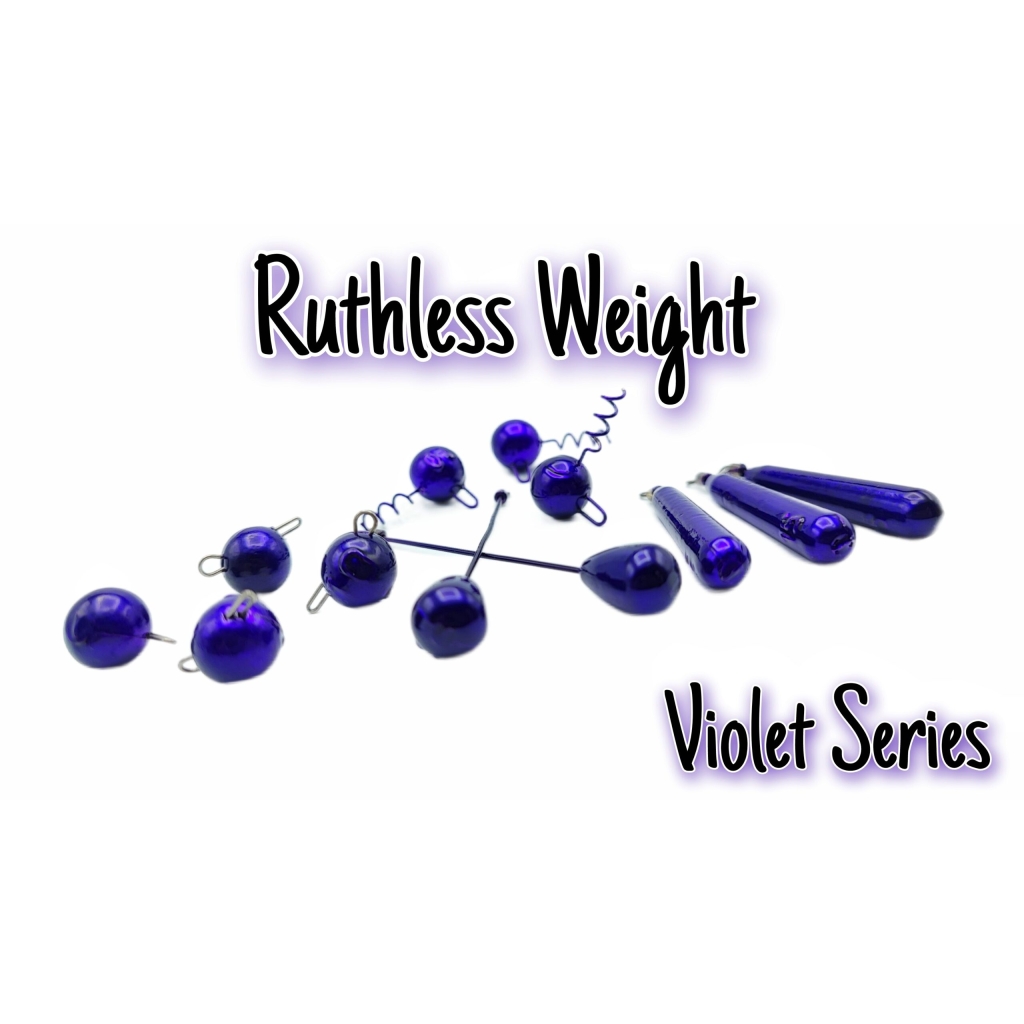
Among the new products for the 2023 season you will find the Ruthless Weight Violet Series weights. Many will certainly recognise these weights and know what they are used for, but on the other side of the screen there is surely also a large group for whom these weights look completely unfamiliar, or who are not entirely sure how to use them. So what are these weights used for? The Ruthless Weight Violet series includes a variety of weights used for making different jig rigs. For many jig anglers, the traditional jig head rig is certainly the best-known and most widely used rigging method, but here we dive a little deeper into the wonderful world of jig fishing.
Before we get acquainted with these different jig rigs, please also take a moment to read our ABC of Jig Fishing. There you will find essential information on, for example, jigging techniques, how different jigs differ from one another, and which type of jig is best suited to each style of jigging. This knowledge will be useful as we take a closer look at the different jig rigs.
-
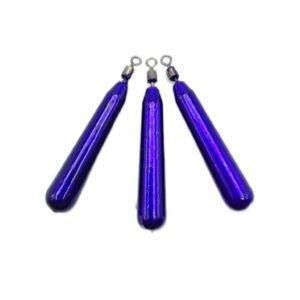 RUTHLESS DROP SHOT WEIGHT3.99 €
-
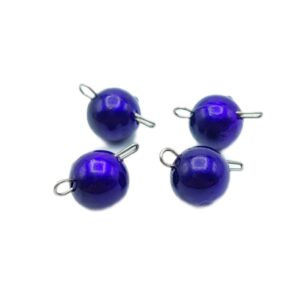 RUTHLESS CHEBU HEAD3.99 €
-
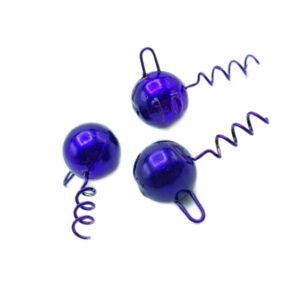 RUTHLESS SCREW HEADPrice range: 4.99 € through 6.99 €
-
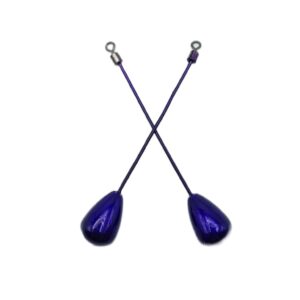 RUTHLESS TOKYO RIG4.99 €
Traditional Jig Head Rig
The traditional jig head rig is the best-known method and still the most popular among beginners and more experienced jig anglers alike. The traditional jig head is threaded onto the jig so that the hook comes out upward on the back and the jig does not bend. The hook length is determined by the length of the jig used, and the weight of the jig head by the depth being fished.
With the traditional jigging method, the jig is cast to the target and allowed to sink to the bottom. After that, reel in 2-3 turns of the reel quickly and wait for the jig to sink a little lower, then reel in another 2-3 turns. This continues until the lure is in the boat. The jig can also be worked with the rod by making twitches and reeling the slack line onto the reel in between.


Cheburashka Rig
The Cheburashka rig is very similar to the traditional jig head, but here the hook and the weight are not fixed to each other. A correctly sized offset, drop shot or single hook is placed in the jig, and a separate Cheburashka weight is attached to it. This allows the hook to move more freely behind the weight, giving the jig a more sensitive action and offering the fish less resistance. The fishing method hardly differs from normal jigging.
Drop Shot Rig
With a drop shot rig, the jig is made to swim above the bottom line. In a drop shot rig, fluorocarbon or monofilament is added to the main line as a leader, to which a drop shot hook is tied. After the hook, the drop shot rig is extended about 40-60 cm downward according to your own preference. The rig is finished by tying a drop shot weight to the end of the leader. The distance between the hook and the weight determines how high above the bottom line the jig is to be presented. A drop shot rig can use either a hook with swivels or one without. I personally use fluorocarbon as the leader and a drop shot hook without swivels, which avoids extra connectors and knots so that the feel of the lure stays as good as possible. A drop shot hook with swivels can also be used in a drop shot rig, in which case the main line is tied to the upper swivel of the hook and the material running from the hook to the weight is tied to the lower swivel. This makes it possible to use monofilament instead of fluorocarbon between the hook and the weight, as it is not as stiff as fluorocarbon.
In drop shotting, the jig can be worked either by making twitches and sideways movements with the rod or by reeling. For a very passive fish, extremely slow reeling often works well too, so that the weight keeps constant contact with the bottom. Heavier weights can be used without worry in drop shotting, as they do not affect the jig's action since the jig is “weightless”. This keeps bottom contact good at all times. The last twitches and pauses beneath the boat are very often the strike point of this jigging method. In summer especially, schools of perch very often drift straight under the boat after following an individual that has strayed from the school and mistakenly grabbed the lure from further away. With drop shotting, even the last moments beneath the boat therefore bring a great deal of effectiveness to your fishing. The drop shot rig is very long and making it takes some dexterity, so it is not the first rig to offer to the youngest members of the family or to complete beginners in jig fishing.


Tokyo Rig
At this stage we venture into slightly less familiar waters, as we turn next to the Tokyo rig, which arrived with somewhat newer trends. The idea of the Tokyo rig is very much the same as in drop shotting, but it is simpler to set up. However, with ready-made Tokyo rig weights, the length between the lure and the weight cannot be adjusted. In a Tokyo rig, an offset, drop shot or single hook is fitted to the lure, to which the Tokyo weight is attached. In the weight, the snap acts as a pivot, so the resistance the lure presents to the fish is not as great. The Tokyo rig works excellently, for example, among vegetation and in rough weather, when more weight is needed to keep contact with the bottom. The jigging technique with a Tokyo rig is quite similar to traditional bottom jigging with a traditional jig head.
Vertical rig
In vertical jigging, the jig is held at a certain depth directly beneath the boat. The boat does not need to be anchored; it can be in slight motion all the time. In vertical jigging, the weights are also considerably heavier, so that you keep good feel as the boat moves and the jig stays directly beneath the boat. A traditional jig head is rarely used in vertical jigging; instead, jigs are hooked with various stingers or rigs. The weight used is often a screw-in jig weight attached to the head of the jig and/or various additional weights. The popularity of vertical jigging has risen in recent years as sonar electronics have developed. Precision vertical jigging in particular is very popular when fishing for large fish.
In vertical jigging, you can also use a shallow rig, that is, a shallow-water rig, in which the lure is hooked without a weight. In addition to shallow water, it also works in cold water, for example when the zander is passive.


Jarno Kangas, social media influencer / Blogger
Latest Posts
-
 BLACK FRIDAY – THE MOST ANTICIPATED SALE WEEK OF THE YEARNovember 6, 2026/0 Comments
-
 CHRISTMAS GIFT IDEAS FOR ANGLERS – DISCOVER OUR SELECTIONNovember 6, 2026/
-

-
 Ruthless Fishing Hard Lures for SummerJune 26, 2026/