
February divides ice anglers in two. Some swear that the fish will not feed and stay at home waiting for spring conditions. Others understand that midwinter is not a bad time. It is a time that calls for the right approach.
When the water is at its coldest and the fish's metabolism is slow, large lures lose their effectiveness. The fish does not have the energy to travel far or to waste energy needlessly. This is precisely where one of the most effective tools of the ice fishing season comes into play: the Ruthless Fly Jig.
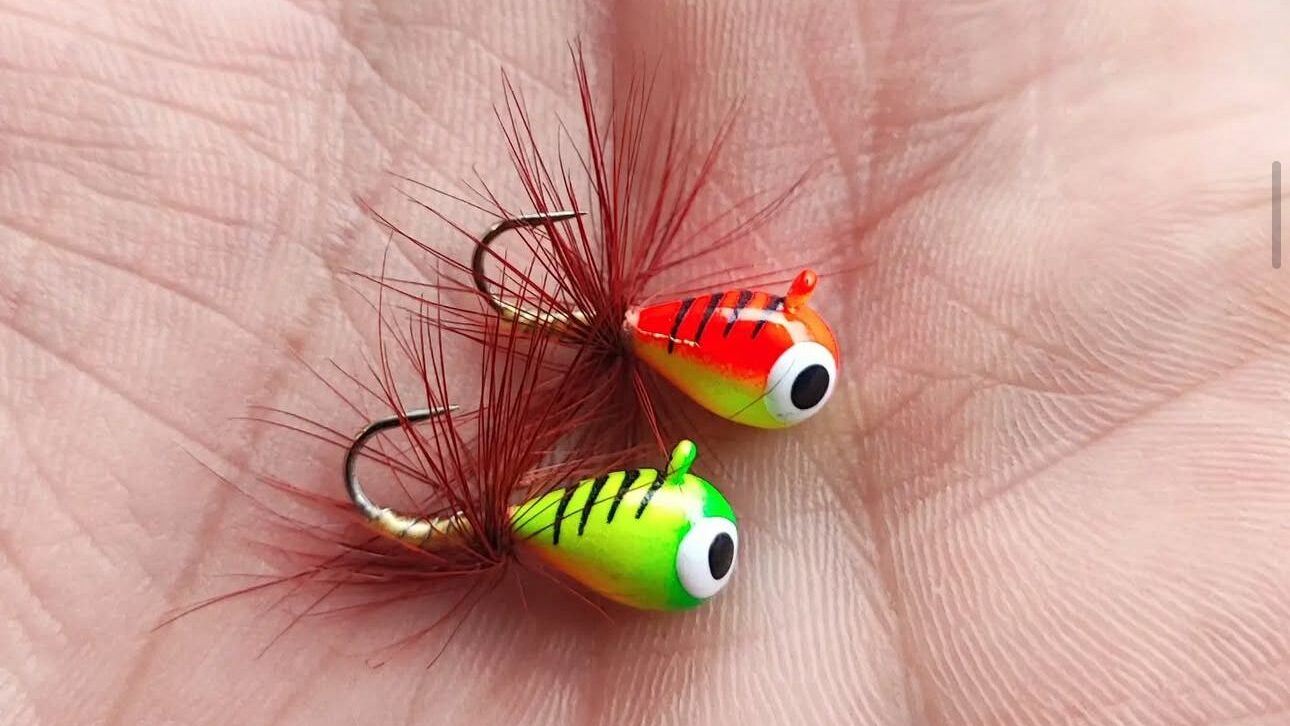
A passive fish calls for something small and slow
In midwinter, fish may hold almost motionless. They observe, but do not react readily to strong stimuli. The advantage of a jig is its subtlety: its small size, natural movement and the ability to keep the lure in the fish's field of vision for a long time.
For perch, a jig is often the clear number one in February. A small tungsten jig sinks quickly to depth and works excellently on thin line. When the presentation is kept calm and the movement is minimal and delicate, a jig can awaken a fish that reacts to nothing else.
Often the most effective technique is simple: jig to the bottom, a small lift and a long pause. The bite may not feel like a tug, but merely like the weight becoming lighter. That is exactly why midwinter ice fishing rewards the patient and focused angler.
A jig is not just a perch lure
Many people think of a jig only as a perch lure, but in reality it is also an excellent lure for salmonids. Rainbow trout, grayling, brown trout and Arctic char can be surprisingly passive in midwinter, and then a small, lifelike vibrating jig offers just the right stimulus.
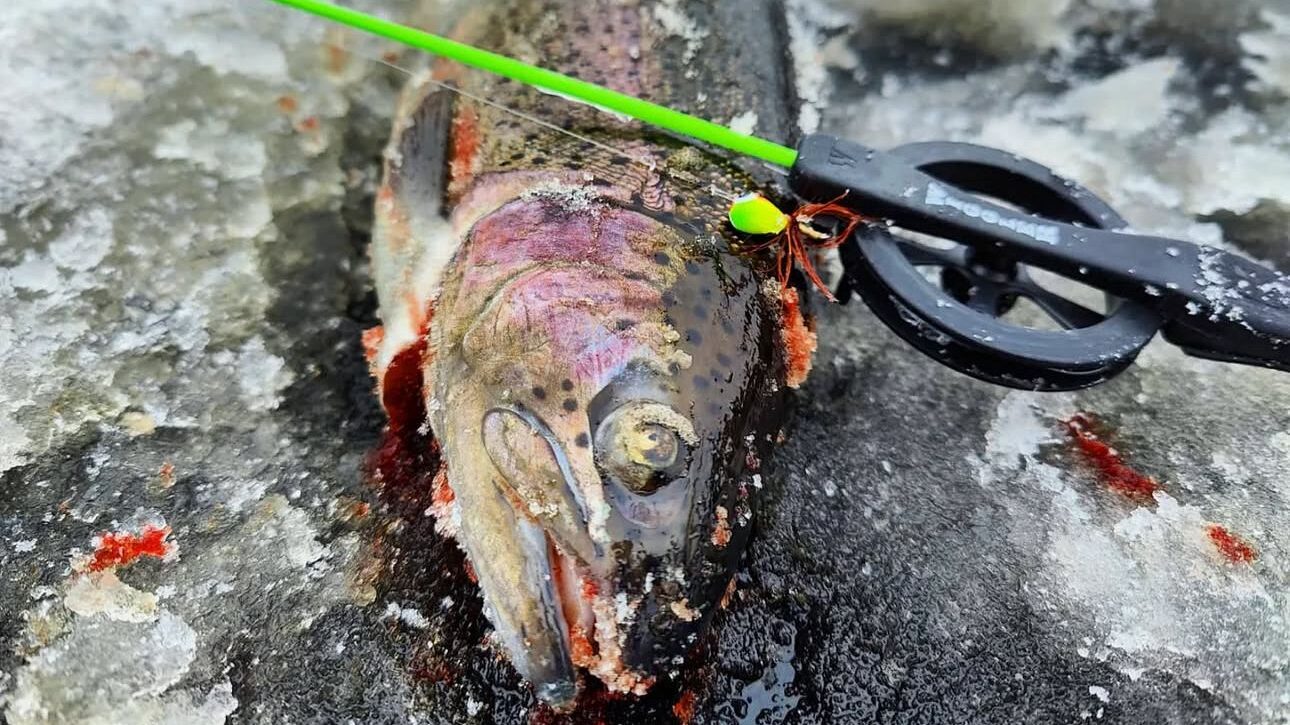
Rainbow trout often react to a slow, steadily vibrating jig that is lifted calmly and held still for long periods. The strike often comes during the pause – at the moment when the lure looks like the easiest prey.
When fishing for salmonids with a jig, the importance of rhythm is emphasized. The same lure may be completely ignored for a minute and trigger a strike on the next pause. The strength of a jig lies in the fact that its presentation can be fine-tuned endlessly without changing the lure.
The dropper rig – the underrated powerhouse of midwinter
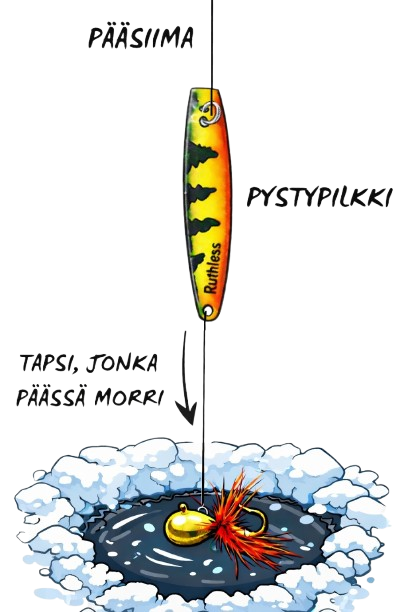
When you want to combine attraction with a secure hookup, the dropper rig comes to the fore. In a dropper rig, a larger vertical jig or spoon acts as an eye-catcher and draws the fish in, but the actual strike is often directed at the jig on the dropper below it.
On a dropper, the jig gains more life and stands out better. This is especially effective in midwinter, when fish follow the lure for a long time but do not dare to strike a large target. The jig then offers an easy and safe alternative.
Many ice anglers share the same experience: the fish visits or follows the main lure, but ends up taking the dropper jig. A small change in the setup can therefore decide the whole day's catch.
In midwinter, restraint wins
Ice fishing in February is neither fast nor flashy. It is calm, precise and deliberate work. The right jig, a suitable rhythm and patience make an ice angler effective even when others declare that the fish are not in a feeding mood.
Midwinter is not the worst moment of the ice fishing season; it is for those who know how to adapt.
If ice fishing feels difficult, ask yourself one thing:
Is the lure small enough and the presentation calm enough?
Often the answer is found in the jig box, and you can find refills for your jig box in our online shop using the button below.

Jarno Kangas – Jakefishng
Web content creator | Fishing Guide
Instagram @jakefishng
Latest Posts
-
 BLACK FRIDAY – THE MOST ANTICIPATED SALE WEEK OF THE YEARNovember 6, 2026/0 Comments
-
 CHRISTMAS GIFT IDEAS FOR ANGLERS – DISCOVER OUR SELECTIONNovember 6, 2026/
-

-
 Ruthless Fishing Hard Lures for SummerJune 26, 2026/