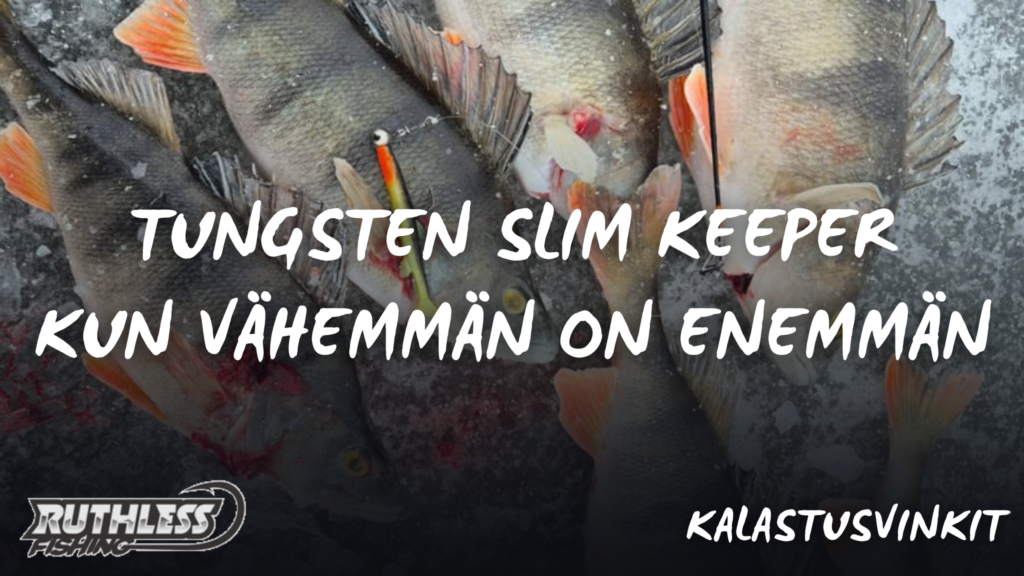
The big perch is watching
On live sonar, the same pattern is often seen:
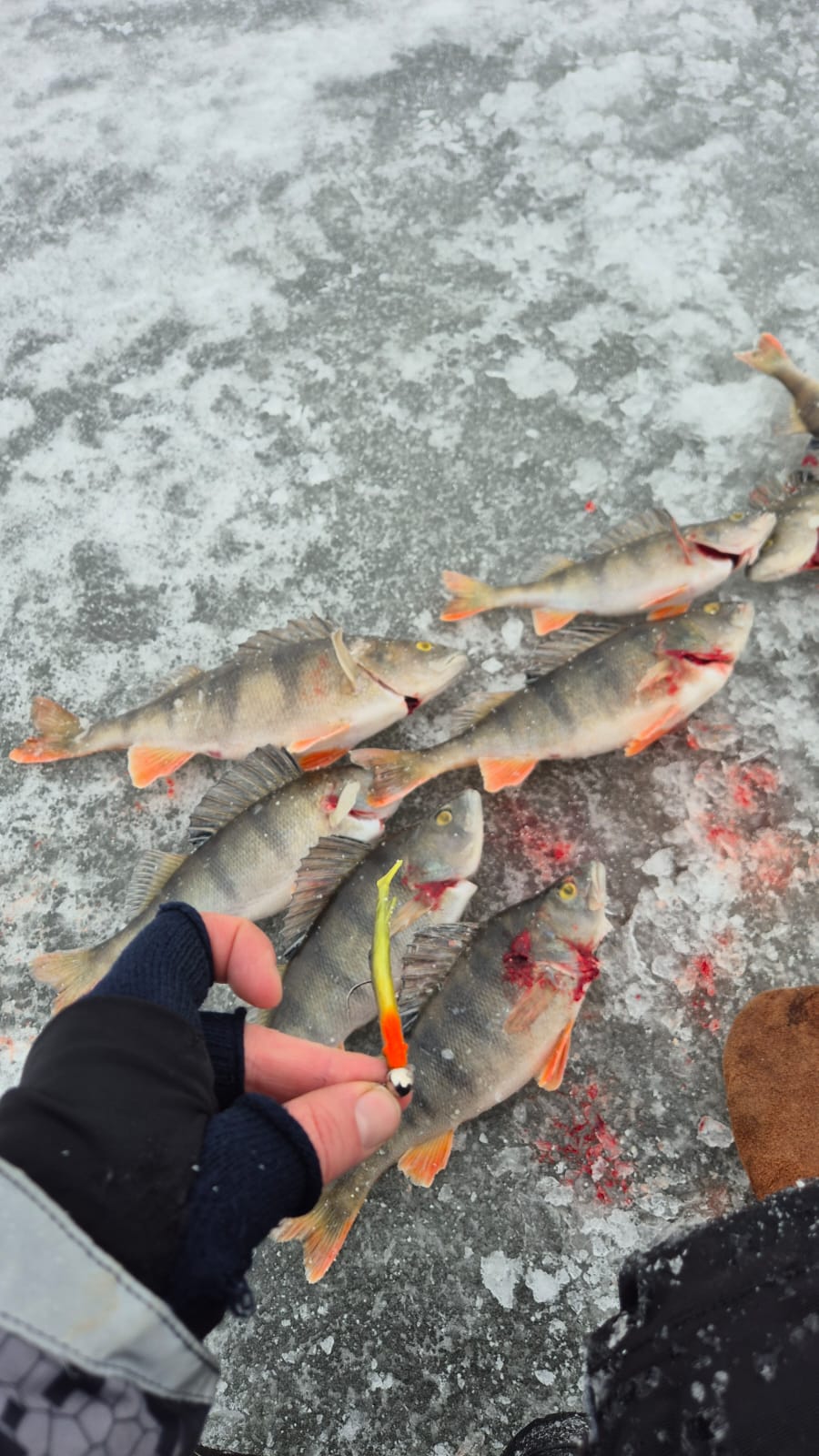
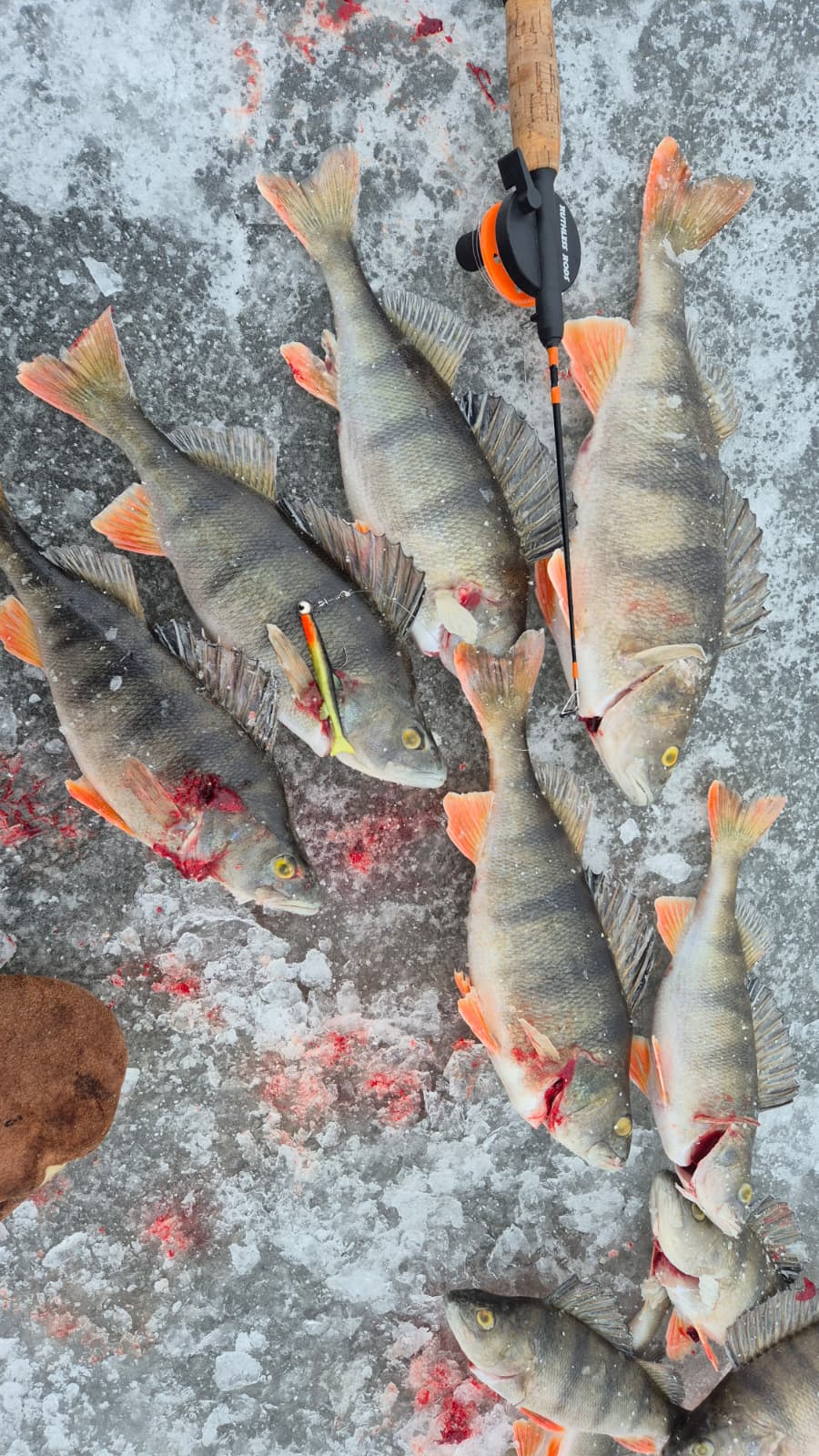
a big perch rises slowly towards the jig, follows it for a long time, but turns away just before striking. Rarely is the cause the wrong color or size; most often the movement is simply too much.
A big perch is experienced. It quickly recognizes an unnatural movement, and overly rhythmic jigging, a high lift or a hovering return can act as a deterrent rather than a lure.
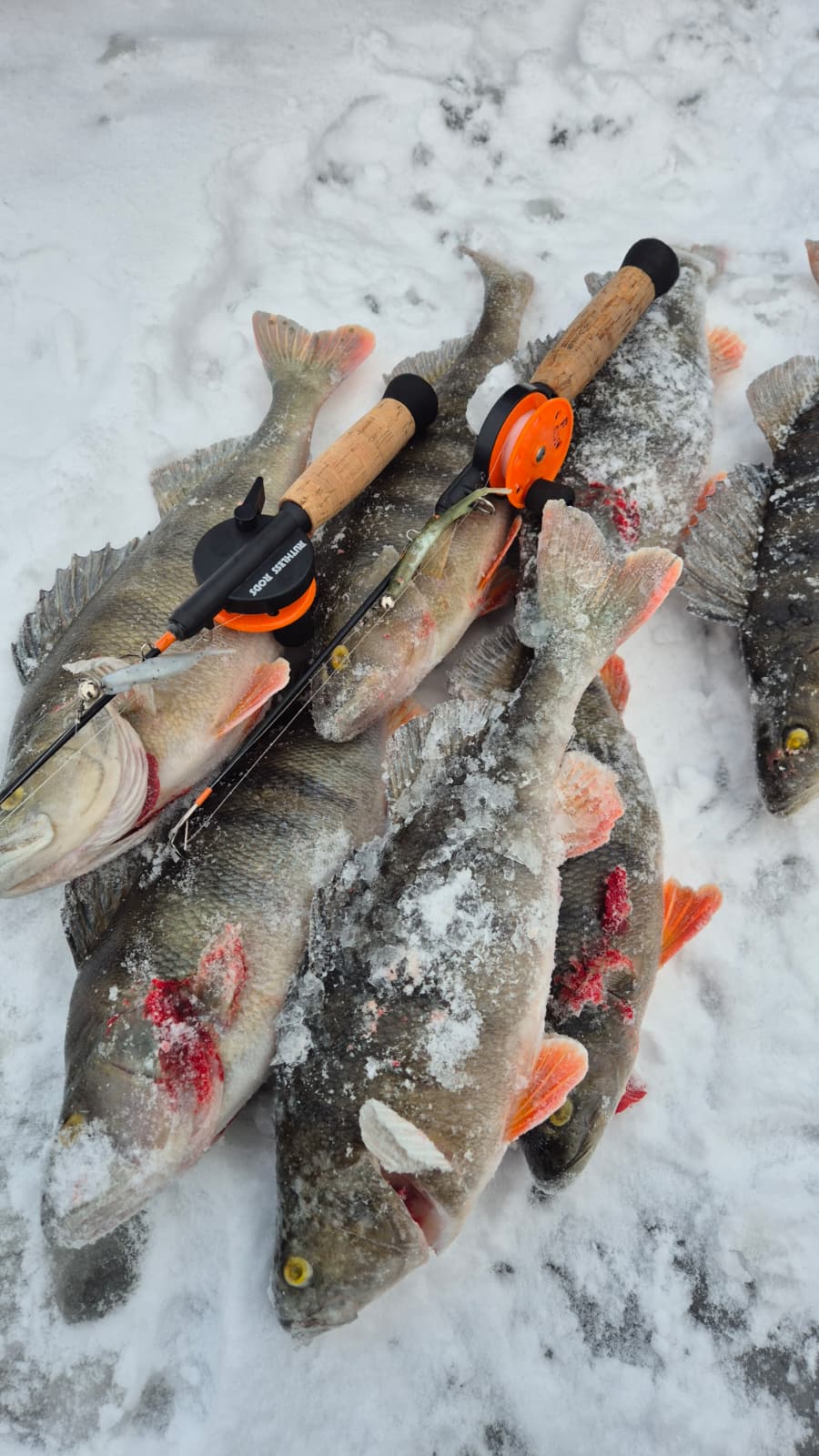
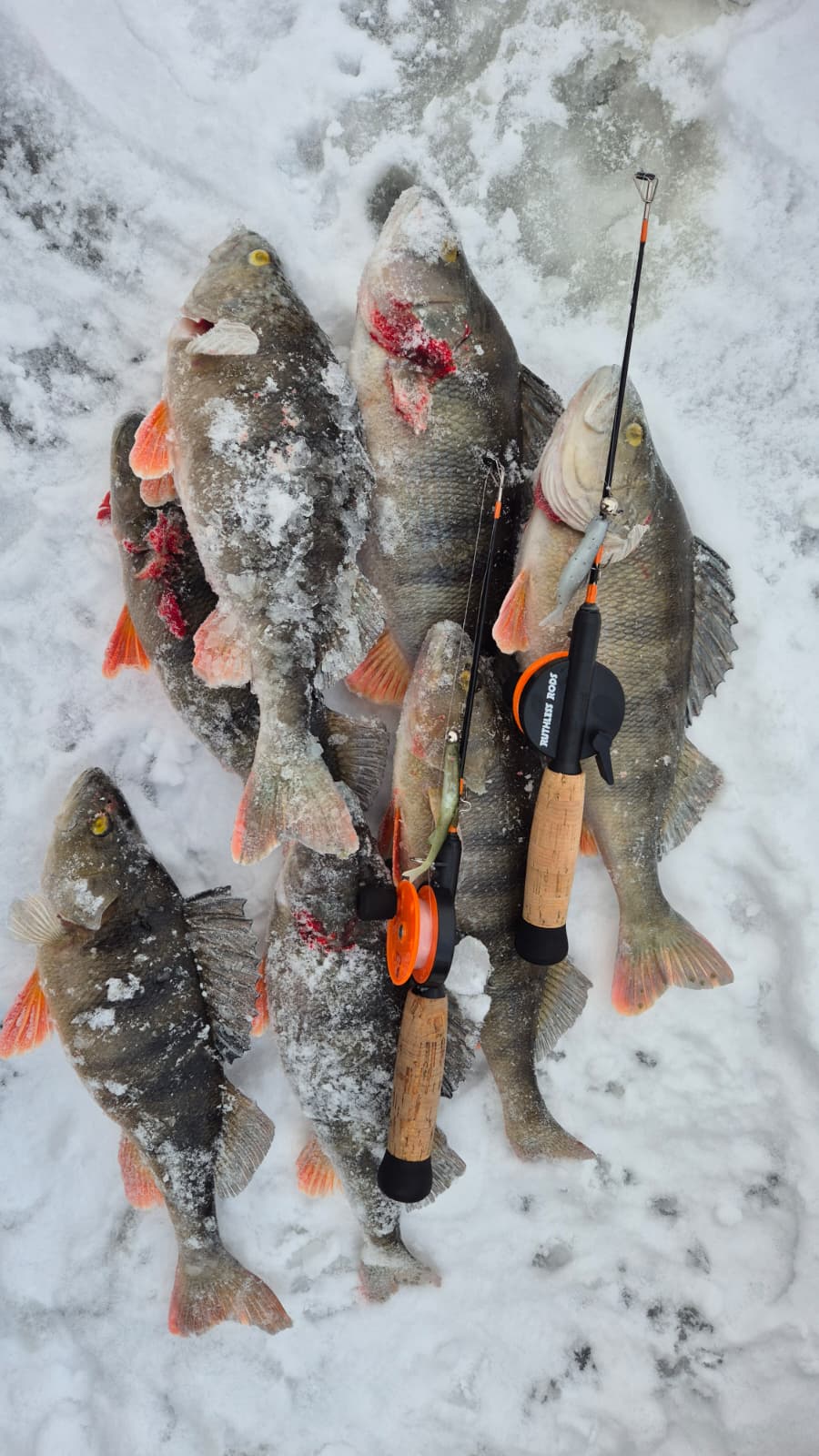
When does less work better?
The “less is more” approach is especially pronounced:
- in clear water
- under heavy fishing pressure
- in situations where the fish follows but does not strike
In these conditions, the ice angler's most important task is not to make the lure lively but natural.
A stationary jig is a surprisingly effective tool
One of the most surprising discoveries for many ice anglers is that sometimes the best jigging is… no jigging at all.
Holding the jig completely still, with only a subtle vibration of the line or rod tip, can be many times more effective than active jigging. A big perch often dares to approach when nothing seems “threatening”.
Practical tip:
- Lower the ice jig slightly above the fish or to its level
- Stop all movement completely for 5–10 seconds
- After that, make only a millimeter-long lift or a light shake. You can also try raising the ice jig gradually higher and higher, like an elevator.
Often this is exactly what triggers the bite.
Tungsten brings control
Thanks to tungsten's high specific gravity, the size of the jig head can be reduced without sacrificing weight. This enables:
- a smaller profile
- a more direct descent
- more controlled and repeatable movements
Summary – ice fishing for big perch in a nutshell
- A big perch reacts sensitively to movement
- Overly active jigging can scare the fish away
- A stationary jig is often underrated but effective
- A smaller profile and better control bring more bites
Modern ice fishing does not mean constant movement – but the right movement at the right time. When you dare to do less, you will often find you get more.

Jarno Kangas – Jakefishng
Web content creator | Fishing Guide
Instagram @jakefishng
Latest Posts
-
 BLACK FRIDAY – THE MOST ANTICIPATED SALE WEEK OF THE YEARNovember 6, 2026/0 Comments
-
 CHRISTMAS GIFT IDEAS FOR ANGLERS – DISCOVER OUR SELECTIONNovember 6, 2026/
-
-
 Ruthless Fishing Hard Lures for SummerJune 26, 2026/