

Ruthless Fishing – practical tips for the water
For many people, fishing is a hobby that combines the peace of nature, a small sense of adventure and the age-old thrill that comes when something tugs at the end of the line. However, many beginners run into the same problem right at the start: the range of equipment is huge, and everyone recommends what they use themselves.
In this guide, we take a closer look at the questions beginners ask most often, both in discussion groups and in fishing shops, and provide answers based on both facts and practical experience.
1. Fishing permits and rules
Before heading out on the water, make sure that you fish legally and responsibly. In Finland, a recreational angler generally needs to consider two types of permit:
- The state fisheries management fee is mandatory for everyone aged 18–69 who fishes by any method other than angling with a hand line, ice fishing with a jig, or Baltic herring jigging. The fee covers the whole country and can be paid for a year, a week or a day.
- Area-specific permits: In certain waters, such as salmon rivers or special fishing areas, a permit from the owner of the water area or the permit holder is also required.
In addition, it is important to know the local rules, such as closed seasons, minimum sizes and catch quotas. These vary by area and by species. You can find up-to-date information from the Kalastusrajoitus.fi service and from the websites of Metsähallitus and the ELY Centres.
Responsible fishing is about more than obeying the law. It also means keeping only as much fish as you will use and releasing the rest in good condition.
2. Choosing the right rod and reel
The first thing many beginners ask is: “What would be a good all-round rod and reel with which I could fish for just about anything?”
The idea is understandable, but this is where fish biology comes into play. Fish differ from one another, and their size, mouth, habits and habitats affect what kind of rod suits them.
- Soft-mouthed fish, such as perch and salmonids, benefit from a more sensitive, tip-action rod that yields at a bite and does not rip the hook loose.
- Hard-mouthed fish, such as pike and zander, require a medium-tip-action or stiffer rod so that the hookset goes through properly.

All-purpose rods do exist, but they are often “quite good at everything, perfect for nothing”. If your goal is to fish mainly for a particular species, you should choose the rod primarily according to that species and accept that fishing for other species may involve a little compromise.
Price differences between rods are mainly due to materials, such as the quality and density rating of the carbon fibre, and the quality of the guides and reel seats. A cheaper rod will work, but lightness, balance and sensitivity improve as you move up the price range.
Choosing a reel and balance
A reel is chosen not only by its features but also by balance. If you attach a heavy size 3000 reel to a light perch rod, the setup becomes back-heavy, which makes it ergonomically poor and unpleasant to use over time.

- Small sizes (500-1000) → for light casting or jigging. Perch and stream rods.
- Medium sizes (2000–2500) → for versatile general fishing. Zander, all-round and sea trout rods.
- Large reels (3000+) → pike, sea fishing, heavy lures.
Balance is especially important if you fish long days, as a reel of the wrong size tires your wrist and shoulder surprisingly quickly.
3. Lines and leaders
Lines are talked about a lot in tackle discussions, and for good reason. The line is the connection between you and the fish, and its properties have a decisive effect on feel and hooksets.
Braid or monofilament for casting?
Braided line is often recommended for beginners because it helps you learn to read the lure's movement and the bites of the fish. Braided line practically does not stretch, which gives excellent feel for the lure and for bites. It also allows longer casts and is thinner than monofilament of equivalent strength.
4x or 8x braided line?
- 4-strand (4x) – a slightly coarser surface that withstands wear well among rocks.
- 8-strand (8x) – smoother, casts farther and more quietly through the guides, but abrasion resistance may be slightly lower. Especially in jig fishing, feel is key, which is why 8x braided line is recommended for jig fishing.
-
 Ruthless 8-Braid braided line 115m19.90 €
-
 Ruthless 4-Braid braided line 115m14.90 €
Recommendations for lines are asked for very often, and choosing a line from dozens of different options can prove challenging. With braided lines, what makes one “better” is durability, which is determined by the density of the weave and the quality of the coating. Another determining factor is consistency / honesty of breaking strength. Not all manufacturers state the true figures, and the thickness of a line can vary considerably at different points on the spool. A 0.14 “on paper” may actually be 0.18. A third factor is softness / stiffness, which also depends on the weave and the coating of the line. This affects casting feel and how prone the line is to tangling. The fourth factor is colour retention: in cheaper lines the colours fade very quickly, whereas higher-quality braided lines keep their colour longer. As you may notice from this text, what makes a line better comes down to factors that go deeper than the surface, and when asking for recommendations everyone recommends their own, from which one may conclude that there is no single right braided line. It is worth boldly trying braided lines from different brands and finding the one you like best.
| Perch | 0.08 – 0.13mm |
| Zander | 0.10 – 0.16mm |
| Pike | 0.20 – 0.40mm |
For jig fishing in particular, it is worth choosing colours that stand out easily in the water, such as yellow, orange, multicolour or white.
Leaders for different fish species
- Perch – a leader is usually not needed, but thin fluorocarbon can be useful in clear water.
- Zander – light fluorocarbon (0.35–0.55 mm), which withstands occasional scrapes from teeth.
- Pike – a steel leader or thick fluorocarbon (0.80+ mm), because a pike's teeth cut through ordinary line in an instant.
-
 RUTHLESS FLUOROCARBON READY-MADE LEADER4.90 €
-
 Ruthless Fluorocarbon LeaderPrice range: 12.90 € through 27.90 €
Beginners should be aware that a heavy steel leader easily kills the delicate action of small wobblers, spoons and jigs – this is a clear disadvantage, especially when fishing for perch.
4. Different lure types and retrieves
The world of lures is like a sweet shop – you want to try everything, but a beginner should build a small, versatile basic selection.
- Spoons and spinners – excellent in warm water and for active fish, with plenty of flash and vibration. A steady retrieve often works, but a slight change in speed or a pause can trigger a bite.


- Chatterbaits and blade baits – like spoons and spinners, they are excellent in warm water. They also work in somewhat deeper waters and are generally heavier than spoons, which allows longer casts, especially when fishing from the shore. Let the lure sink for a moment after the cast and keep a steady rhythm while reeling in, so that the vibration is transmitted best.
-
 RUTHLESS BLADE RUNNER 48mm8.90 €
-
 RUTHLESS BLADE RUNNER 40mm8.90 €
-
 RUTHLESS BLADE RUNNER 60mm8.90 €
-
 RUTHLESS CHATTERBAIT 10g9.90 €
-
 RUTHLESS CHATTERBAIT 15g9.90 €
-
 RUTHLESS PREDATOR CHATTERBAIT 25g9.90 €
- Jigs – a year-round weapon, versatile and inexpensive. With a jig, rhythm is important in the retrieve: lift and drop to the bottom, and vary the retrieve speed. You can tell when the jig touches the bottom because the line goes slack on the water and a faint tug is felt at the rod tip. In cold water, use a slower retrieve and a slightly lighter jig head; in warm water, the retrieve can be more aggressive and the jig head slightly heavier. A good rule of thumb is 1.5–2 grams per metre of depth fished in warm water, and 1–1.5 grams per metre of depth fished in colder water, for example in autumn. Even a small change in jig head weight can make a big difference, depending on the fish's behaviour at the time.
-
 ORKA HYBRID SHAD 5 CM4.90 €
-
 ORKA HYBRID SHAD 7 CM5.90 €
-
 ORKA SHAD 11 CM5.90 €
-
 ORKA SHAD 3.5 CM4.90 €
-
 ORKA SHAD 4.5 CM4.90 €
-
 ORKA SHAD 5.5 CM4.90 €
-
 ORKA SHAD 7 CM4.90 €
-
 ORKA SHAD 9 CM5.90 €
-
 ORKA SHAD TAIL 10.5 CM5.90 €
-
 ORKA SHAD TAIL 5.5 CM4.90 €
-
 ORKA SHAD TAIL 7.5 CM4.90 €
-
 ORKA SMALL FISH 10 CM5.90 €
-
 ORKA SMALL FISH 3 CM3.90 €
-
 ORKA SMALL FISH 5 CM4.90 €
-
 ORKA SMALL FISH 7 CM4.90 €
-
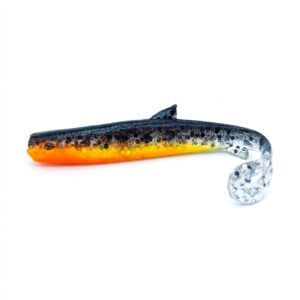 ORKA SMALL FISH PADDLE TAIL 10 CM5.90 €
-
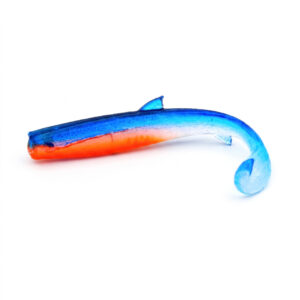 ORKA SMALL FISH PADDLE TAIL 5 CM4.90 €
-
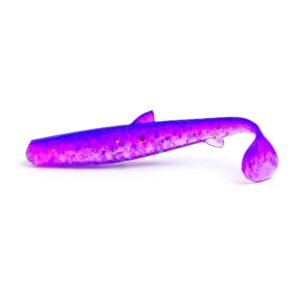 ORKA SMALL FISH PADDLE TAIL 7 CM4.90 €
- Crankbaits – at their best in cold water with a slow retrieve, but they also work in summer in certain situations. A "stop and go" retrieve often works with crankbaits, where the pauses imitate an injured baitfish.
-
 RUTHLESS RATTLIN CRANK SHALLOW 65mm13.90 €
-
 RUTHLESS RATTLIN CRANK DEEP 65mm13.90 €
-
 RUTHLESS HOLY DIVER 18mm9.90 €
-
 RUTHLESS REAPER 45mm9.90 €
-
 RUTHLESS HOLY DIVER 35mm9.90 €
Tip: do not buy a huge stock of lures all at once – first learn to use a few models well, and expand your selection according to what you fish for and how you fish.
5. Handling and releasing fish
Responsible fishing begins the moment the fish is on the end of your line.
- Always use wet hands when touching a fish – with dry hands, the scales and the slime layer are easily damaged.
- If you intend to release the fish, try to keep it in the water as much as possible and avoid lifting it onto a dry surface.
- Support the fish with both hands – one hand behind the pectoral fins and the other at the base of the tail. Never hang large fish by the jaw alone.
- Release the fish quickly, preferably within a few tens of seconds after landing it.
- If you want a photo, prepare the camera and the shot in advance to shorten the time the fish is handled.
A well-handled fish can go on living and provide an experience for the next angler – or for you yourself in the future.
6. Angler's accessories
Many people focus on rods and reels, but a few small tools make fishing smoother and safer:
- Pliers for removing hooks
- Braided line scissors
- Measuring tape and scale
- Snaps and leaders
- A priest (for dispatching fish) and a fishing knife
- A lure box for storing lures, as well as a lure backpack or bag for storing lure boxes and other tackle
- Polarized sunglasses
- Landing net
-
 RUTHLESS FISHING FISH TOWEL9.90 €
-
 RUTHLESS CUT PLIERS FISHING PLIERS19.90 €
-
 RUTHLESS MINI TACKLE TAPE MEASURING TAPE5.90 €
-
 RUTHLESS LANDING NET – SIZE: M59.00 €
-
 RUTHLESS SHADES SUNGLASSES69.00 €
-
 Ruthless Rapid Lock lure lock3.90 €
7. Your first reel – baitcasting, spinning or spincast?
This is a classic beginner's question. The short answer: a baitcasting reel is the best choice for most people when starting out.
- Baitcasting reel – easy to learn, not so prone to tangles, good feel. A quality model is available even at a moderate price.
- Spinning reel – excellent accuracy and power, but it requires practice and a quality model costs more. For light fishing, a good spinning reel easily costs over 200 euros. With a cheap spinning reel, a beginner often gets more line tangles than fish.
- Spincast reel – old-fashioned, short casting distance, surprisingly prone to tangles and poor feel. Many parents and grandparents recommend a spincast reel for a child because of its "ease", but in reality it can discourage enthusiasm when the equipment does not meet today's fishing standards.
8. Ready-made combo or self-assembled?
- Ready-made combo – a good option if the budget is tight. You get a working package without any adjustment and usually at an affordable price.
- Self-assembled – the chance to choose higher-quality components and get a setup that suits your own use exactly.
If you invest a little more, a separately assembled setup is often clearly better. The knowledgeable staff of fishing shops are invaluable help here – they can put together a balanced and durable combination for you.
Choosing fishing equipment may feel like a jungle at first, but the basic principles are simple: consider which fish you mainly want to catch, where and in what way, and choose your equipment accordingly. Good equipment makes fishing more enjoyable, but no setup replaces the hours spent on the water and the experience gained over time.
Do not be afraid to experiment and make mistakes, either – every experienced angler has at some point wasted money on the wrong lure or a rod that was too stiff. It is part of the nature of the sport.

Jarno Kangas
Fishing content creator / Blog writer
Fishing Guide & Fishing Consultant
Latest Posts
-
 BLACK FRIDAY – THE MOST ANTICIPATED SALE WEEK OF THE YEARNovember 6, 2026/0 Comments
-
 CHRISTMAS GIFT IDEAS FOR ANGLERS – DISCOVER OUR SELECTIONNovember 6, 2026/
-
-
 Ruthless Fishing Hard Lures for SummerJune 26, 2026/