
Shimano's Top-Class Baitcasting and Spinning Reels: A Guide to Choosing the Right Reel

Fishing is not merely a hobby, but a passion and a way of life in which equipment matters enormously. An excellent reel can make the fishing experience smoother and more enjoyable, offering both precision and power even in challenging situations. Shimano is a renowned fishing reel manufacturer that, through reliable quality and continuous innovation, has earned its place in the tackle bags of professionals and enthusiasts alike around the world. Ruthless Fishing offers Shimano baitcasting and spinning reels in its online shop, and in this article we delve deeper into the world of Shimano reels so that every angler can choose the reel that best suits their needs.
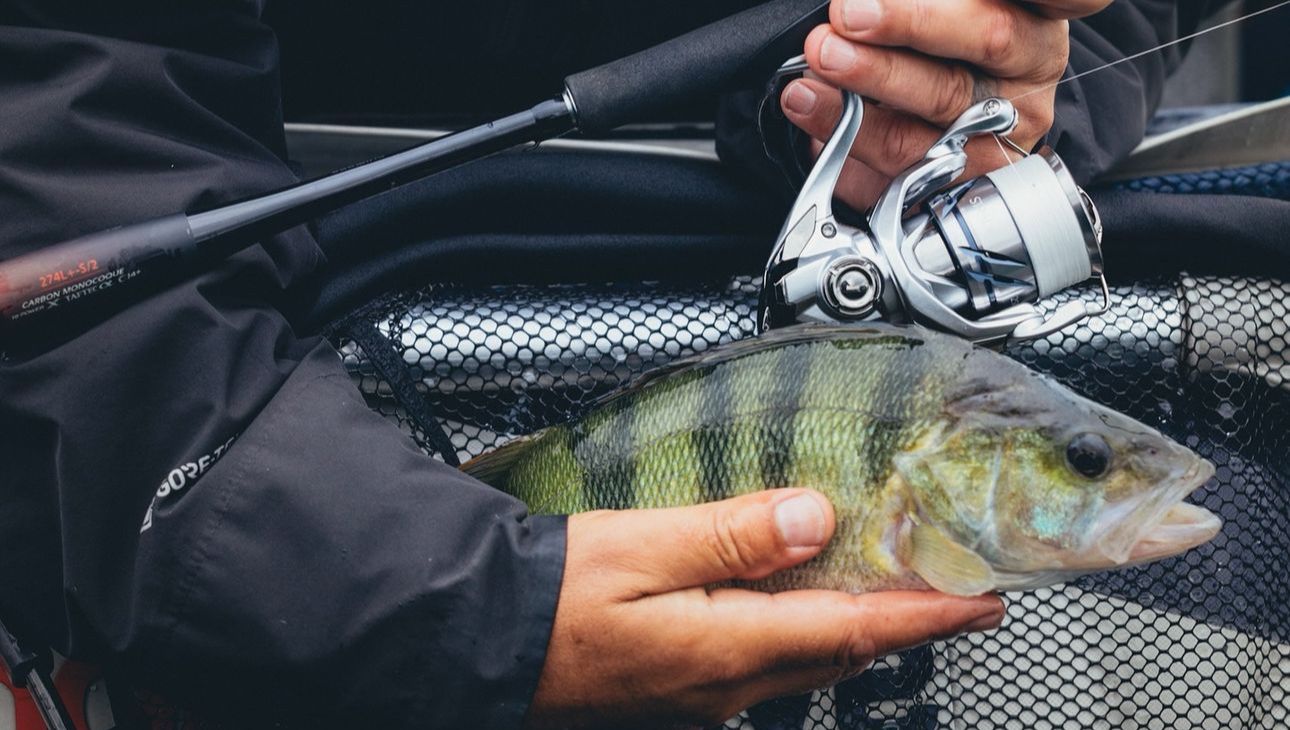
We have expanded our online shop range with several Shimano reels. Over the past year, we have tested a number of different Shimano reel models together with our rod series and have been pleased with Shimano's products, which is why our range now includes a wide selection of Shimano reels for different purposes. Crown your Ruthless Rods rod with a reliable reel. Shimano's more affordable models in particular offer some of the best value for money on the market, which allows us to offer quality reels to every angler.
- Joonas Väntti – Ruthless Fishing
Why choose Shimano?
The popularity of Shimano reels is no coincidence – it is based on decades of innovative development work that combines cutting-edge technology with the needs of anglers. Shimano has developed several technologies that improve the durability, lightness, strength and ease of use of its reels.
Based on the experiences of competitive anglers and sales representatives, Shimano reels are reliable and long-lasting, and they offer the best possible fishing experience. Shimano continuously develops new innovations and invests in product development, which means that the reels keep evolving to meet anglers' changing needs.
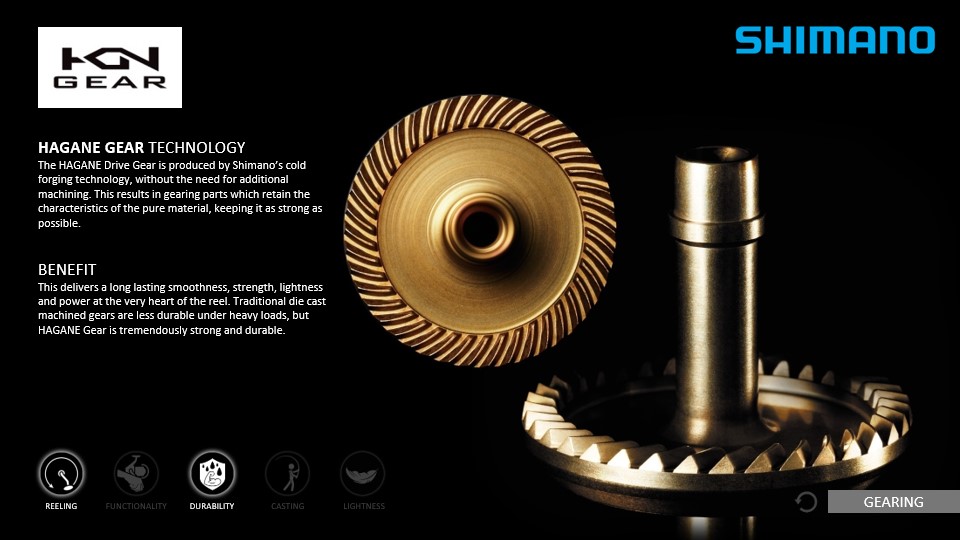
Shimano reels stand out precisely because of their quality. The gear mechanisms are cold-forged, which makes the reels extremely durable and prevents them from developing play or wobble over the years. Shimano is often regarded as a premium brand, and that is exactly what it is. A reel must work reliably and smoothly all year round, which is why I use Shimano reels myself.
- Mika Mujunen – Shimano Nordics Ambassador
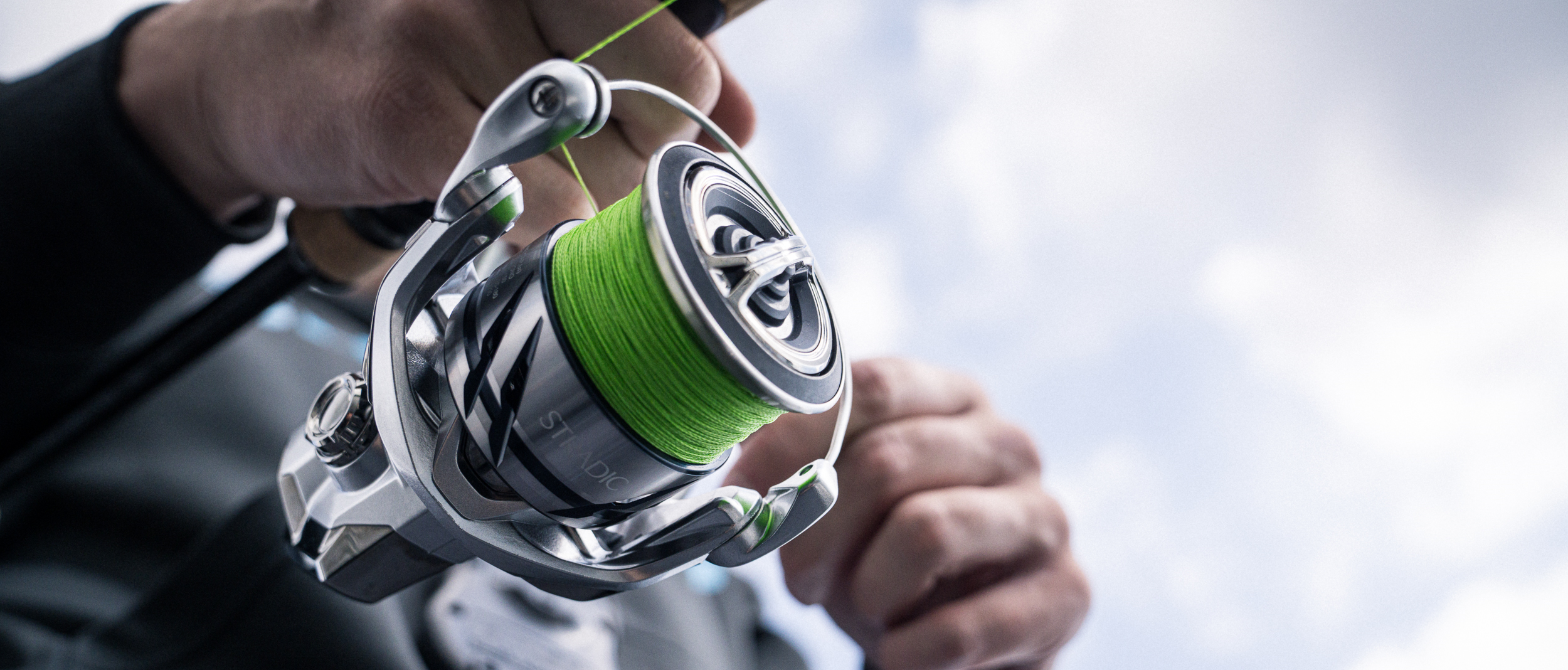
Shimano's Innovations and Technologies
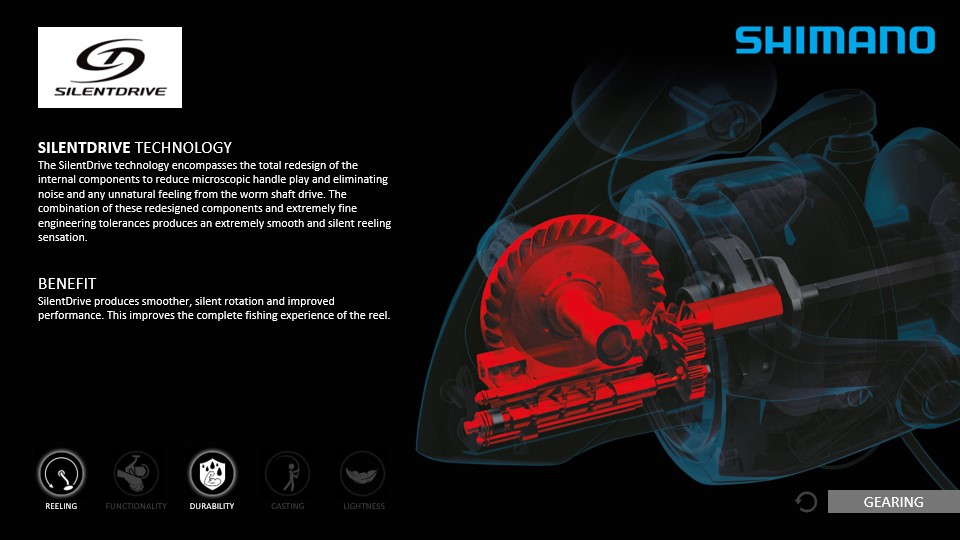
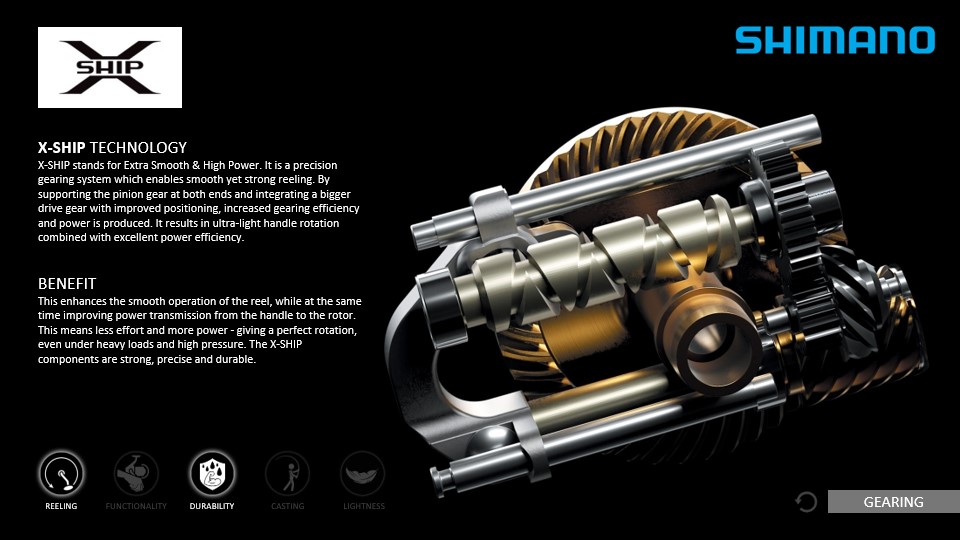
- Gearing
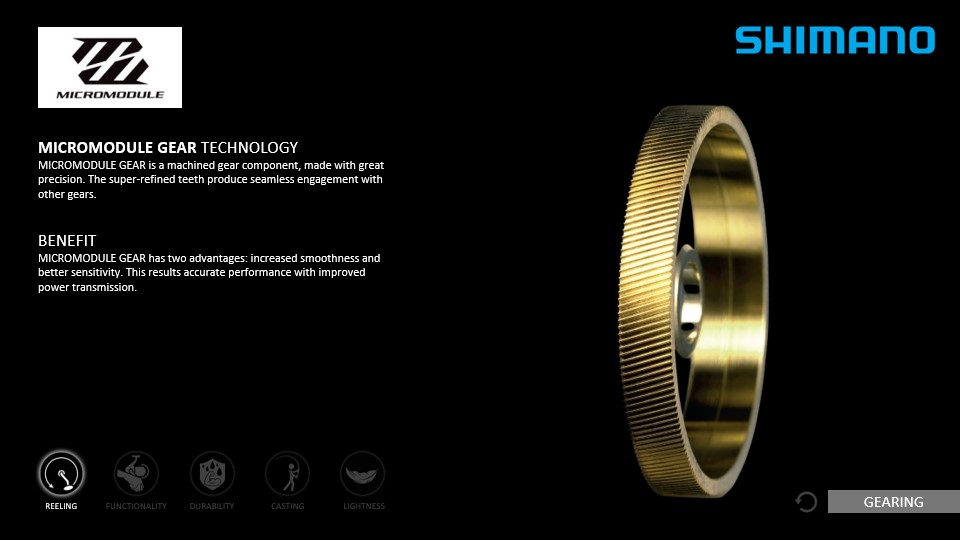
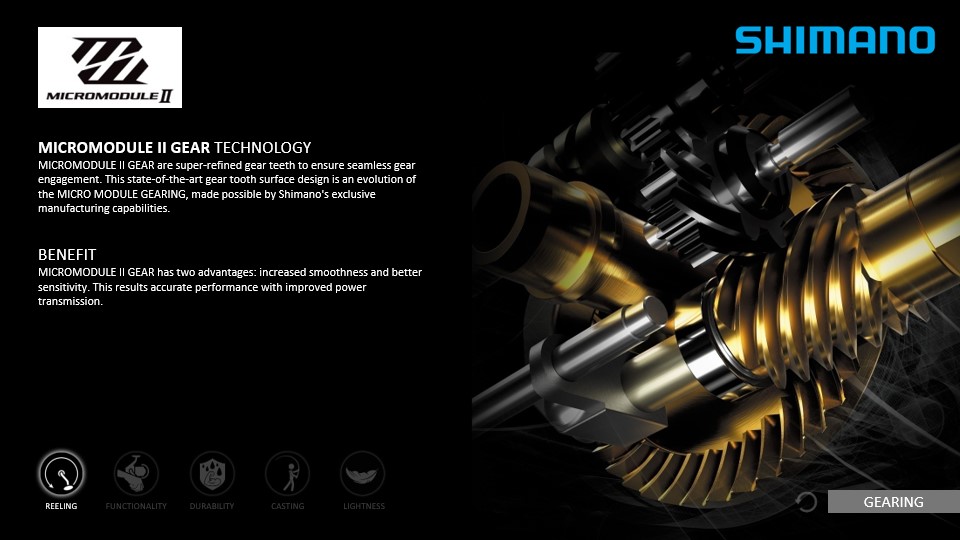
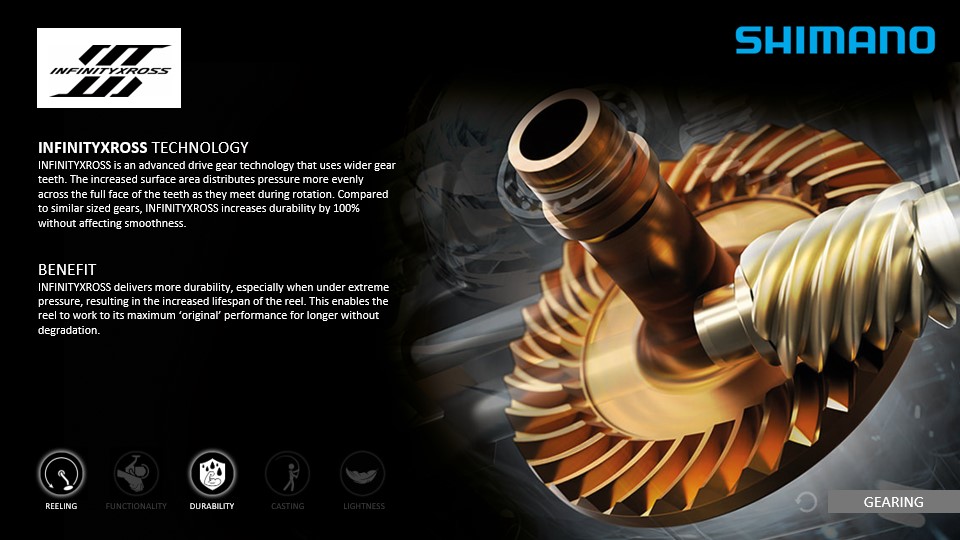
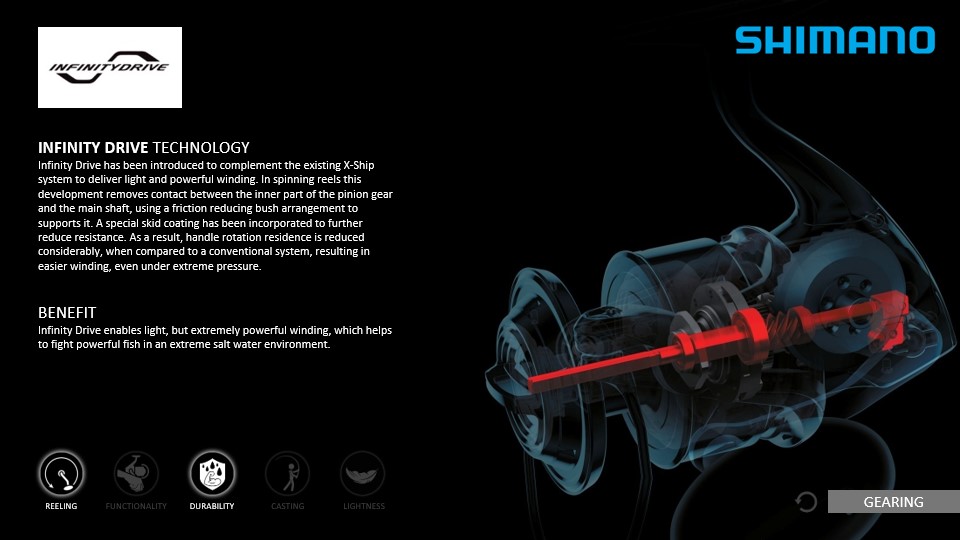
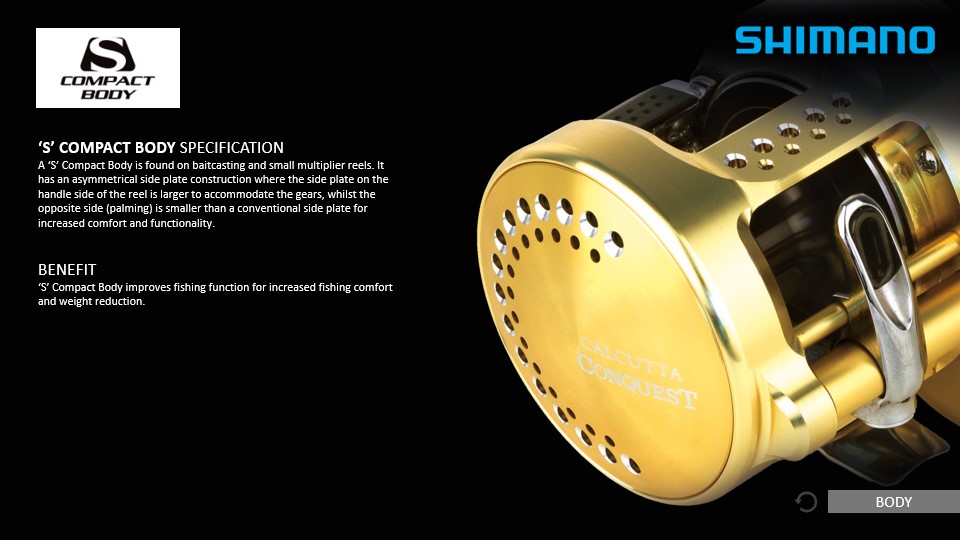
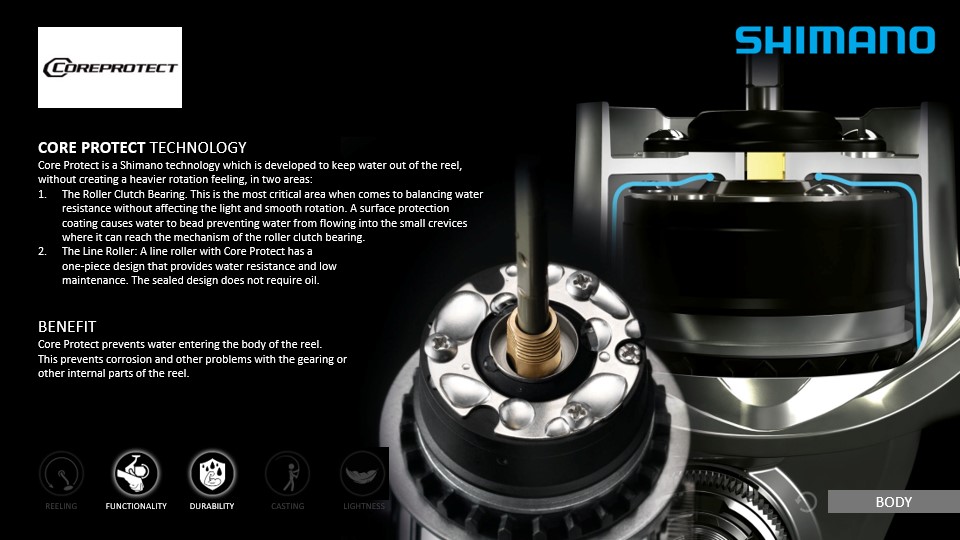
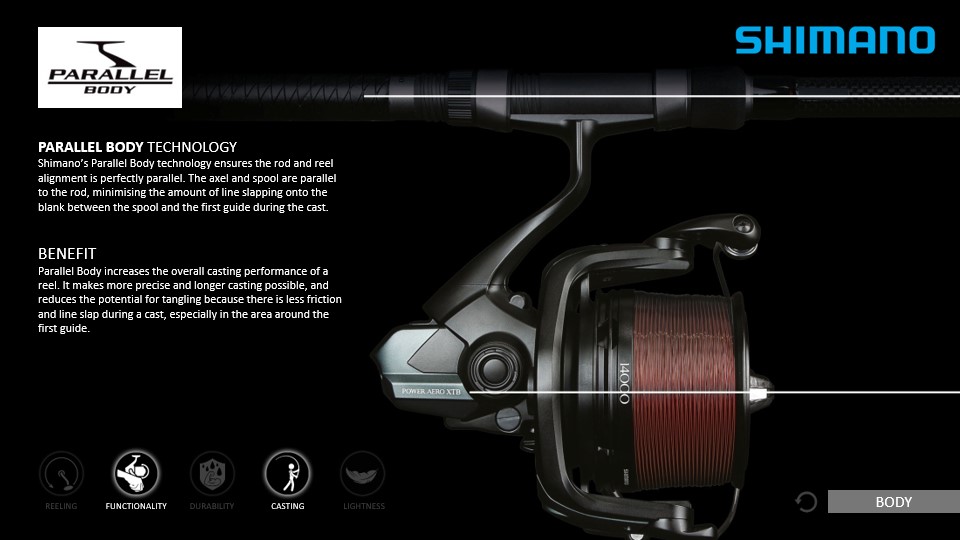
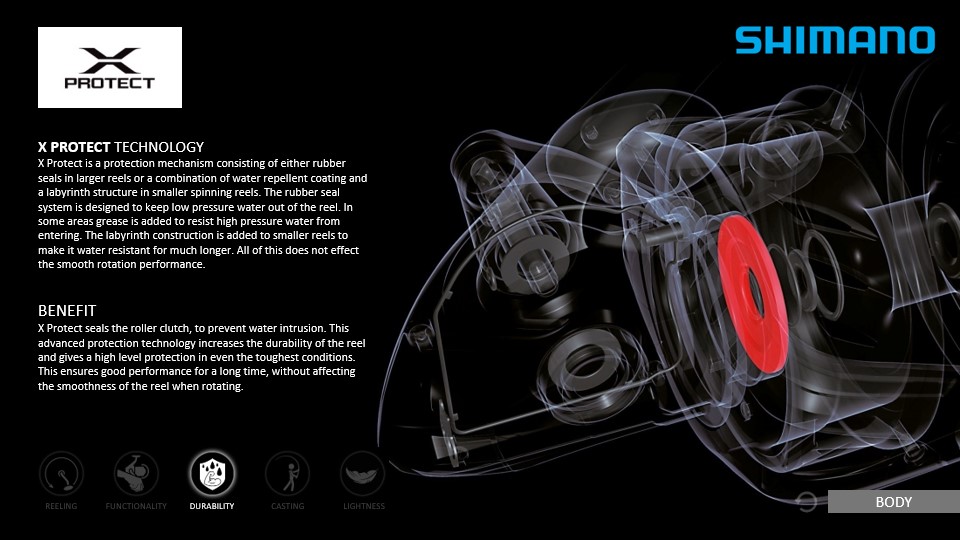
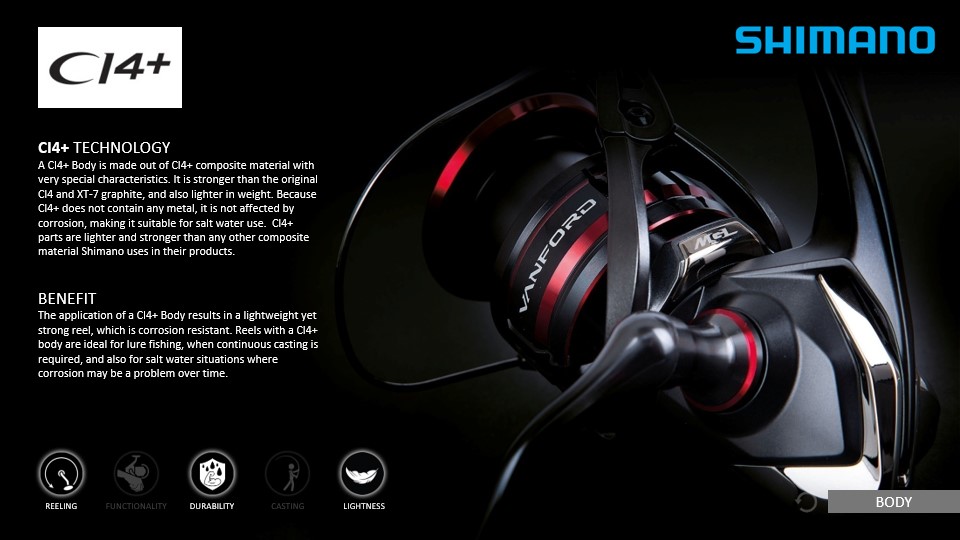
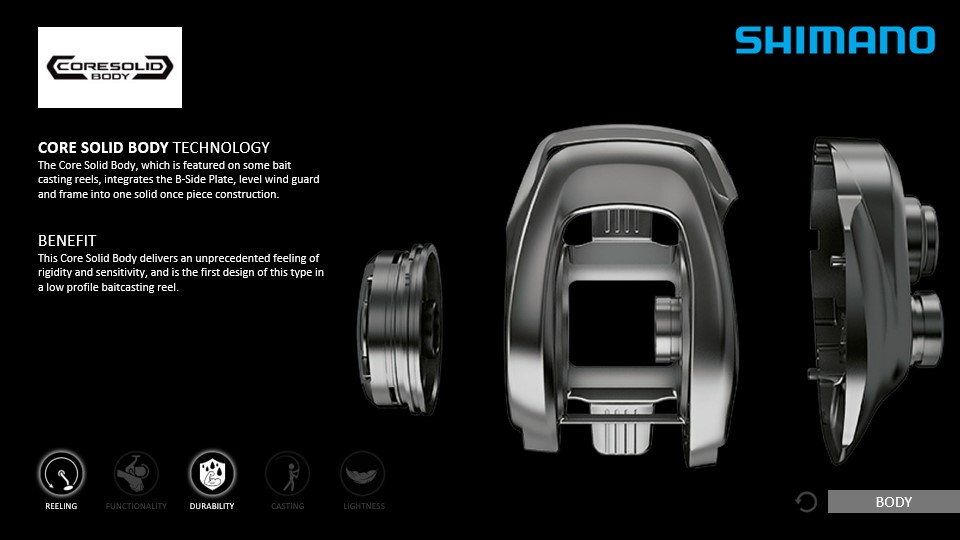
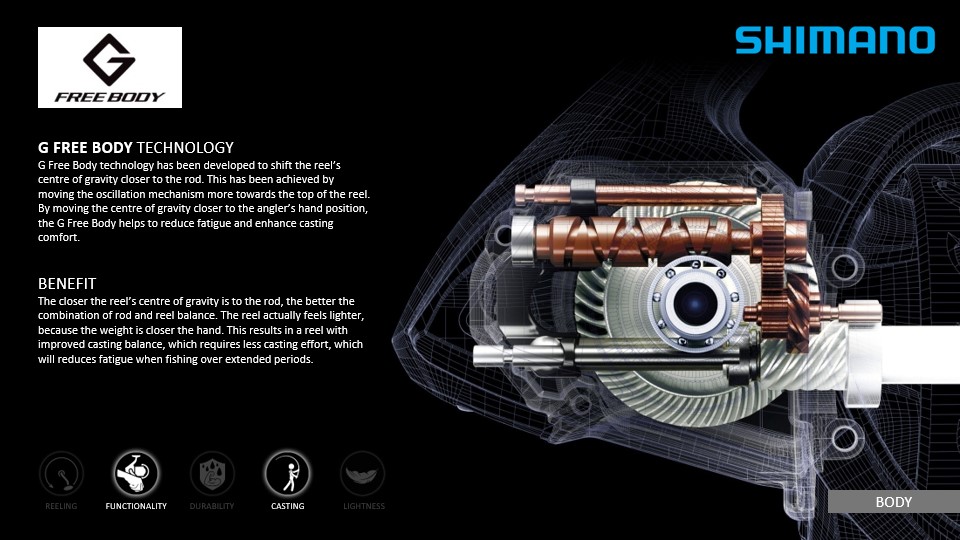
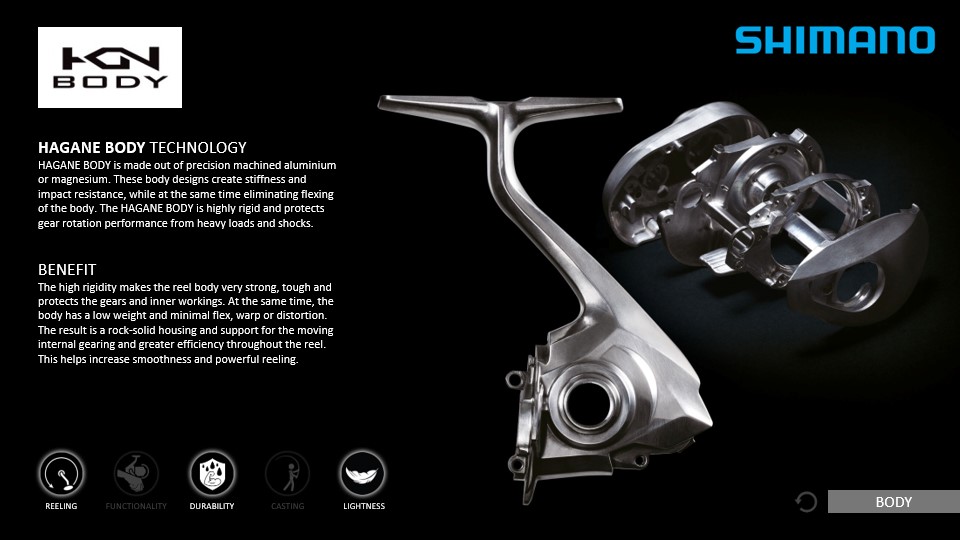
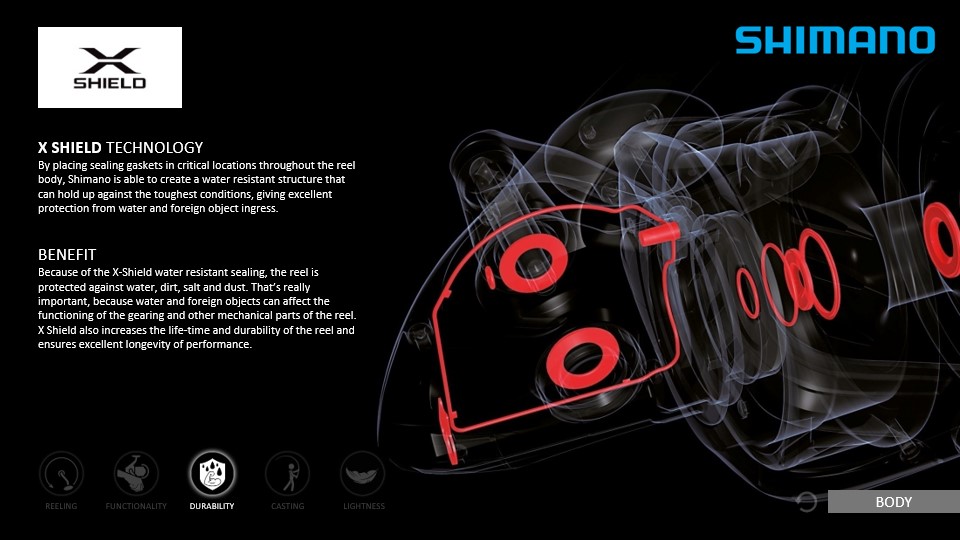
- Body
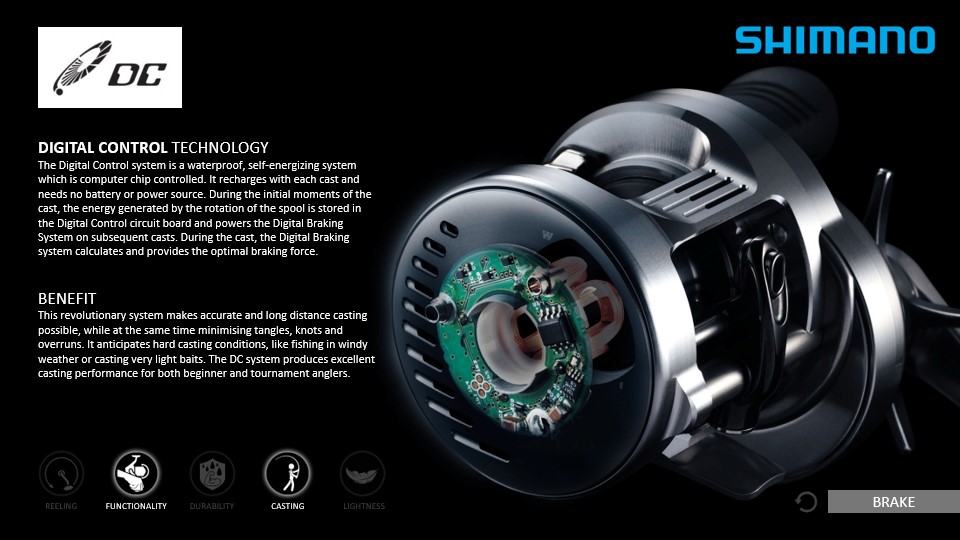
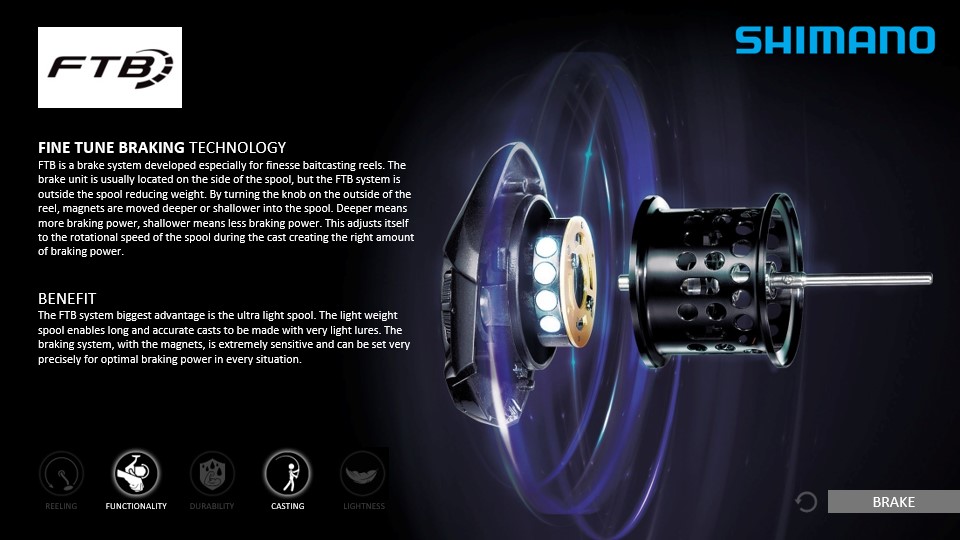
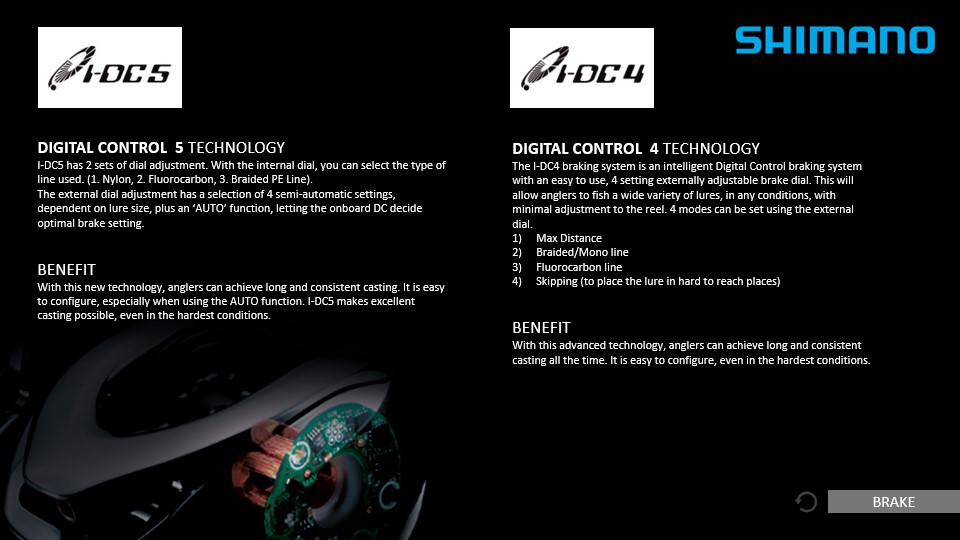
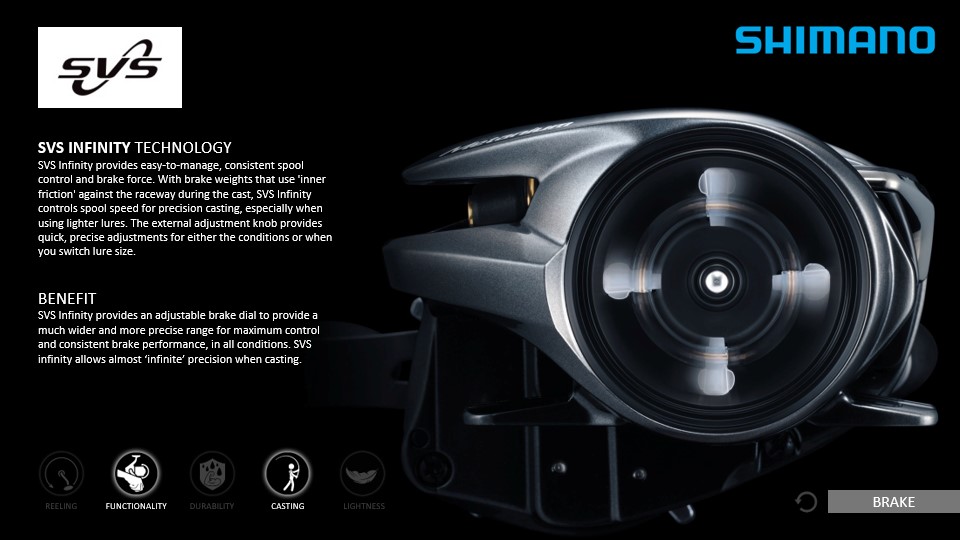
- Brake

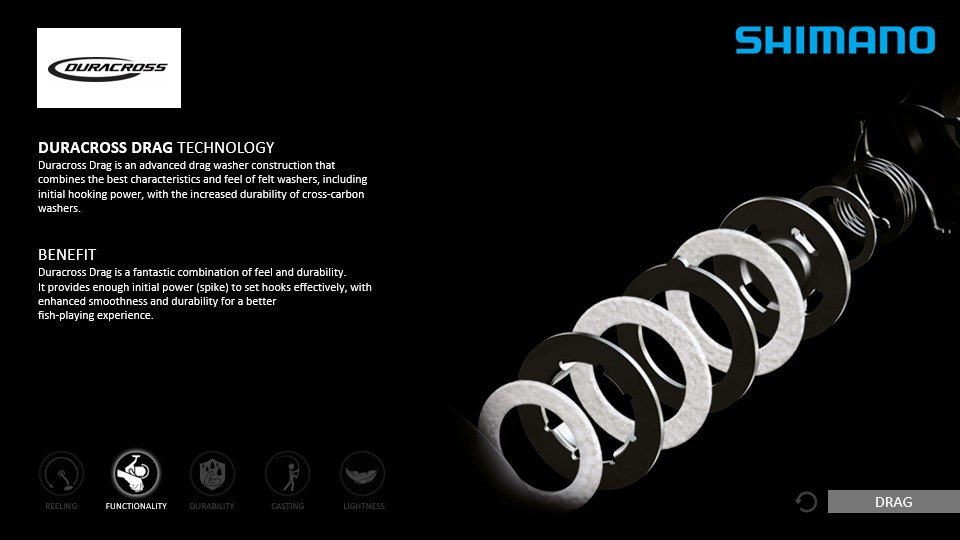
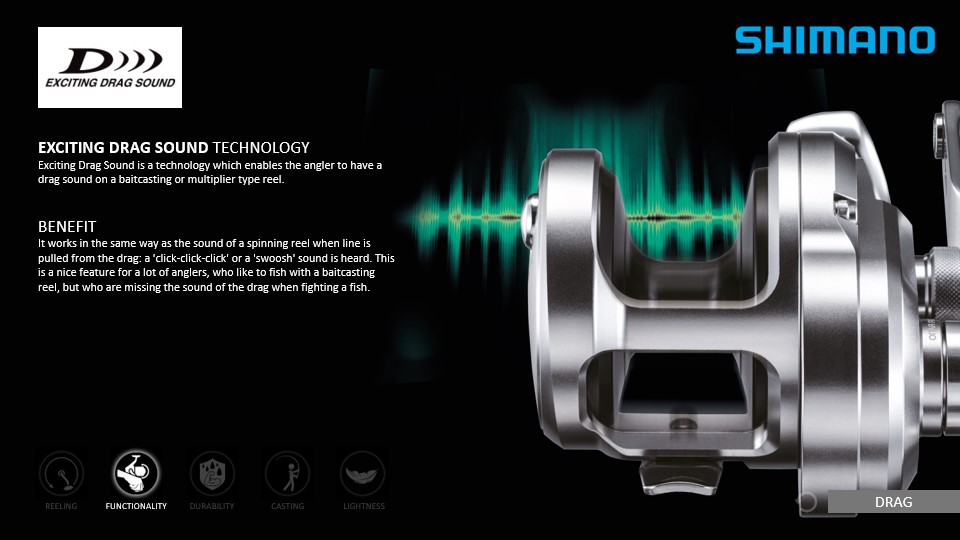
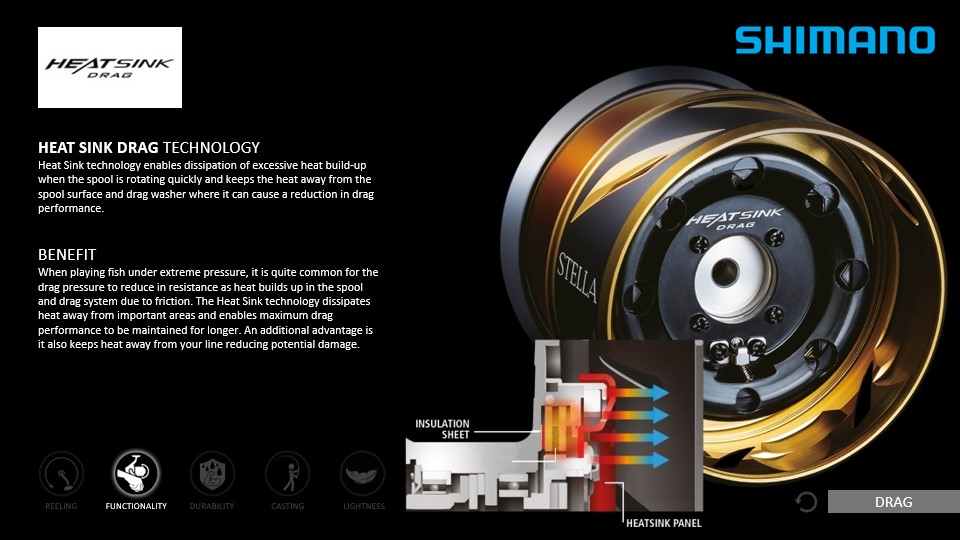
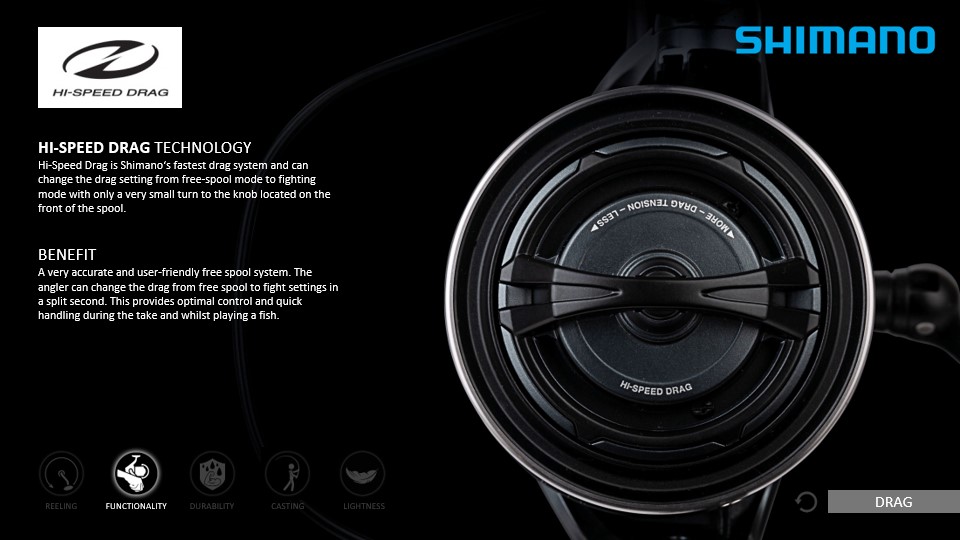
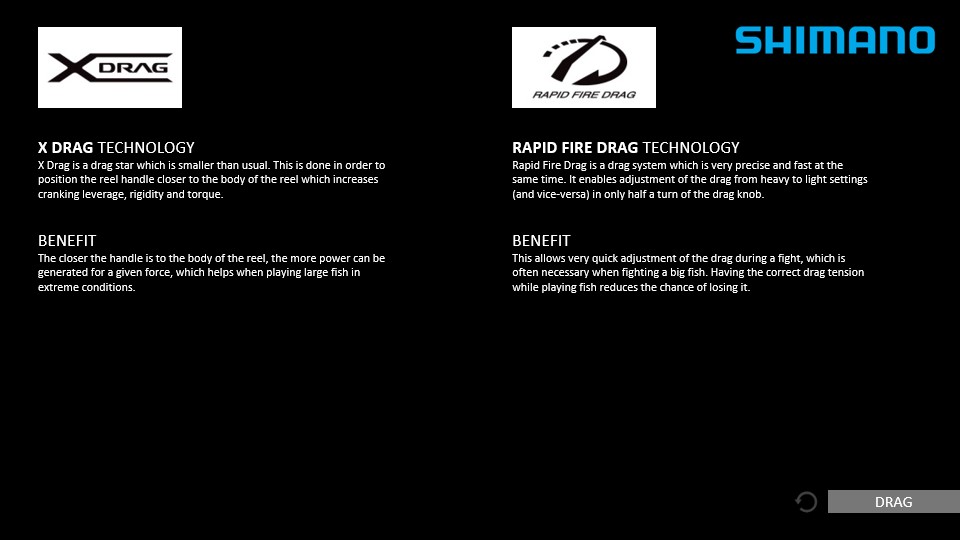
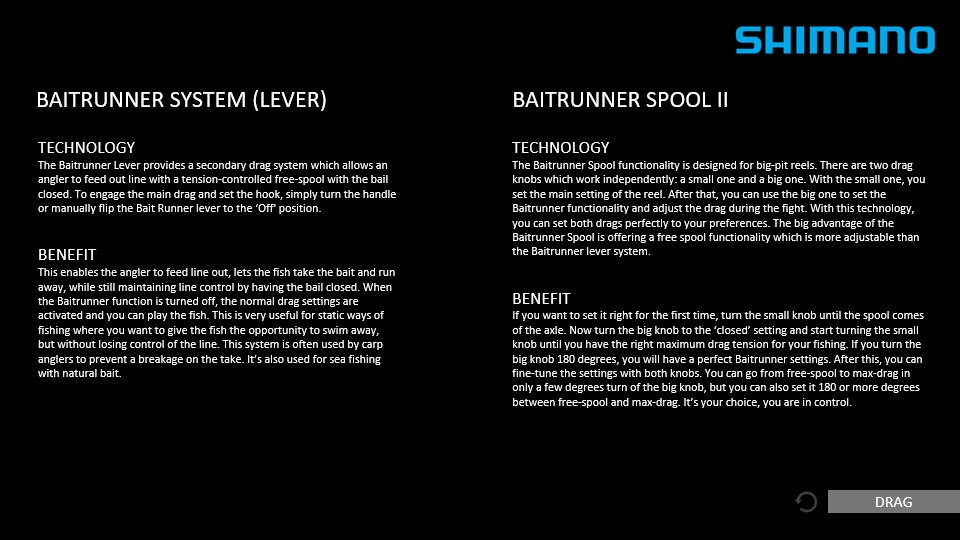
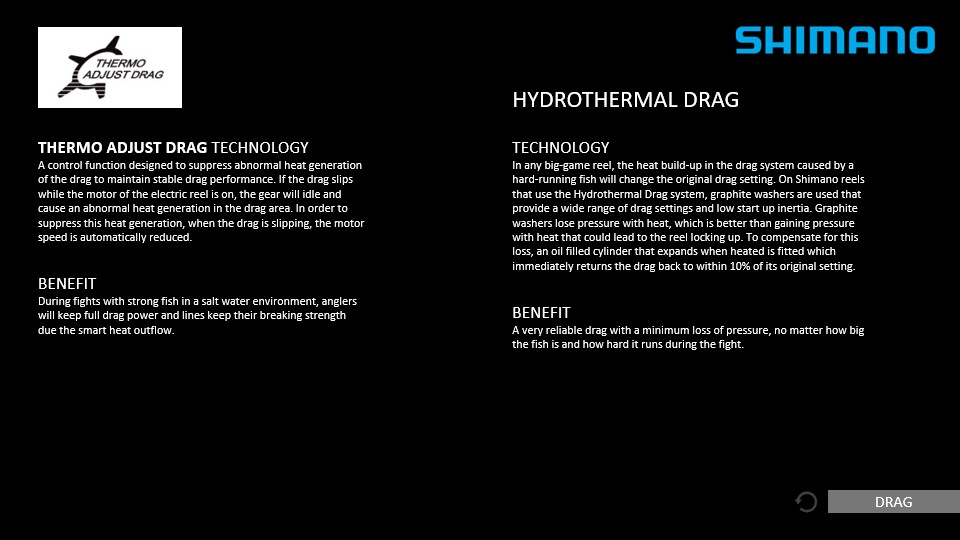
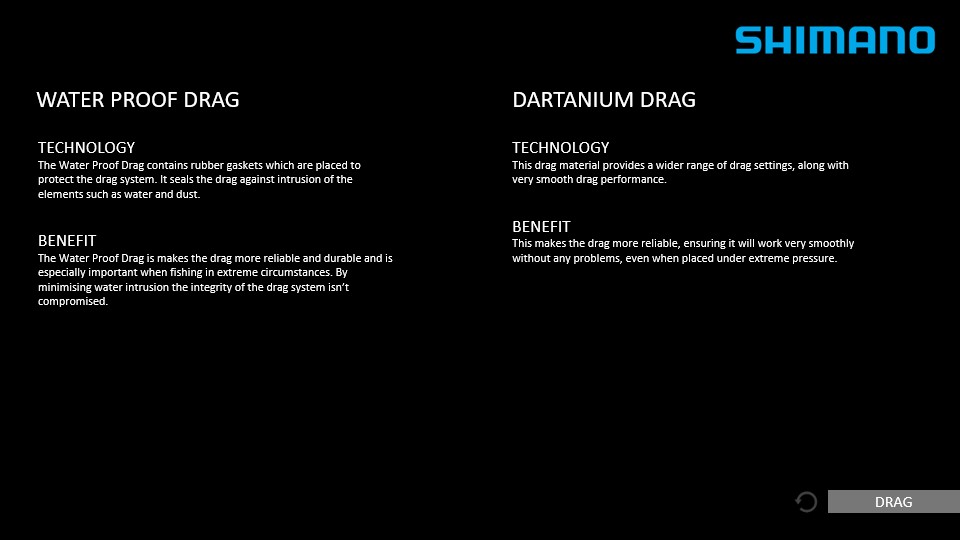
- Drag



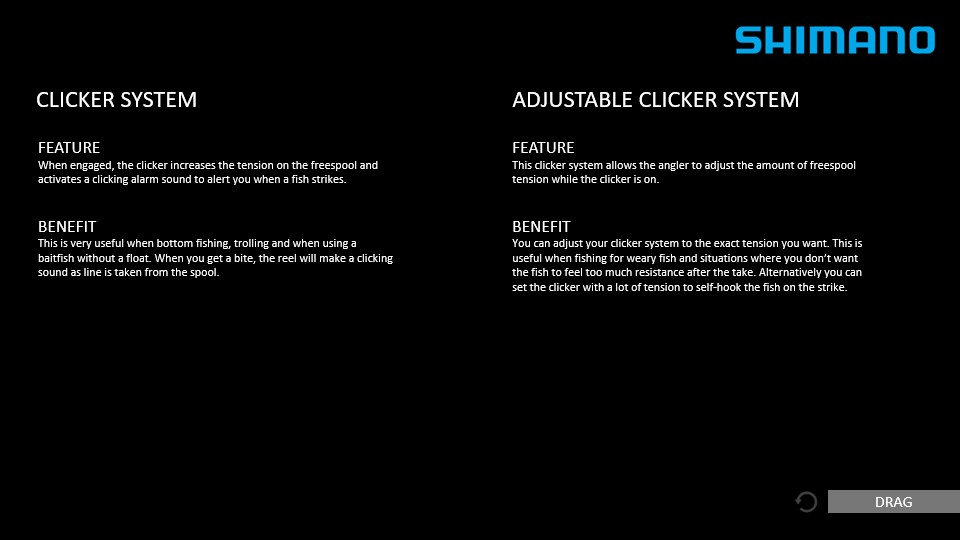
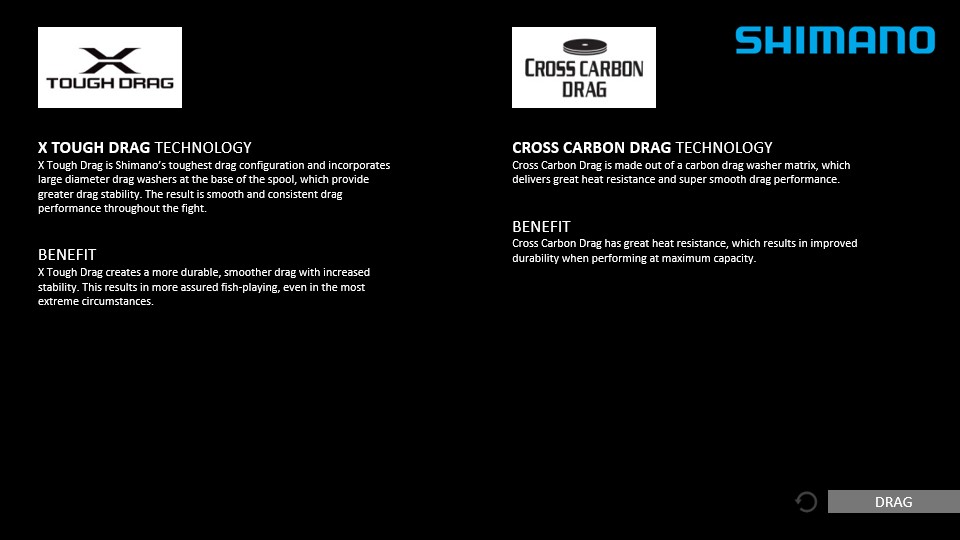
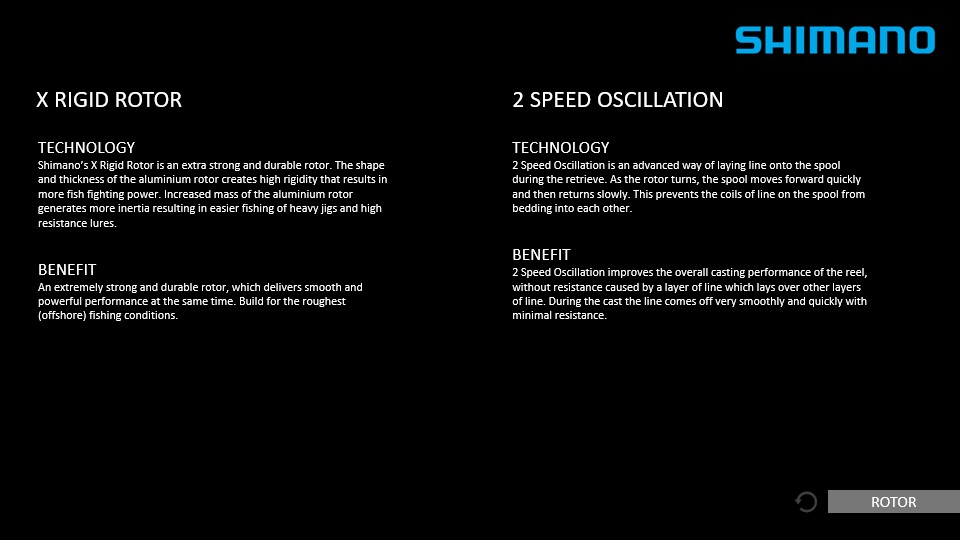
- Rotor
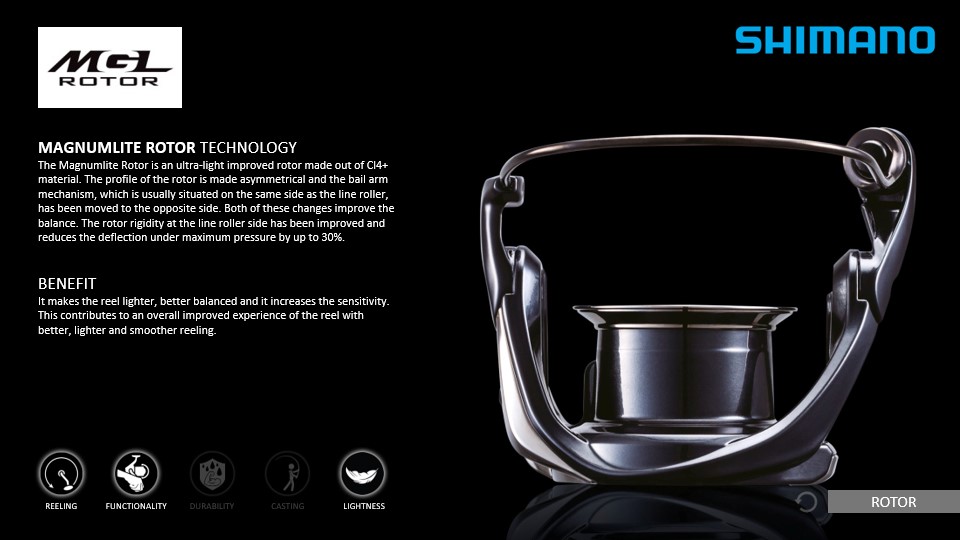
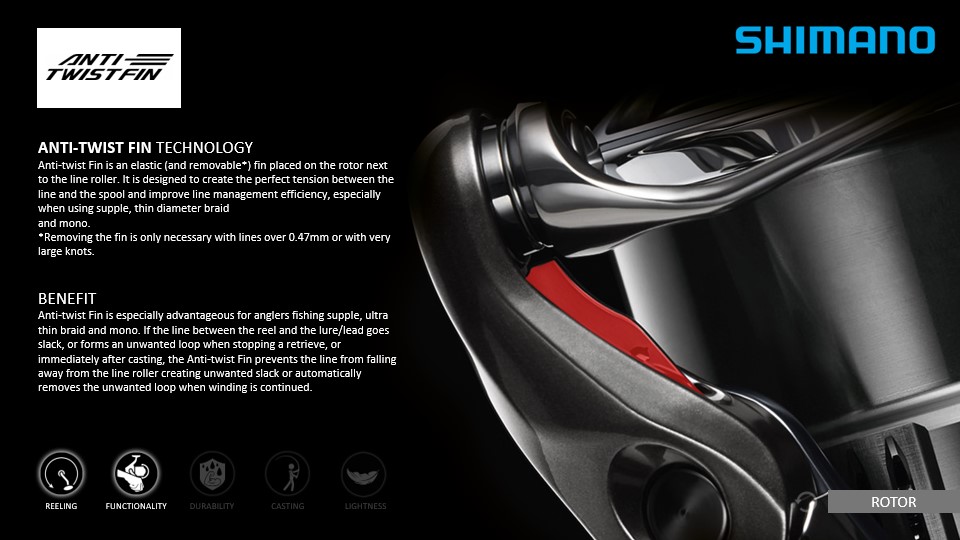
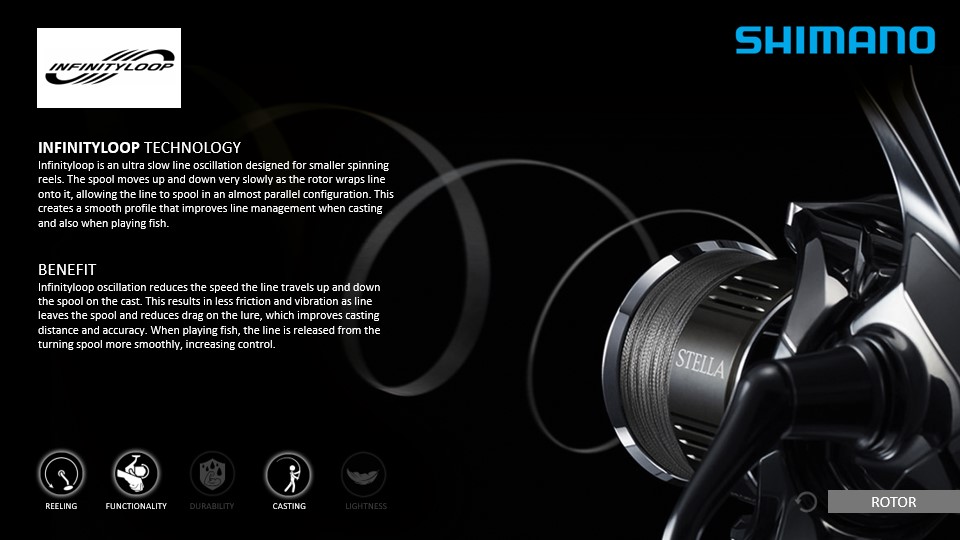
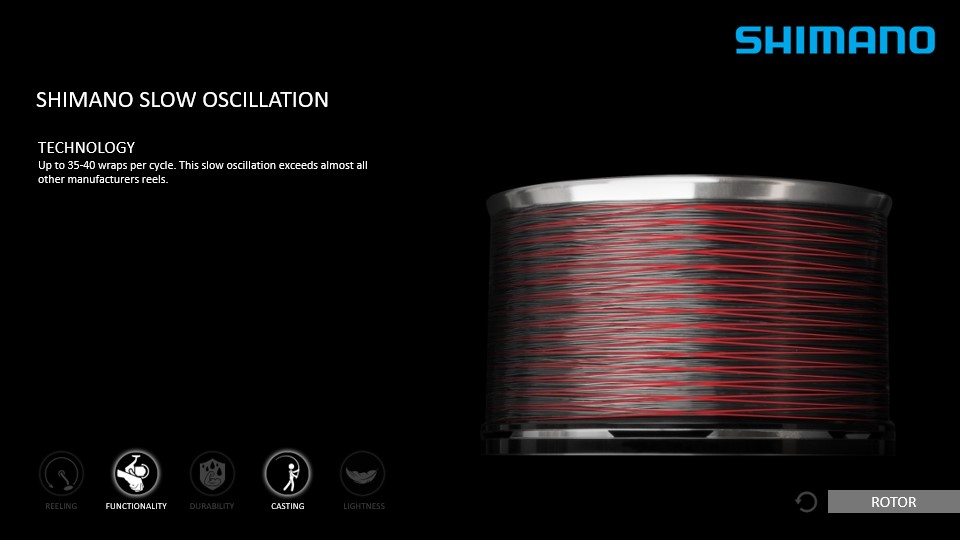
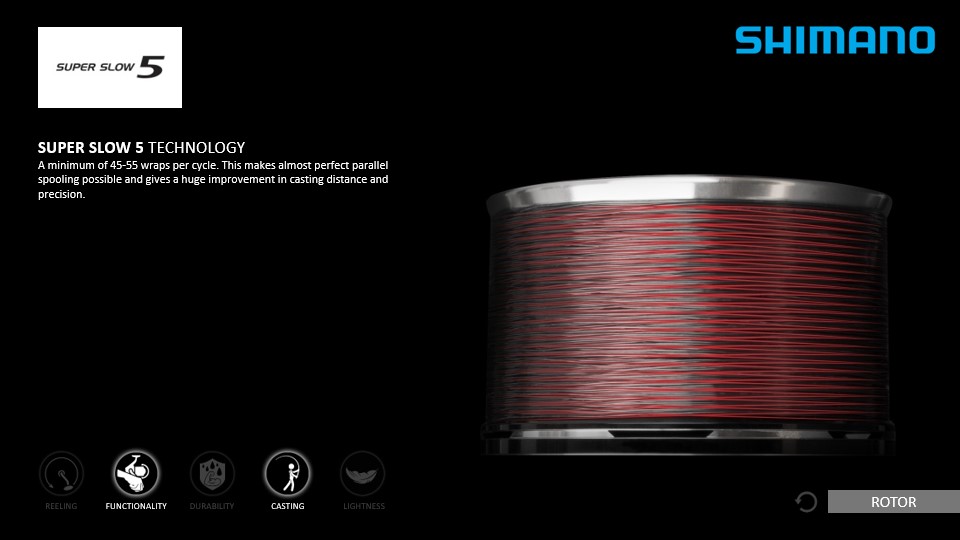
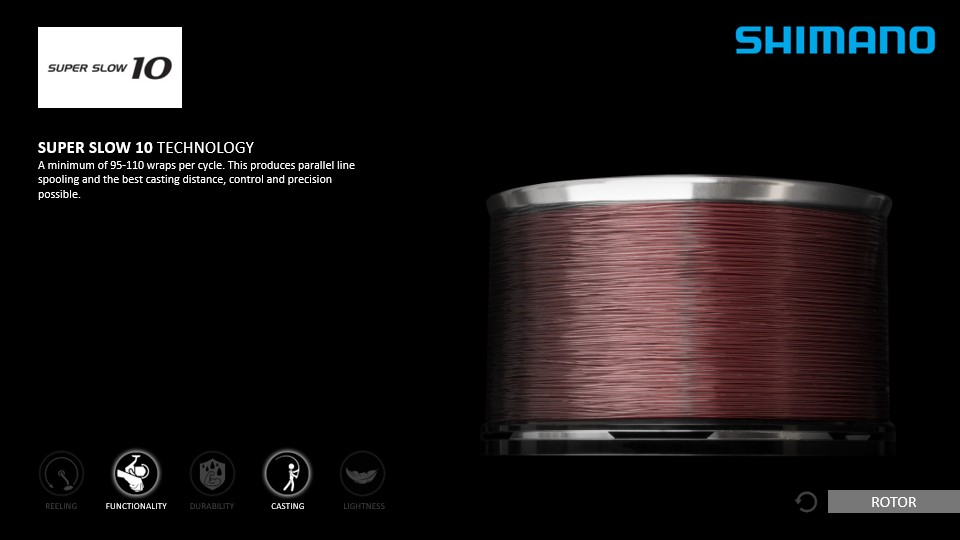


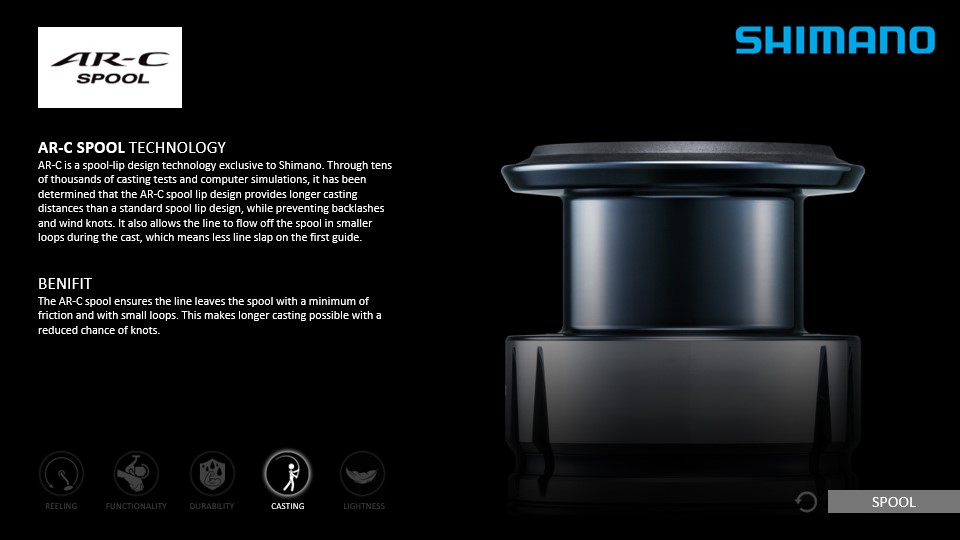
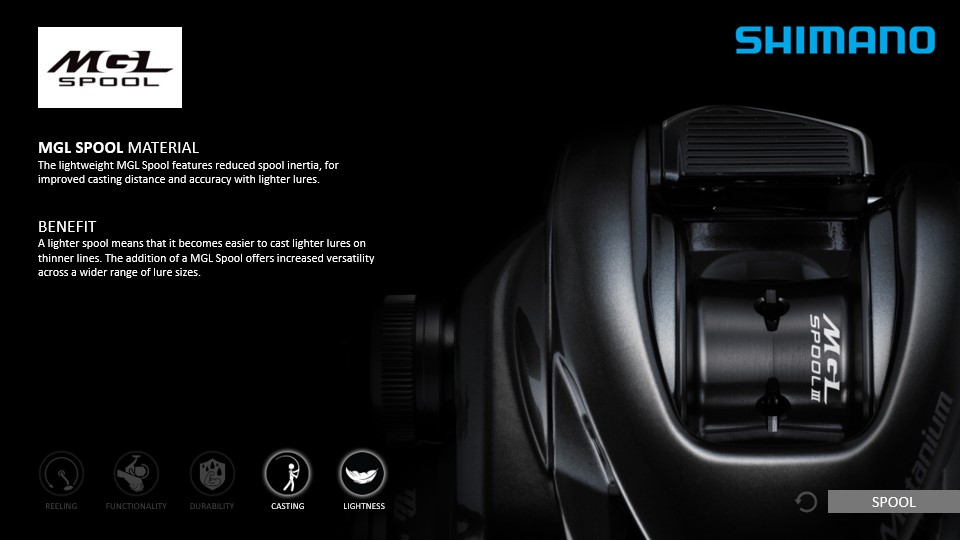
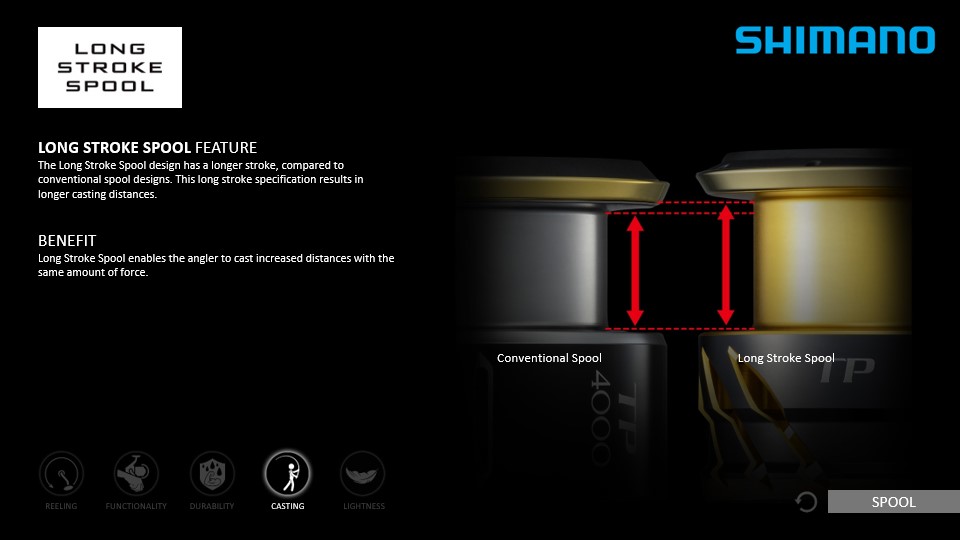
- Spool


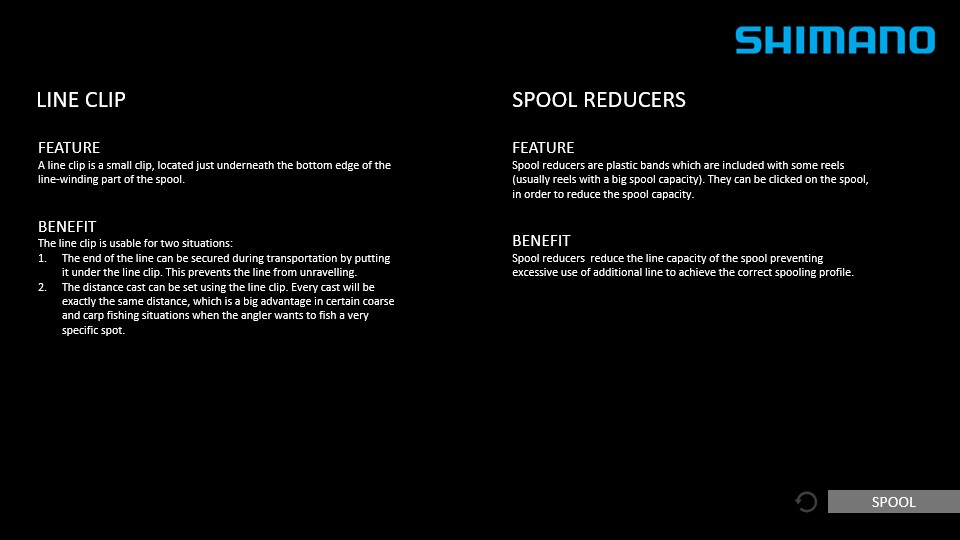
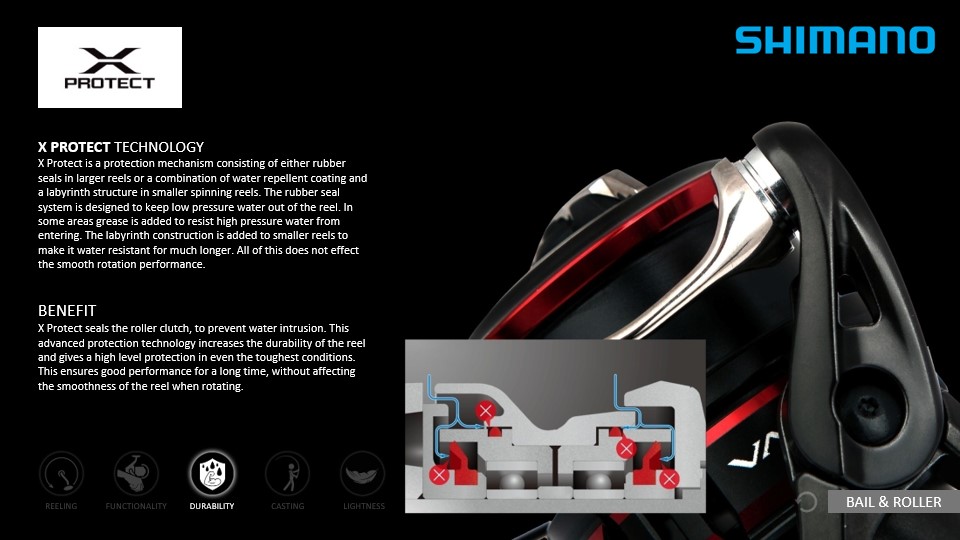
- Bail & Roller

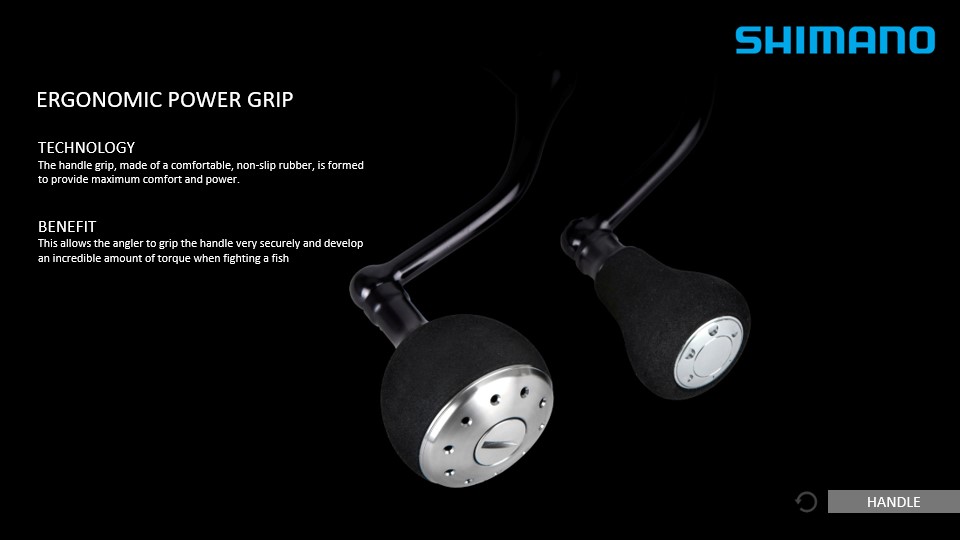
- Handle

Shimano continuously develops its product lines. In reels, the Stella will be the flagship, to which new technologies and innovations always arrive first and then trickle down to the lower model series. The same happens in other product categories, such as rods. The sea trout fishing flagship Lesath represents the pinnacle of rod technology, with blanks featuring Spiral X core, Hi-Power and Nanopitch.
Shimano will certainly always be regarded as a “high-end” brand, and that is how it is intended to remain.
- Juha Penttilä – Shimano Nordic
Maintenance, Spare Parts and Care of Shimano Reels
Shimano reels are designed to last, but they require regular maintenance to retain their performance. Ruthless Fishing recommends basic maintenance and washing of reels, especially after use in salt water, as well as annual professional servicing, so that the reel stays as good as new for a long time. Shimano offers a wide range of spare parts, which makes it easier to replace broken or worn parts.
With regard to servicing, spare parts and upkeep, Shimano recommends always rinsing the reel with fresh water after use in salt water, and cleaning and oiling the bearings regularly. It is also recommended to service reels at least once per season, either yourself or by a professional. For warranty matters and spare part enquiries, Shimano instructs customers to go primarily through retailers.
General Information on Baitcasting and Spinning Reels and Their Differences
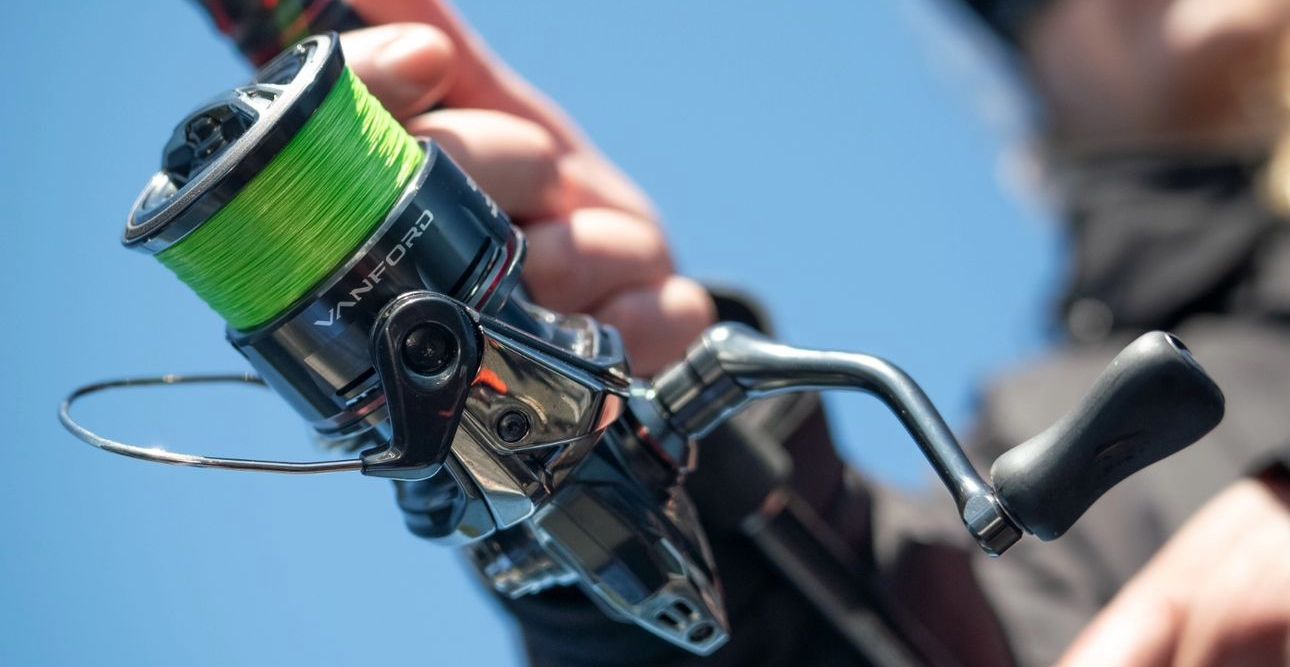
- Baitcasting reels: Offer precision and power, which makes them ideal for large lures and heavier catches. Baitcasting reels are popular among experienced anglers, as controlling them requires some practice.
- Spinning reels: Thanks to their ease of use, they are an excellent choice for beginners and lighter fishing. Spinning reels also provide good control with light lures and are versatile.
- Castability: Spinning reels are suited to lighter lures and allow longer casts, whereas baitcasting reels handle heavy lures better and provide an accurate cast.
- Control: The braking system of baitcasting reels requires more fine-tuning and experience, but for an experienced angler it offers better control and efficiency.
- Tangling: With spinning reels the risk of line tangles is lower, whereas with baitcasting reels a poorly adjusted brake can lead to backlashes, that is, line tangles.
- Learning curve: For a beginner angler, a spinning reel is the more sensible choice, as learning is quicker and you can focus on the fishing itself sooner. Casting with a baitcasting reel requires a little more practice, but on the other hand it brings precision and control right from the start.
In Shimano reel models, size numbers such as 1000, 2000 and 2500 for spinning reels, and 70, 100, 150, 200, 300 for baitcasting reels, refer to the size of the reel or spool and to its line capacity. The reel's gear ratio (e.g. HG = High Gearing) determines how many times the spool turns with one rotation of the handle – a higher number means faster retrieval. For example, a gear ratio of 6.4:1 means that the spool turns 6.4 times during one turn of the handle. Generally speaking, a higher gear ratio suits fast fishing, such as jig fishing, while a lower gear ratio gives more power and a smoother retrieve when reeling in, for example, high-resistance lures such as chatterbaits, spinnerbaits or crankbaits. Retrieve speed, such as 80cm:1, tells how much line is wound onto the reel during one turn of the handle. Line capacity refers to how much line fits on the spool. Line capacity is affected by whether the reel has a shallow or a deep spool and by the diameter of the spool. Weight is mostly a matter of the user's personal preference. The significance of a reel's weight lies mainly in whether it is balanced with your rod. A rod that is too front-heavy or too back-heavy may feel uncomfortable to use.
BFS baitcasting reels – Workhorses for light fishing
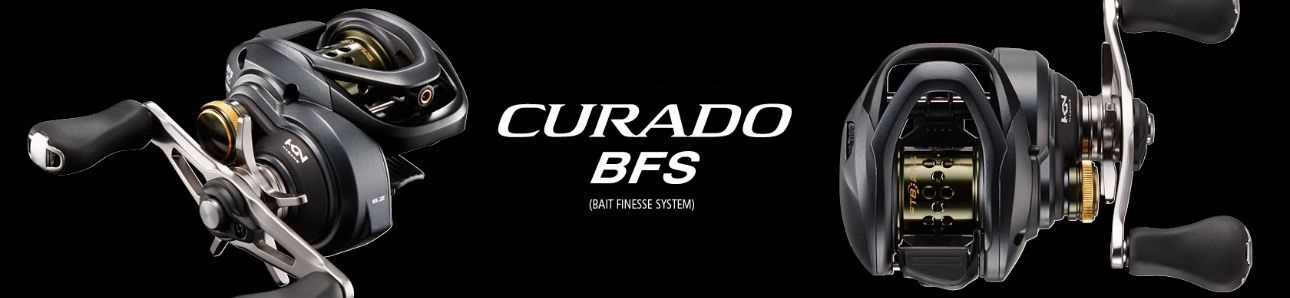
BFS (Bait Finesse System) baitcasting reels have grown in popularity in light lure fishing. These reels are designed to offer precise casting control even with very light lures. The Shimano Curado BFS is an excellent example of this technology. BFS reels are particularly useful in fishing that demands precision, such as jigging or fishing with small lures. BFS reels are also an excellent choice for those who want to move from spinning reels to baitcasting reels, as they offer the precision and power of a baitcasting reel at a lighter weight. Shimano's BFS reels offer a combination of lightness, precision and innovative technology that meets the needs of both experienced anglers and beginners. Their popularity keeps growing as more and more Finns discover the appeal of using light lures and a more subtle fishing technique.
Why are Shimano BFS reels becoming ever more popular in Finland?
- The light fishing trend: Finnish anglers' fishing hobby has shifted towards more subtle methods that demand precision, with an emphasis on light lures. For example, fishing for perch and trout with BFS reels, which are lighter than traditional spinning reels, has become more common.
- The rise of jig fishing: Jig fishing, which often requires small lures, benefits from the control and precision offered by BFS systems.
- Development of fishing equipment: Ever better BFS-compatible rods and lures are available in Finland, which has lowered the threshold for trying finesse fishing.
- The influence of Japanese fishing style: Shimano is a global pioneer, and the influence of Japanese fishing culture has inspired Finns to try something new.
A guide to choosing the right reel
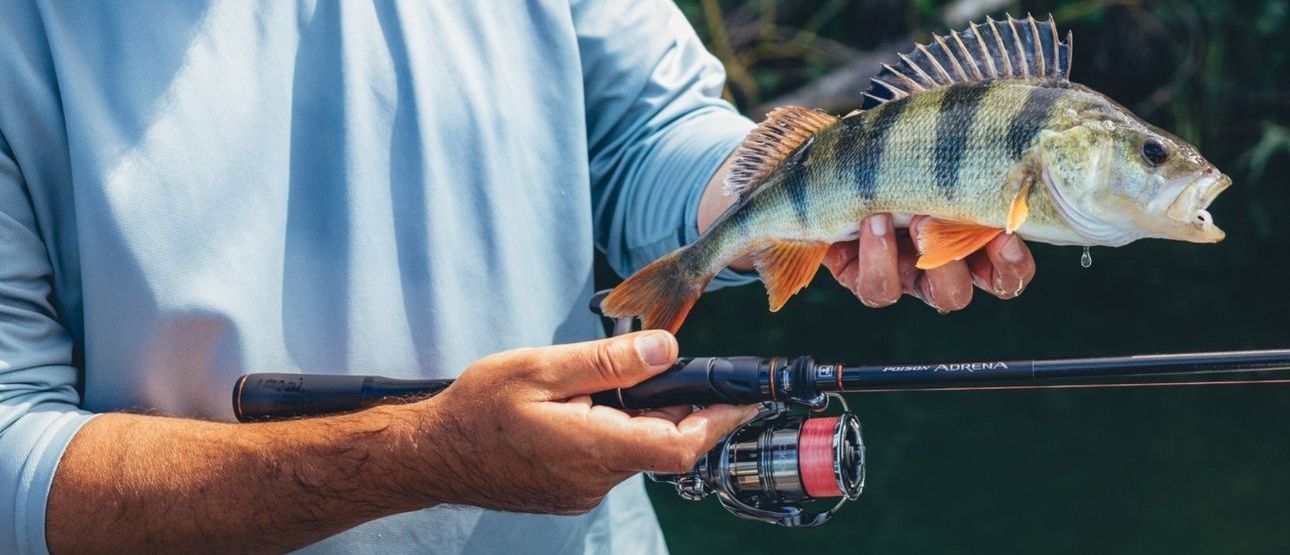
In fishing, it is very important that you have the right equipment for every situation. Of this equipment, the reel is one of the most important pieces. During long days of fishing or in the decisive hours of a fishing competition, it is important that the reel offers lightness, comfort of use and reliability. Shimano reels bring durability and versatility to beginners and more experienced anglers alike.
- Juha Penttilä – Shimano Nordic
Reel by style – Baitcasting or spinning reel?
- Hunting large predatory fish with big lures: Choose a baitcasting reel that withstands heavy strain and offers power. For example, the Shimano Curado 300 is an excellent tool for larger lures and predatory fish. Spinning reels in the 3000–4000 size range also work well in heavier fishing, and the choice of reel type also depends on the angler's own preferences.
- Casting: Spinning reels with an HG gear ratio allow fast and accurate retrieval, which suits the use of lighter lures. Spinning reels are also more beginner-friendly with light lures than baitcasting reels. Baitcasting reels in the 70–100 size range likewise work excellently in light fishing, but are slightly more expensive than comparable spinning reels. For casting, we recommend:
-
 Shimano Sedona FJ 2000S HG79.90 €
-
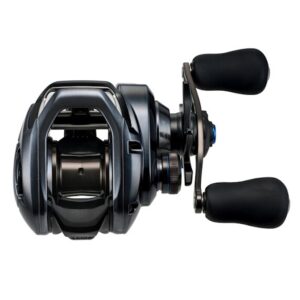 Shimano SLX 70 A179.00 €
-
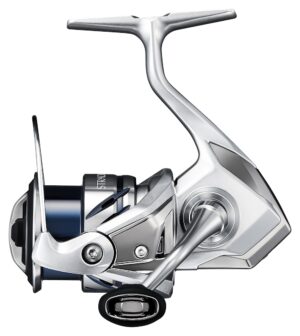 Shimano Stradic FM C 2000 HG219.90 €
-
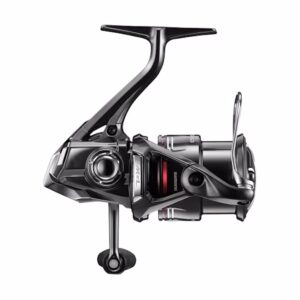 Shimano Vanford FA 2500S259.00 €
- Jig fishing: For jig fishing, shallow- and light-spool baitcasting reels in the 70–100 size range are particularly suitable, as are BFS baitcasting reels, which combine control of light lures with the power of a baitcasting reel. As with casting, in jig fishing too, spinning reels are more beginner-friendly with light lures than baitcasting reels. However, a quality baitcasting reel brings considerably more precision and control to jig fishing when very accurate casts are needed. For spinning reels, we recommend reels in the 1000–2000 size range with a faster gear ratio. Today's materials allow lighter reels, so the weight differences between reels in the 1000–2000 size range are no longer particularly noticeable. For jig fishing, we recommend:
-
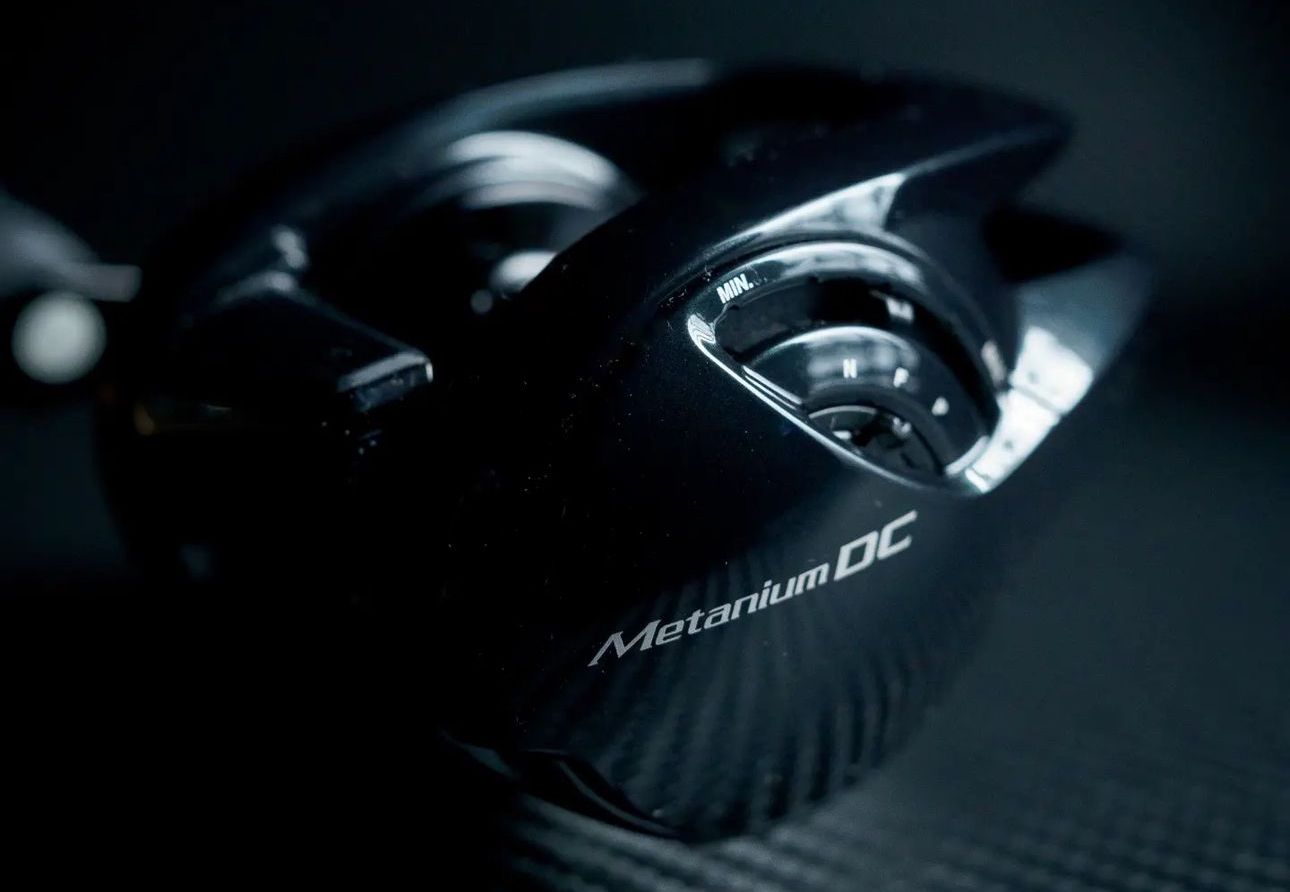
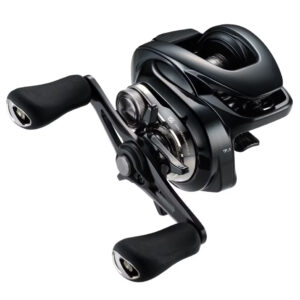 Shimano Metanium DC 70 / 71 HG539.00 €
-
Shimano Vanford FA 2500S259.00 €
-
Shimano SLX 70 A179.00 €
-
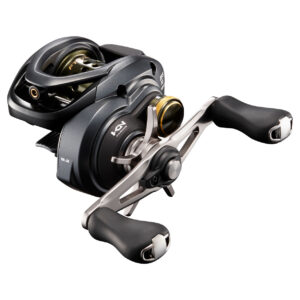 Shimano Curado BFS XG229.00 €
-
Shimano Stradic FM 1000 HG219.90 €
- Light pike and zander fishing with medium-heavy lures: For lighter pike and zander fishing, spinning reels in the 1000–2500 size range and baitcasting reels in the 100–200 size range are suitable. Although the recommendation is to have separate equipment for each fish species, many people still use one rod in every situation, and for such so-called all-round equipment, reels of the same size range can be used. For general fishing, we therefore recommend the following reels:
-
Shimano Vanford FA 2500S259.00 €
-
Shimano Stradic FM C 2000 HG219.90 €
-
Shimano Sedona FJ 2000S HG79.90 €

Jarno Kangas
Fishing content creator / Blog writer
Fishing Guide Student
Latest Posts
-
 BLACK FRIDAY – THE MOST ANTICIPATED SALE WEEK OF THE YEARNovember 6, 2026/0 Comments
-
 CHRISTMAS GIFT IDEAS FOR ANGLERS – DISCOVER OUR SELECTIONNovember 6, 2026/
-

-
 Ruthless Fishing Hard Lures for SummerJune 26, 2026/