

Perch Fishing in October – Effective Tips and Tactics
October is one of the best months for perch jigging for many anglers. As autumn arrives, the water temperature drops and perch start actively feeding to prepare for winter. This makes perch especially hungry and receptive to being caught. Although conditions change compared to summer, October offers the chance to land large, active perch, provided you understand the effects of water temperature, light and weather. In this article, we give you our best tips and tactics for perch jigging in October.
Perch love small fish – Use this to your advantage when choosing a jig
In early autumn, the occasional school may still be found in somewhat shallower water, but gradually most perch begin to move to open water in pursuit of baitfish. The larger, pan-sized perch in particular start chasing small fish to deeper waters well in advance. To find bigger perch, you should head for waters deeper than six metres. Drop-offs, bag-bottom pockets and even shallower flats near open water may also produce results.

Perch are indeed feeding up for winter and actively chase schools of small fish. It is therefore worth trying many different jigs that imitate small fish. In waters with ruffe and vendace, it is best to use slightly lower-profile jigs whose colour palette imitates these fish. If the waterbody has plenty of roach or other high-backed cyprinids, it is worth trying slightly higher-profile jigs; paddle-tail models, for example, are a very good choice. However, you should not completely ignore bright, irritant colours either, as these can very actively attract the attention of perch by standing out from the rest of the school of prey. You can also try colouring the belly side of the jig orange or red, for example, so that the jig imitates a vendace carrying roe.
You should not shy away from trying larger jigs for perch either; a larger perch will readily take even a 13 cm long delicacy jig. Especially when jigging among a school of baitfish, you sometimes need something that clearly stands out from the natural fish. In these situations, a considerably larger jig can make a big impact. Likewise, from among large schools of perch, even a really large jig can sometimes lure the biggest individuals to follow it and onto the hook.
Ruthless recommends for autumn waters
-
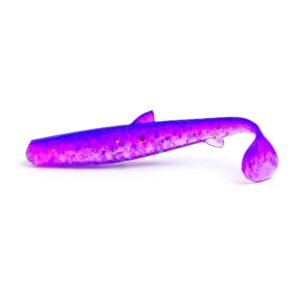 ORKA SMALL FISH PADDLE TAIL 7 CM4.90 €
-
 ORKA HYBRID SHAD 7 CM5.90 €
-
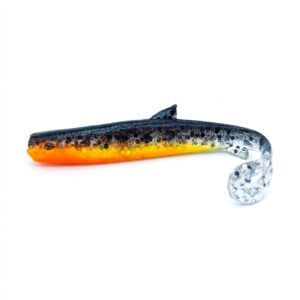 ORKA SMALL FISH PADDLE TAIL 10 CM5.90 €
-
 ORKA SMALL FISH 10 CM5.90 €
-
 ORKA SMALL FISH 7 CM4.90 €
-
 ORKA SHAD 11 CM5.90 €
-
 ORKA SHAD 9 CM5.90 €
-
 ORKA SHAD 7 CM4.90 €
Feeding times and fish activity can change very quickly
In early autumn, early mornings and evenings accompanied by the sunset can prove to be good times for jigging perch. Baitfish are very active in the mornings and evenings, which also activates the predatory fish. However, the days begin to shorten very quickly the further into October you go, at which point the best times are the bright hours of the day.

Changes in the weather significantly affect perch behaviour. Damp, low-pressure days can increase perch activity, whereas clear, high-pressure weather may make fishing more challenging. The effect of wind is also important: a light wind can create ripples on the water surface, which encourages perch to rise closer to the surface and their prey. On windy days, perch may gather, for example, on the downwind side, where the waves carry food.
The lower amount of light also shows in perch behaviour, and especially toward the end of October perch can become very selective. Perch appetite is usually at its best in water of 8–12 degrees. The more the water cools, the more passive perch become outside feeding times. It is therefore very important to be aware of when and where to go fishing.
Calm presentation and drop shotting
When perch are feeding, you really do notice it, but in autumn waters you very often run into situations where it feels like nothing works at all. For many anglers, hand-twitch retrieves and reeling come partly from muscle memory, and the technique is very often aimed at active fish. Many use the same weights as in summer, and patience tends to run out when the fish are passive.

The fish become passive, so become passive along with them
Reduce the weight of the jig head, slow down your retrieve, offer jigs with a more passive swimming action and try, for example, the drop shot technique. Perch really do become passive outside feeding windows, at times very strongly, and in that case the most important thing is to remember to stay calm. For example, send your wife a text message in the middle of a cast so that the jig can lie on the bottom for a moment in the view of a contemplative perch, reduce the weight of the jig head so that lazy perch keep following the lure, and favour more rod-led retrieves and calm reeling.

Jarno Kangas
Fishing content creator / Blog writer
Fishing Guide Student
Latest Posts
-
 BLACK FRIDAY – THE MOST ANTICIPATED SALE WEEK OF THE YEARNovember 6, 2026/0 Comments
-
 CHRISTMAS GIFT IDEAS FOR ANGLERS – DISCOVER OUR SELECTIONNovember 6, 2026/
-

-
 Ruthless Fishing Hard Lures for SummerJune 26, 2026/