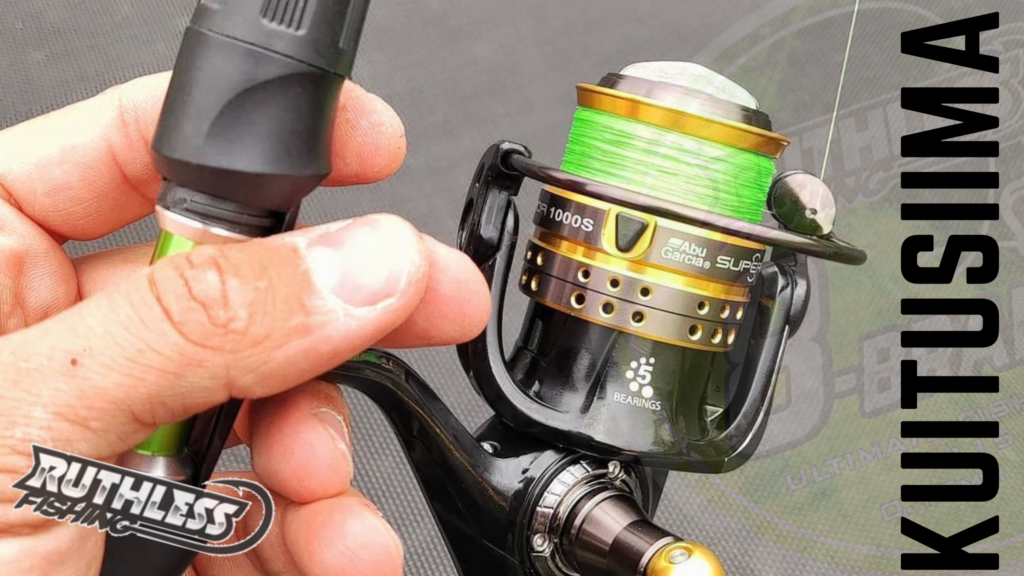
Braided lines are a key part of modern fishing, and their properties have a significant effect on the fishing experience. Braided lines are made from extremely strong synthetic fibres such as Dyneema, Dacron, Spectra or PE (Polyethylene). These fibres are braided together into thin but extremely strong lines. They differ significantly from traditional monofilament lines, which are made from a single plastic material.
So what are the benefits of braided line compared with traditional monofilament line? Braided lines are considerably stronger relative to their diameter, which allows a thinner line to be used without sacrificing tensile strength. Braided lines also have no stretch, which improves feel and hooksetting power. Braided lines also have a long lifespan and no memory, so they do not coil up in the same way as monofilament lines.
-
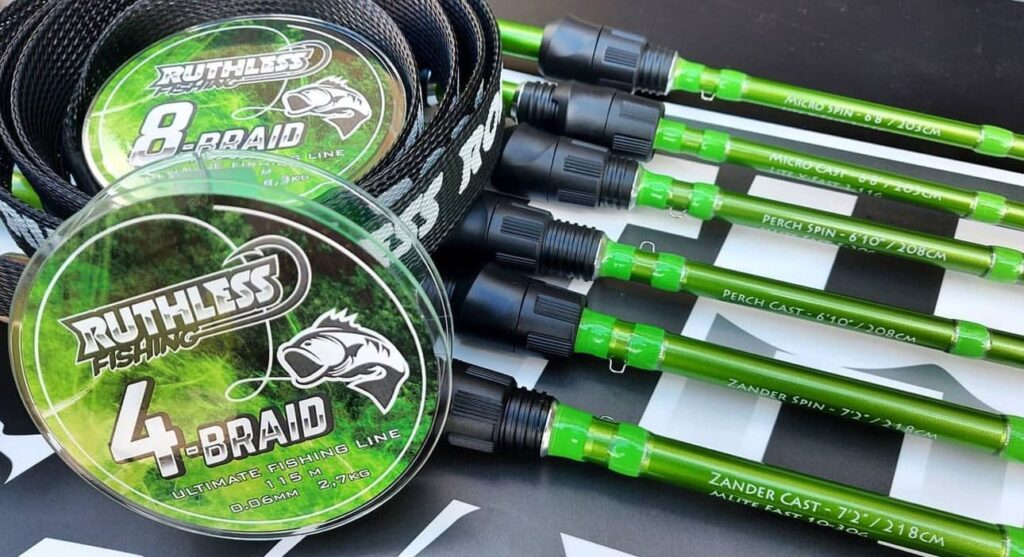
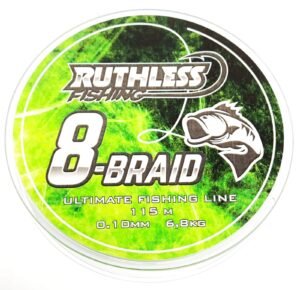 Ruthless 8-Braid braided line 115m19.90 €
-
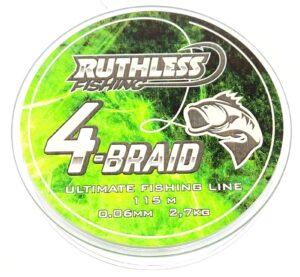 Ruthless 4-Braid braided line 115m14.90 €
Materials and Technical Differences of Braided Lines
- Dyneema: Made from ultra-high-molecular-weight polyethylene (UHMWPE). Dyneema is known for its extremely high tensile strength and light weight. It is commonly used to make fishing lines, but also in other applications such as bulletproof vests.
- Spectra: Also a UHMWPE-based material, but its manufacturing process uses different techniques that give it unique properties, such as improved abrasion resistance.
- PE: PE materials are the most common raw materials for braided lines. They offer excellent tensile strength and lightness, but are generally slightly less abrasion resistant than Dyneema and Spectra.
Many manufacturers treat their lines with various polymer coatings that make the line slicker (for better casting distance), more abrasion resistant and less water absorbent. Braided lines are always dyed, and the colouring aims to increase visibility for the angler or reduce visibility to the fish.
There are several patented techniques in the manufacture of braided lines that affect their performance. One example is the use of Gore-Tex fibres, which increase the durability and flexibility of the braided line.
Coatings on Braided Lines
- Polymer coatings: This coating makes the line slicker, which improves casting distance and reduces line wear. Polyurethane also improves the line's water resistance, which prevents it from absorbing water and slows the line's deterioration in water.
- Silicone coating: Some manufacturers use a silicone coating to improve line slickness and casting distance. Silicone reduces friction, especially between the reel and the rod guides, which allows longer and smoother casts.
- Wax Coating: Wax makes the line less slippery, which can be useful especially when better grip and casting accuracy are needed. It also improves the line's resistance to abrasion.
- Teflon-Coating (PTFE): This coating makes the line extremely slick and durable. Teflon is known for its low friction, which makes it ideal for long-distance casting and resistant to wear.
- Hydrophobic Coatings: These coatings prevent the line from absorbing water, which helps keep the line light and flexible in the water. Hydrophobic coatings also improve the line's durability in salt water, which makes them particularly useful in sea fishing.
- Plasma Coating: This is an advanced coating technique in which lines are treated with plasma. It improves the line's slickness, durability and water resistance without significant added weight or thickness.
- Nano-Resin: Nano resins are extremely small, almost microscopic particles that are applied to the surface of the line. They increase the line's tensile strength and abrasion resistance without compromising its flexibility or slickness.
- UV-Resistant Coatings: These coatings protect the line from deterioration caused by sunlight, which is particularly important if the line is frequently exposed to direct sunlight.
Differences Between Manufacturers?
There are quite a lot of differences between lines, and for many anglers the "number one line" is only found later, after trying several lines. Manufacturers differ in how tightly and from how many strands the line is braided. Tighter braided lines are generally more durable and slicker, but also more expensive. Each manufacturer has its own recipes for coating the line, which affects performance, such as casting distance and abrasion resistance. Top manufacturers invest in quality control, which ensures consistent quality and performance in their lines.
How to Choose the Right Braided Line for You?
It is very common to see people asking for recommendations for a new line and receiving a dozen or more different options in reply, and many favour older models from long-established brands that are not made with today's technology and may not match today's lines in their properties. The right line for you can only be found by trying different lines, but it is also worth considering
- Target species: It is important to remember that when fishing, you are fishing for fish. The old adage that a line must withstand a sunken log or half the globe can be forgotten altogether. Larger and stronger-fighting fish require a stronger line, whereas a thinner and less visible line may be sufficient for smaller fish. When fishing for perch, for example, the line can safely be as thick as 0.06–0.10 mm.
- Fishing location: Do you fish on a rocky lake or in rapids? If so, it is not advisable to choose the very softest line or one with a less tight weave, as these are usually the most prone to breaking from abrasion against rocks or other bottom structures. In rocky or reef-strewn lakes and in flowing waters, it is worth investing in a high-quality, well-coated line, and always using a fluorocarbon or steel leader as an extension to the braided line.
- The significance of price: With braided lines, quality often correlates with price. More expensive lines can offer better performance and a longer service life. They can also be quieter on the reel and provide longer casting distances. In the cheapest braided lines, the weave is usually weak and the line's durability is not among the best.

Jarno Kangas
Fishing content creator / Blog writer
Fishing Guide Student
Latest Posts
-
 BLACK FRIDAY – THE MOST ANTICIPATED SALE WEEK OF THE YEARNovember 6, 2026/0 Comments
-
 CHRISTMAS GIFT IDEAS FOR ANGLERS – DISCOVER OUR SELECTIONNovember 6, 2026/
-

-
 Ruthless Fishing Hard Lures for SummerJune 26, 2026/