

Among our new products for spring 2024 is the all-new Ruthless Chatterbait. Less passionate anglers may well have wondered what kind of contraption this is. Let us therefore take a closer look at what a Chatterbait actually is.
What is a Chatterbait?
Chatterbaits have their roots largely in North America, where it is very common for jig lures to be fitted with swimming blades. Chatter lures are based on a weighted head (the term jig head can also be used) to which a metal swimming blade, a so-called chatter blade, is attached. Chatterbaits often contain a lot of metal: the swimming blade, the lure clip and the weighted head. For this reason they produce considerable clicking and rattling under water, which attracts predatory fish. In addition to the swimming blade and weighted head, chatterbaits have a so-called "skirt", which is typically made of silicone.

The appeal of chatters is based on sound and vibration, but the "skirt" also plays a part, and pike in particular seem to go wild for trailing streamers. A jig can, and perhaps even should, also be added to the chatterbait hook to increase the lure's appeal. Slim-profile jigs, such as our Orka Small Fish or Orka Small Fish Paddle Tail, are probably the most familiar addition to a chatterbait. However, almost any jig can be used with a chatterbait. Chatterbaits dressed up with crayfish jigs have proven effective, and pike have also seemed to take chatters fitted with a sickle-tail jig very well.
Boost your Chatterbait with a jig!
-
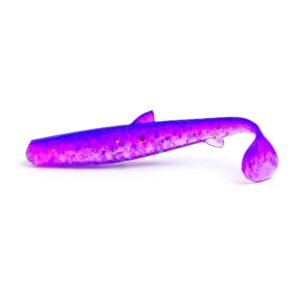 ORKA SMALL FISH PADDLE TAIL 7 CM4.90 €
-
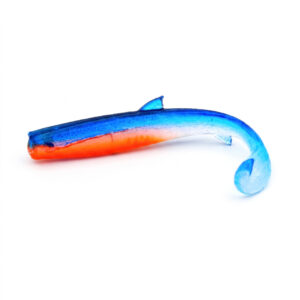 ORKA SMALL FISH PADDLE TAIL 5 CM4.90 €
-
 ORKA SMALL FISH 7 CM4.90 €
-
 ORKA SHAD TAIL 7.5 CM4.90 €
Chatterbaits are highly effective lures that are sure to stir the senses of prey fish. At times, however, the chatterbait's skirt and jig have made too "large" a combination, so that even a hungry perch merely nips at the tail when it cannot get a proper grip on the hook. There are a few options to improve the hook-up rate. You can try replacing the original hook on the chatterbait with an offset hook with a slightly longer shank, or add a second single hook to the original one using rubber beads. In both methods, the principle is that the hook then reaches the rear part of the "skirt", which is the most natural spot for a perch to strike.
-
 RUTHLESS OFFSET HOOK3.90 €

When and where should you fish with a chatterbait?
There is hardly any right answer to the question of where. As an example, the author has fished with a chatterbait in flowing waters, rocky shallows and deep open water alike. The question of when? is perhaps more important. By far the best seasons for chatterbaits have been the warm waters of midsummer and the waters of autumn, when fish are at their most active and chatterbaits, which produce a lot of sound and movement, awaken their predatory instincts. Especially in the warm waters of midsummer, chatterbaits have proven to be highly effective lures, as active perch in warm water dash at full speed towards the rattling, vibrating lure.
Techniques and equipment for chatterbait fishing
When fishing with a chatterbait, a steady retrieve is quite enough, and both perch and pike will strike it. As with jig fishing, however, your own touch makes a great difference when fishing with a chatter. In addition to a steady retrieve, you can try swimming the chatterbait by reeling in about 4-5 turns of the handle and then stopping, at which point the chatter begins to sink, and this is very often the moment that triggers a predator. You can equally make occasional faster retrieves with the reel or give a few twitches with the rod. Any movement that differs from the lure's steady swimming can be an effective trigger for activating the fish.
When fishing for perch, the bite is very often noticed first by the vibration from the chatter blade in the rod stopping. At that point you should stay alert and give the striped one a proper hook-set. When a larger fish such as a pike or zander strikes, you will certainly feel the bite immediately.
As for equipment when fishing with a chatterbait, it is worth noting that the chatter blade stands upright in the water, creating greater resistance than an ordinary lure. For the most part, the same perch gear that you use with other lures of a similar weight class works with a chatterbait, but you will get the best results for chatter fishing with a slightly sturdier perch rod. For example, the Ruthless Glass Series 208cm 8-28g in our selection is an excellent choice for fishing with chatterbaits. The choice of reel depends purely on the angler's own preferences. Of course, rods used for chatterbait fishing are not at the heaviest or most robust end, so +2500 class spinning reels or 300 class baitcasting reels may make the rod noticeably tail-heavy.
-
 Ruthless Glass Series 6’10″/208cm 8-28g199.00 €
-
 Ruthless 8-Braid braided line 115m19.90 €
-
 RUTHLESS CHATTERBAIT 15g9.90 €
-
 RUTHLESS CHATTERBAIT 10g9.90 €
-
 RUTHLESS FLUOROCARBON READY-MADE LEADER4.90 €

Jarno Kangas
Fishing content creator / Blog writer
Fishing Guide Student
Latest Posts
-
 BLACK FRIDAY – THE MOST ANTICIPATED SALE WEEK OF THE YEARNovember 6, 2026/0 Comments
-
 CHRISTMAS GIFT IDEAS FOR ANGLERS – DISCOVER OUR SELECTIONNovember 6, 2026/
-

-
 Ruthless Fishing Hard Lures for SummerJune 26, 2026/