
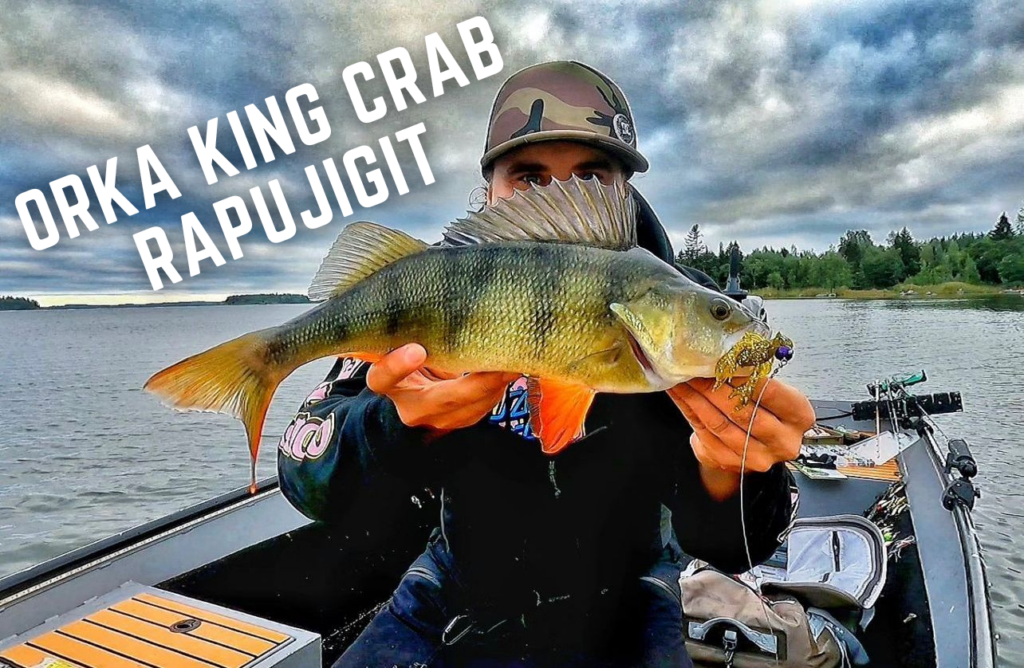
Variety for ordinary jigs – Orka King Crab crayfish jigs
Ever more crayfish jigs are appearing on the market, and more and more anglers already have these perch delicacies in their repertoire, yet the full breakthrough for crayfish jigs has still to happen.
Crayfish jigs can be used in any body of water, but they work best in waters where crayfish are found. In waters with crayfish, perch hunt mainly along the bottom, and crayfish are part of their natural diet. Crayfish are also a highly nutritious food source for predatory fish, which is why they offer a good chance of landing a large perch. For example, in the world-famous Perchzilla, known for its huge perch, crayfish play a major role in the growth of the perch. Crayfish themselves do not favor flat areas, but rather rocky or weedy bottoms where it is easy for them to find shelter from predatory fish. The signal crayfish, for example, also likes to stay in somewhat deeper water, so fishing need not focus solely on shallow banks. Because crayfish live mainly in rocky and weedy spots, an echo sounder with side-imaging sonar is a great help.
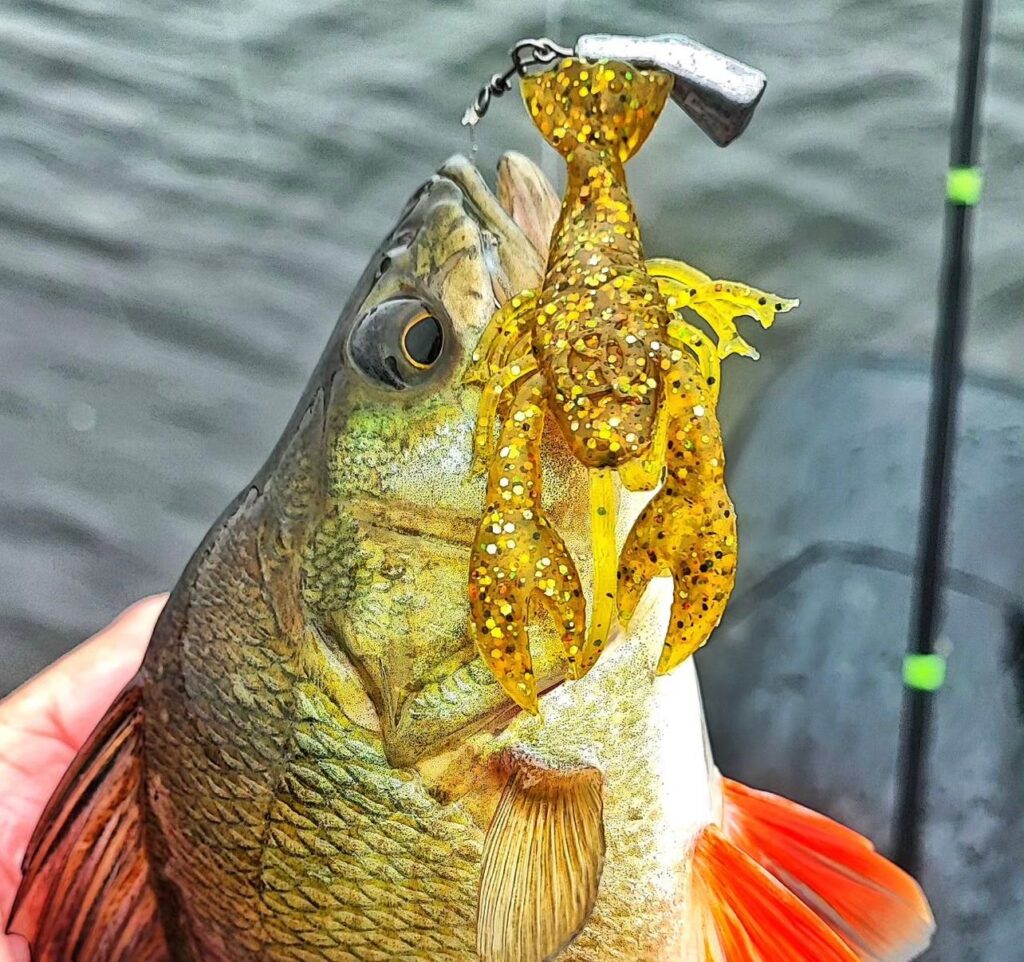
Crayfish jigs come in many different colors, and this is not just a sales gimmick. For example, when crayfish are stocked, the range of their colors is surprisingly wide. So it is not advisable to rely on just one color. As for size, the most common crayfish size found in a perch's stomach is 4-7 cm, but when looking for a bigger perch you should by no means rule out crayfish jigs over 7 cm, quite the opposite. At sea, these 4-7 cm jigs may work better, since at sea crayfish jigs are meant to imitate shrimp and amphipods. Crayfish are most active at dusk, probably because they are then less exposed to predation. For this reason, it is worth offering a crayfish jig at sunset and after it. The best times for crayfishing fall in August and September, so that is when crayfish jigs are well worth offering in earnest. However, perch prey on crayfish throughout the open-water season, and the signal crayfish in particular also lives in somewhat deeper water, so crayfish jigs should not be forgotten even when the perch move to deeper water around September and October.
-
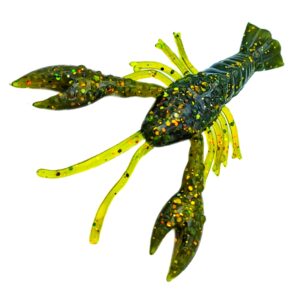 ORKA KING CRAB 7.5 CM5.90 €
-
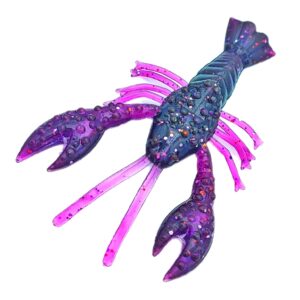 ORKA KING CRAB 5.5 CM4.90 €
-
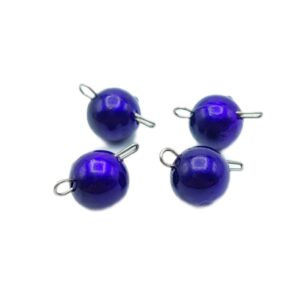 RUTHLESS CHEBU HEAD3.99 €
-
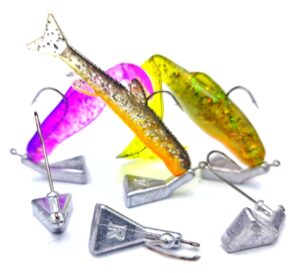 Stand Up Jig Head Ruthless 10g3.90 €
-
Stand Up Jig Head Ruthless 6g3.90 €
How to rig crayfish jigs and how to work them?
Unlike ordinary jigs, crayfish jigs are hooked from the tail end, so to speak. A crayfish uses its claws both to obtain food and to defend itself. When a crayfish defends itself, the predator very often strikes from diagonally above, which is why crayfish jigs are always rigged to match this posture, and the easiest solution for this is various Stand Up jig heads.

The stand up jig head is the most traditional and easiest way to rig a crayfish jig, but as crayfish jigs have become more common, other rigging methods have also become more common. Alongside the stand up jig head, alternative rigging methods include, for example, cheburashka and bullet weight rigs. With these rigging methods the crayfish jig itself becomes weightless, making it easier for a feeding perch to take it into its mouth. With cheburashka and bullet weight rigs, it is worth using an offset hook.

Crayfish usually move fairly slowly, and this is worth remembering when jigging as well. The retrieve with crayfish jigs may therefore be very slow, and at times a brief shaking in place and light twitching may be the most effective method of all. A crayfish jig is worked along the bottom in order to maintain a perfect imitation, so to speak. A perch may also grab it in mid-water, but then we may be talking about a confused perch. At times a perch may also lurk for a longer while at a short distance from a crayfish on the bottom and only then strike, so sometimes you can simply try shaking the crayfish jig in place. Crayfish jigs also work in running waters, and they are especially effective in places where the current is somewhat milder. In that case, the jig is worked mainly with the rod, since the current itself makes the crayfish jig quiver, tempting fish to bite.
With crayfish jigs, somewhat heavier weights than the usual jig head can be used, since the flat shape and air pockets of crayfish slow the sinking of the jig. When jigging with crayfish, maintaining bottom contact is also extremely important, so there is no need to be timid with the weight. Any rod suited to jig fishing will do. When fishing with a crayfish jig, however, it is worth making good use of working the jig with the rod; in that case, do not use a rod with the most sensitive tip, so that your so-called handwriting can be kept tidy. A slightly stiffer tip allows more moderate twitches.
You can find our Orka King Crab crab jigs at retailers across Finland and in our online shop. Order yours today!
With the 5.5cm version, use a Ruthless Stand Up jig head with a #2 hook size, and with the 7.5cm version, use a Ruthless Stand Up jig head with a #1/0 or #2/0 hook size.


Jarno Kangas, Fishing Content Creator / Blog Writer
Latest Posts
-
 BLACK FRIDAY – THE MOST ANTICIPATED SALE WEEK OF THE YEARNovember 6, 2026/0 Comments
-
 CHRISTMAS GIFT IDEAS FOR ANGLERS – DISCOVER OUR SELECTIONNovember 6, 2026/
-

-
 Ruthless Fishing Hard Lures for SummerJune 26, 2026/