

How to Choose the Right Reel for You?
In fishing, many things come down to personal preference, and the same applies to reels. The best way to find a reel that suits you is to bring your own rod to a fishing supply store, where you can try different reels together with your rod. It is also important that the rod and reel are well balanced, and this cannot necessarily be judged from product information alone when ordering a reel online. The skilled sales staff at fishing supply stores can also help you find a reel suited to your intended use, so do not be afraid to ask professionals for tips. If your budget is limited, it is worth putting the larger investment into the reel, because the difference between a cheap and a mid-priced reel is greater than the difference between a cheap and a mid-priced rod.
-
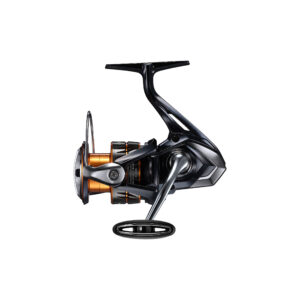 SHIMANO NEXAVE FJ 100069.90 €
-
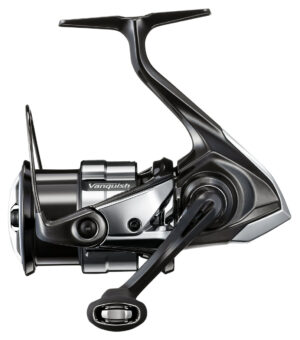 SHIMANO VANQUISH FC C2000S499.90 €
-
 SHIMANO SEDONA FJ 100079.90 €
-
 Shimano Sedona FJ C300079.90 €
-
 Shimano Nasci FD 1000119.00 €
-
 Shimano Twin Power FE C2000S HG479.00 €
-
Shimano Twin Power FE 2500479.00 €
-
 Shimano Stradic FM 2500219.00 €
-
 Shimano Vanford FA C2000 SHG229.00 €
-
 SHIMANO NASCI FD 2500119.00 €
When buying a reel, the two most important key points are:
- What you will be fishing for
- Whether you want a spincast reel or a spinning reel

The spinning reel is the most popular reel type on the market today and is a safe choice for beginners, the youngest members of the family and experienced anglers alike. Spinning reels are easy to use and require less maintenance than spincast reels. In addition, spinning reels are generally cheaper than spincast reels, and untangling line snarls is easier. The handle side can also be switched, so you can find the right feel on either side. For this reason, the spinning reel is the more beginner-friendly option. A spinning reel works for practically all kinds of fishing except trolling.
What do the spinning reel size classes mean, and what is the significance of the number?
You have found a reel you like, but the same reel comes in many variants with the numbers 1000, 2000, 2500, 3000. These numbers indicate the size class of the reel, which includes the following:
- Physical size and weight increase as the number gets larger
- Line capacity increases as the size class grows
- Drag power may also increase, for example when comparing size 1000 and size 3000 reels. In consecutive size classes, the drag power usually stays the same.
- Retrieval speed in cm per handle turn increases
A size 500 reel is best suited to UL fishing. A size 1000 reel suits micro jig fishing, jig fishing, rapids fishing and light perch fishing. A size 2000 reel is still a good all-round size for jig fishing and also for both pike and zander fishing. Reels in sizes 2500-3000 are already approaching the pike category, but a size 2500 reel is still suitable for heavier perch fishing and zander fishing. A size 4000 reel is geared almost entirely towards pike fishing. Even larger sizes are available on our market, but these are practically unnecessary for the predatory fish in our country's lakes.
What do all the markings on the packaging mean? Retrieval speed, gear ratio, line capacity, number of bearings? Does weight matter?

When purchasing a baitcasting reel, the side of the sales package may carry a long list of number combinations and figures. These very often state the reel's more detailed technical specifications.
Gear ratio (5.3:1 / 6.4:1 etc.)
This figure tells you how many times the spool rotates during one turn of the handle. For example, with a reel with a 6.4:1 gear ratio, the spool makes 6.4 rotations per handle turn. These figures indicate whether the reel is slow or fast geared. The gear ratio is also affected by how much line is retrieved onto the reel during one handle turn, and this figure is expressed with the term
Retrieval speed (67cm:1 / 80cm:1 etc.)
Reels do come in slow and fast gear ratios, but ultimately the more important factor is this figure, which tells how much line is retrieved onto the reel during one handle turn. Indeed, if you are looking for a reel that is ideal for jig fishing and you want it to be fast, it may turn out that a reel with a lower gear ratio actually has a higher retrieval speed.
Line capacity
Quite simply, line capacity means how much line fits on the spool. Line capacity is affected by whether the reel has a shallow or deep spool and by the diameter of the spool.
Number of bearings

On the packaging or on the reel itself, you will also often see figures marked in different ways, such as “3+1, 4+1, 5+1, Bearings 9 etc.”. This figure tells you how many ball bearings plus roller bearings the reel has. It is very often comparable to the reel's durability and to how “smooth” the reel is to wind. However, bearings are one of the most expensive components of a reel, so a reel with, for example, 3+1 bearings may be more durable and smoother to use than a reel with 8+1 bearings, if the 3+1 bearings are of higher quality than those in the reel with nine bearings. In this case too, it is worth taking the reel in your hand and feeling in which model winding feels most comfortable to your own hand. Durability can also be compensated for with regular servicing, even if you do not buy the most expensive reel in the shop.
Weight
Weight is mostly a matter of the user's personal preference. The significance of a reel's weight mainly lies in whether it is balanced with your rod. A rod that is too front- or rear-heavy may feel uncomfortable to use. The most important guideline, however, is that the rod should feel balanced precisely to you.
What else should you consider when purchasing a baitcasting reel?
Are you planning to buy a baitcasting reel for heavier pike fishing? Please bear in mind that lure weights here approach 100 grams, the line strains your finger with every cast, and casting begins to feel somewhat uncomfortable. After a long day, your finger may even be, so to speak, worn raw. It is therefore worth considering a spinning reel for pike fishing.
What do the different “code names” in reel product names mean?
LT, MHS, S, H, SX, FI. The various letter combinations after a reel's name are usually either abbreviations of the reel manufacturer's own concepts, or they may indicate technical or physical specifications and features of the reel. The meanings of the abbreviations can usually be found on the manufacturer's own website. Below are a few examples of abbreviations:
- LT = A designation familiar from Daiwa reels, referring to Daiwa's Light & Tough concept, in which power and drag performance have been brought to the reels while keeping the physical size and weight light.
- S = This designation can be found, for example, on our Abu Garcia Superior and Abu Garcia Zenon reels. It comes from Abu Garcia's term “shallow spool depth”, meaning a shallow spool.
- MHS = The aforementioned Abu Garcia Superior is available in our range in the 1000S and 2000S models, but in the 2500 model the letter combination changes to MHS. This abbreviation comes from the term “medium shallow spool depth”, meaning a medium-shallow spool depth. So in this 2500 model the spool depth increases slightly, and at the same time the gear ratio and retrieval speed increase.

Many may regard a spinning reel as intended directly for heavier fish or as a tool for more hardcore anglers. However, spinning reels have developed greatly, and with that their popularity has also been growing. Nowadays the market offers models for everything from light perch fishing to heavy pike fishing. Casting with a spinning reel is ultimately learned very quickly, and many avoid the reel precisely because it is considered harder to use than a baitcasting reel. With a spinning reel, casting control and accuracy are better than with a baitcasting reel, and with your thumb you can control the casts and stop the lure. These features are emphasised even more when fishing with heavier lures.
-
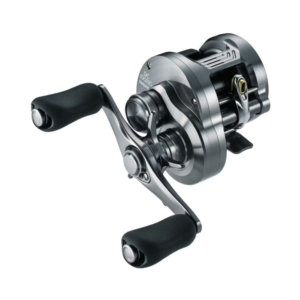 Shimano Calcutta Conquest DC A 200/201 HG599.90 €
-
Shimano Calcutta Conquest DC A 100/101 HG599.90 €
-
 Shimano SLX XT A 150/151129.00 €
-
 Shimano SLX BFS XG199.00 €
-
 Shimano Tranx B 300/301339.00 €
-
 Shimano Curado K 300 baitcasting reel229.00 €
-
 Shimano Curado 200 M XG baitcasting reel219.00 €
-
 Shimano Metanium DC 70 / 71 HG539.00 €
-
 Shimano SLX 70 A179.00 €
-
 Shimano Curado BFS XG229.00 €
-
 RUTHLESS EDITION carbon fibre comb for baitcasting reel49.00 €
Spinning reel size classes and what they mean
The size classes of baitcasting reels are also expressed with numerical size ratings. For baitcasting reels, the size classes are often given as 100, 150, 200, 300 and so on. When discussing baitcasting reel sizes, shape and gear ratio also come into play, so it is not worth focusing on the numerical size class alone.
For perch fishing, you should choose a baitcasting reel with a low profile in the 70–100 size class and a spool that is as shallow as possible. Shallow spools spin up more easily on the cast than deep spools, which makes them better suited to casting light lures. The reel may have either a magnetic or a centrifugal brake; both work well.
For perch, pike-perch and light pike fishing, you should choose a low-profile reel in the 150 size class. For example, the Abu Garcia Salty Stage is a good choice for this job. The reel comes with a shallow "finesse" spool for perch and pike-perch, and a deeper spool for thicker lines, for example for light pike fishing or for catching large pike-perch with the help of live sonar.
For pike fishing, you should choose a baitcasting reel in the 200–300 size class. This can be either a low-profile or a round-body reel.
What else should you consider when buying a baitcasting reel? How important is the gear ratio, and can the handedness be changed?

Largely the same rules apply to weight and the number of bearings as when buying a spinning reel. When buying a baitcasting reel, the gear ratio and retrieve speed play a larger role than with spinning reels.
Gear ratio (5.4:1 / 6.4:1 / 7.1:1)
On baitcasting reels, the gear ratio tells you exactly the same as on spinning reels: how many times the spool rotates during one turn of the handle. However, on baitcasting reels the gear ratio matters somewhat depending on which lures are used or which fish is targeted. The fastest-geared baitcasting reels are ideal for bottom-line and vertical jigging. Reels with a medium-fast gear ratio are well suited as so-called all-round reels; with them you can cast jigs and hard lures, both large and small. Slower-geared reels are in turn suited to lures with higher resistance, such as spinnerbaits and crankbaits.
Retrieve speed (67cm:1 / 80cm:1 etc.)
As far as retrieve speed is concerned, the same things apply to baitcasting reels as to spinning reels. When you are looking for a fast-geared, low-profile reel for perch fishing, for example, it is also worth paying attention to this figure, which tells you how many centimetres of line are wound onto the spool during one turn of the handle. Retrieve speed is also affected by how much line is on the reel and how thick a line is used. It could even be summed up by saying that the gear ratio can be "whatever:1", because everything depends on the factors mentioned above and on how much line goes onto the spool during a turn of the handle. Your own retrieving technique and skill also matter a great deal.
Line capacity
Put simply, line capacity means how much line fits on the reel. Line capacity is affected by whether the spool is shallow or deep in profile and by the diameter of the spool.
Number of bearings

With baitcasting reels, too, the number of bearings very often determines how smoothly the reel retrieves. Bearings are one of the most expensive components of a reel, so a reel with, for example, 3+1 bearings may be more durable and smoother to use than a reel with 8+1 bearings if the 3+1 bearings are of higher quality than those in a reel with nine bearings. The price very often indicates how high-quality the components used in the reel are. In this case, too, it is worth picking up the reel and feeling which model's retrieve feels most comfortable in your own hand. Durability can also be compensated for with regular maintenance, even if you do not buy the most expensive reel in the shop.
Weight
Weight is mostly a matter of the user's personal taste. The significance of a reel's weight lies mainly in whether it is balanced with your rod. A rod that is too front- or rear-heavy may feel uncomfortable to use. The most important guideline, however, is that the rod should feel balanced in your opinion. With baitcasting reels, though, a high-quality and light reel costs somewhat more than a comparable spinning reel.
What else should you consider when buying a baitcasting reel?
When it comes to heavy pike fishing in particular, a baitcasting reel is practically the only choice. This spares the index finger from strain, and both control and casting accuracy can be kept good.
As baitcasting reels have developed, a wide range of high-quality baitcasting reels is now available even for lighter fishing. When you dive into the deep end of tackle sport and want to get all the sensitivity out of, for example, a perch setup, baitcasting reels can cut as much as several tens of grams from the weight.
Hyrräkeloissa on hinnalla on suurempi merkitys, kuin avokeloissa. 100 eurolla saat avokelan, joka sopii täydellisesti kaikista kevyimpäänkin jigikalastukseen, mutta vastaavanlaisesta hyrräkelasta joutuu maksamaan lähemmäksi toista sataa euroa. 100-150 eurolla saa kuitenkin jo sellaisen hyrräkelan, jonka voi hyvillä mielin luokitella tummennetulla tekstillä hyväksi.
If you have any questions about fishing equipment, or reels in particular, please do not hesitate to ask the staff of fishing tackle shops or other professionals in the field. The undersigned is also happy to answer your questions or give recommendations, for example on Instagram at @jakefishng.


Jarno Kangas, social media influencer / Blogger
Latest Posts
-
 BLACK FRIDAY – THE MOST ANTICIPATED SALE WEEK OF THE YEARNovember 6, 2026/0 Comments
-
 CHRISTMAS GIFT IDEAS FOR ANGLERS – DISCOVER OUR SELECTIONNovember 6, 2026/
-

-
 Ruthless Fishing Hard Lures for SummerJune 26, 2026/