Jig fishing is a form of fishing that originated around the 1980s, but it only began to attract wider interest among anglers in the 2000s. It is only in the last ten years, however, that jig fishing has made its breakthrough, so to speak, and reached even the more casual recreational anglers. Even so, there are still many anglers for whom jig fishing is a completely unfamiliar way of lure fishing. As a fishing tackle retailer, we still come across questions every week such as "what kind of jig head should these jigs have", "how should this jig be worked", "what kind of rod do I need for jig fishing" and "what is the difference between these different jigs". All of these are answered in this fishing tips article, along with plenty of other essential information, so that everything is available on a single page.
Rods & Reels
When buying a rod, many people first think of wanting a general-purpose jig rod for catching perch, pike and zander alike. A general-purpose jig rod is a somewhat tricky concept, because every fish behaves differently and rods are designed with this in mind. For example, zander is somewhat harder to fish with a sensitive perch rod, because the zander has a bony mouth and a sensitive tip-action rod does not provide enough power for the hookset, so bites may remain just bites. Conversely, when jigging perch with a medium-action and somewhat stiffer zander rod, feel suffers, and because the rod tip is not sensitive, a thrashing perch will either tear its mouth or come off the jig. Rod length largely depends on the angler's own preferences, but rod action matters more when fishing for different species.
Rods also involve plenty of so-called matters of taste. Some like cork handles and some do not; some prefer lighter rods, while others like slightly heavier ones. With jig rods, I always focus on the rod being as light as possible and having a fast or extra-fast action. I also prefer the rear handle to be slightly shorter than normal and slimmer. For pike and zander rods, on the other hand, I prefer medium or moderate-fast rods with a somewhat sturdier rear handle. This gives more leverage from the rear handle for hooksets and for fighting the fish.
Perch jig rod – A tip-action rod, 160 cm – 220 cm in length, that is clearly softer. The lure weight recommendation for a traditional perch jig rod is around 5-20 g, but when seeking extra feel and sensitivity, you can also look at a 3-15 g recommendation, all the way to Ultra Light rods with a recommendation under 10 g.
Zander jig rod – A medium-action rod, 170 cm – 240 cm long, with enough stiffness even for a larger zander. The lure weight recommendation for a zander jig rod is generally up to 35 g. For the majority of zander jig rods, the recommendation is approx. 10-30 g.
Pike jig rod – A rod 190-240 cm long that is sensitive, yet at the same time sturdy and powerful. The lure weight recommendation is determined by the pike rubber lures being cast. However, for many pike rods the recommendation is stated with an "up to" marking, which only defines the upper limit for the weight of the lure being cast. A pike rod marked up to 90 g offers ample leeway for lures of various sizes.
A blank intended solely for jig use may be 1/3 action, that is, a very tip-action rod. This provides crisp casts and, above all, fast hooksets that set the hook in the fish after the bite. The blank may be relatively light and soft at the tip, so that a thrashing, shaking perch stays on the line all the way to the boat.
The weight of the rod is not so important as long as it is well balanced. For example, a very light rod that is poorly balanced is heavier to use than a heavier rod with a good balance point. The length of the rear handle depends largely on the angler's own preference, but the handle of a traditional jig rod is between 25 and 30 cm. If the rod feels tip-heavy, adding a small weight to the rear handle helps shift the balance point in a better direction.
A perch rod may be about 6″-7″ feet long. A rod of this length keeps the weight of the rod under control and allows pleasantly long casts, while with slightly longer blanks the fish feels nice at the end of the line.
From our rod series, the Ruthless Rods Perch is an excellent choice for perch jigging. It has all of the specifications and features mentioned above.
Joonas Väntti – Ruthless Fishing
Nowadays there are essentially two types of reels: spinning reels and baitcasting reels. Closed-face reels do exist as well, but they have no real features that would set them ahead of spinning or baitcasting reels. In addition, very few closed-face reels are available new. For perch fishing, the best choice is the lightest possible lightspinning reel, in which a handle with no backlash is important so that the fishing feel stays as good as possible. A fast retrieve ratio in a spinning reel is also beneficial in jig fishing. Many anglers prefer a spinning reel for perch and zander jig fishing because of its ease of use. Spinning reels also generally have a very smooth drag. They also require less maintenance than baitcasting reels, and nowadays even spinning reels are available in very light models that are excellent for jig fishing.
For pike jigging, on the other hand, a baitcasting reel is the better option. Its casting control and accuracy are better than those of an open-face spinning reel, and it is almost essential when casting heavier lures. With a baitcasting reel you do not need to control the cast with your index finger, as you do with a spinning reel, which after prolonged casting of heavy lures can leave your finger skin rather worn. Many experienced anglers also use a baitcasting reel for lighter fishing, since as baitcasting reels have developed, very light models are now available, lighter even than spinning reels, and with them even the smallest jig heads fly effortlessly. Casting with a baitcasting reel is also, in the end, surprisingly quick to learn.
Spinning reel for perch – Size class 500-1500
Spinning reel for zander – Size class 1500 – 2500
Spinning reel for pike – Size class 2500 and above
Choosing a baitcasting reel:
The same reels are suitable for jigging perch and zander. When fishing with light lures, it is worth investing a few euros more in a baitcasting reel so that casting is pleasant. The cheapest baitcasting reels under €100 are best left on the shop shelf if you intend to fish with relatively light lures under 15 g.
As a baitcasting reel, we recommend choosing a low-profile reel in size class 70 – 100equipped with the shallowest possible spool. Shallow spools spin more readily during the cast than deep spools and are therefore better suited to casting light lures. The reel may have either a magnetic or a centrifugal brake; both work well.
If you are looking for, for example, a good all-round baitcasting reel for perch, zander or light pike fishing, the Abu Garcia Salty Stage is a good choice for the job. The reel comes with a shallow “finesse” spool for perch and zander and a deeper spool for thicker lines, for example for light pike fishing or for catching large zander with the help of live sonar.
When lures weigh over 100 g for pike fishing, it is worth choosing a baitcasting reel in size class 200-300. This can be either a low-profile or round-end reel.
Joonas Väntti – Ruthless Fishing
ABU GARCIA SALTY STAGE CONCEPT FREE FOR GENERAL FISHINGLines, leaders and clips
For line in jigging, you should definitely choose braided line. Preferably eight-strand and as visible as possible, for example fluorescent green, fluorescent yellow or orange. When the line is visible, it is easier to read bites from it. Also, when the lure sinks to the bottom, the line settles on the water at the same time, which makes it easier to tell from the line when the lure is on the bottom. Braided line does not stretch, so you get better feel and more effective hooksets. The thinner the line, the better it cuts through the water, and in windy weather the line bow is smaller.
When jigging, it is worth using fluorocarbon for the leader / tippet. Fluorocarbon withstands abrasion on rocky bottoms better, and when fishing for perch it provides a little protection in case of zander and pike. However, when fishing for perch you cannot rely blindly on fluorocarbon protecting you from lost lures if a zander or pike strikes. Especially when fishing for perch with somewhat lighter jig heads and jigs, you should not use too thick a tippet, as it will then hinder the lure's swimming action, perhaps a little too much. Tippet length is largely a matter of taste, but the general guideline is that tippet length is 30cm – 150cm. I myself always measure tippets at random, slightly over shoulder width.
To join fluorocarbon and braided line I use a “porcini knot”. This knot allows the use of longer leaders. It passes well through the rod guides. Longer leaders are particularly useful when fishing in very clear water, for example for perch. This gives invisibility over a longer distance in front of the lure. A longer leader also prevents the line from breaking on stones and other sharp objects on the bottom.
Joonas Väntti – Ruthless Fishing
WATCH THE VIDEO FOR AN INTRODUCTION TO RUTHLESS FISHING FLUOROCARBON LEADER LINE. IN THE SAME VIDEO YOU WILL ALSO FIND THREE DIFFERENT WAYS TO JOIN BRAIDED LINE AND FLUOROCARBON.
Fluorocarbon thickness for perch – 0.20mm – 0.40mm
Fluorocarbon thickness for zander – 0.35mm – 0.60mm
Fluorocarbon thickness for pike – 0.90mm – +1mm
In addition, a clip to which the jig head is attached is placed on the tippet or line. Many prefer a twist clip, with which changing lures takes only a moment. If the clip is attached directly to braided line, you can use, for example, the Palomar knot, and when tying to fluorocarbon or monofilament you can use, for example, the uni knot. A size S clip is suitable for small jig heads and micro jigging, while size M suits almost all jigs. A size L clip can be used for heavier and larger jig heads, for example when jigging for zander. For pike jigging, on the other hand, it is better to use strong “stay-lock” type clips.
As the clip on the end of the fluorocarbon I use the twist-type Ruthless Rapid Lock in size M. It is really simple to use, and a new jig can be twisted on quickly when you change them often on the water.
If you cast spinning lures, it is good to have a clip with a swivel, as it prevents line twist. Another option is to join the braided line and fluorocarbon with a small swivel, but make the fluorocarbon leader short enough that you do not reel the swivel into the tip ring. This could easily break a ceramic tip ring.
Choosing the right jig head is one of the most significant factors in jig fishing. One of the most common questions about jig fishing is also what weight of jig head to choose, or what size of hook it should have. The jig head has an essential effect on how the jig swims, and when choosing one you must also take into account the water depth, the currents and temperature of the water being fished, and the wind. In warm water you can use a slightly heavier jig head than usual and try a slightly more aggressive retrieve. In cold water and late in the season, you can use somewhat lighter jig heads as perch begin to become a little more passive. In flowing water, a considerably heavier jig head can be used.
In our selection you will find Slim Keeper, Tungsten Slim Keeper and Stand Up jig heads.
Thanks to its ingenious “clip”, the RuthlessSlim Keeper jig head allows even small and slim-bodied jigs to be threaded onto the jig head without damaging the jig. Thanks to its shape and material, the Slim Keeper holds the jig firmly in place while fishing. The “clip” does not tear the jig when it is changed either, so a jig removed from the hook remains fully usable. The tungsten
Ruthless Tungsten Slim Keeper jig heads give the jig angler the best possible feel of the lure. Tungsten is 70% denser than lead and sinks in water considerably faster than lead. When fishing with a tungsten jig head, the weight head used can be significantly lighter and smaller than a lead one. Tungsten is also a very hard material compared with lead, and gives the angler an unprecedented feel of both the lure and the bottom structure of the fishing area. Thanks to their small size, tungsten jig heads are excellent for use with slim-bodied jigs. Tungsten is also an environmentally friendly material and, unlike lead, does not dissolve in water.
Ruthless Stand Up Jig Head revolutionizes the effectiveness of jig fishing for perch and pikeperch!! Predatory fish almost invariably strike the jig just before it reaches the bottom line. When the jig hits the bottom, the fishing effectiveness of an ordinary round jig head is lost as the jig falls over. The specially shaped head of the Ruthless Stand Up Jig Head keeps the jig upright even after touching the bottom. This way the jig fishes extremely effectively even after reaching the bottom, which is exactly where predatory fish hunt!!
Use the following table to choose a suitable jig head for your lure
Water Depth
Weight
1 m
3 g
2 m
4-5-6 g
3 m
5-6-7 g
4 m
7-8-10 g
5 m
10-12 g
6 m
10-13-15 g
7 m
10-13-15 g
8 m
13-15-17 g
9 m
13-15-17 g
10 m
15-17 g
Use the following table to choose the right hook size for your lure
Jig model
Hook size
Small Fish 3cm
#6
Small Fish 5cm
#2
Small Fish 7cm
#1/0 – #2/0
Small Fish 10cm
#2/0
Orka Shad Tail 5.5cm
#4
Orka Shad Tail 7.5cm
#1
Orka Shad Tail 10.5cm
#1/0
Orka Shad 3.5cm
#4
Orka Shad 4.5cm
#2
Orka Shad 5.5cm
#1
Orka Shad 7cm
#1/0
Orka Shad 9cm
#3/0
Orka Shad 11cm
#4/0
Orka Twisting Worms 10cm
#4
Orka Twisting Worms 13cm
#1
Orka Twisting Worms 20cm
#3/0
In cold water, use a light jig head with a slow swim, stationary shaking and hopping. In warm water, use a larger jig head and a fast swim.
In general, however, it is worth trying all of these styles and different jig head weights depending on the weather and water temperature. Sometimes in the heat of summer you need to swim a small jig on a light jig head slowly for the fish to strike, and sometimes at the same spot in the same weather you have to use a 15g jig head and reel it in really fast.
So by searching and testing different styles, you will find the best combination for that moment or day.
Joonas Väntti – Ruthless Fishing
WATCH THE VIDEO PRESENTATION OF OUR RUTHLESS SLIM KEEPER JIG HEADS
No direct instructions can really be given for choosing the right model or colour of jig, as many factors affect the choice. Is the lake dark or clear-watered, what kind of fish stock does it have, and is there baitfish such as vendace or smelt? The weather and the season are also very important. This list could be continued endlessly with further factors. However, tips can be given for choosing the right jig and colour, such as those the undersigned has found to work.
Begin fishing with a jig with a paddle tail of about 5 cm that is as natural as possible. Jigs imitating vendace and smelt are usually a reliable colour to start with. In our colour chart you will find, for example, the SF45, PJF40 and WB colours, which imitate natural baitfish very closely. Shades of brown, yellow, purple and white are also reliable choices. I always start fishing by looking for the right jig model, and only then move on to finding the right colour. The three most common jig models are:
Paddle tail jigs – Perhaps the most widely used jig model, which works both early in the season and in the heat of midsummer
Sickle tail jigs – Thanks to its sickle-shaped tail, this jig model has a slightly more aggressive swimming action than a traditional paddle tail jig. It is a very good option in warm water, but not necessarily as effective in the colder waters early and late in the season.
V-tail jigs – V-tail jigs have a very passive swimming action and are preferred mainly for vertical jigging and ice jigging. They can also prove very effective in traditional cast jigging, and are an excellent option for use with, for example, Stand Up jig heads.
In addition, grub jigs and crayfish jigs are available on the market, and they have grown in popularity in jig fishing.
You should only start choosing the colour once you have had some bites on a particular jig model. However, it is good to remember that if there are no fish, there will be no bites whatever lure you offer, which is why a sonar is an absolute aid in jig fishing. It is also worth keeping an open mind when choosing a jig colour and trying even the oddest combinations. Once you find the colour that gets bites, remember that it may change several times during the day, for example as the weather, wind or fish activity changes, so you should not rely too heavily on one productive colour either.
On an unfamiliar lake, you first try to find out what the lake's baitfish population is: vendace fry, vendace, roach, perch or something else. The jig type to start testing with is then chosen accordingly. For example, if the baitfish are larger bleak, roach or other higher-profile prey, you start working Orka Shad jigs in different sizes. If the water has plenty of small vendace fry or vendace, it is worth choosing a very slim-bodied Orka Small Fish jig with a dead-swimming action. This jig is my favourite model for lake fishing in general. Third comes the sickle-tail jig, which is an all-round workhorse. A lively, vibrating sickle tail can be the day-saver whether you are fishing at sea or on a lake. This sickle tail is often my own starting jig when fishing at sea.
The jig colour is usually chosen according to the colour of the water. I like to fish a dark jig in dark water, and slightly lighter and natural-looking models in clear water.
If the above do not work, then we try to solve the puzzle with bright attention-grabbing colours. These bright colours are often to the liking of pikeperch, for example.
Joonas Väntti – Ruthless Fishing
When jig fishing is discussed, many people think of traditional cast jigging, which is by far the most popular jig fishing technique. However, in addition to traditional cast jigging, jig fishing includes many other jigging techniques, which we will briefly cover next.
Cast jigging
In traditional cast jigging, fishing takes place at the bottom or in mid-water, and the target species are perch, pikeperch and pike. As a rule, cast jigging is done by casting from an anchored boat or from the shore. Cast jigging also works in flowing water, but because of difficult bottom structures, it may lead to more lost lures in a current. The technique itself is based on lowering the jig to the bottom or into mid-water, after which fish are enticed with various retrieve or rod-lift techniques. There is no single correct technique; everyone can fish entirely according to their own taste. I very often use a technique in which
I wait for the jig to sink to the bottom, then reel quickly for 2–3 turns of the reel and wait for the jig to sink a little lower, after which I reel another 2–3 turns. This continues until the lure is back at the boat.
I wait for the jig to sink to the bottom, then make a few “twitches” with the rod close to the bottom line, after which I reel in the slack line and continue twitching close to the bottom. I may repeat this until the lure is back at the boat, or I may occasionally reel 2–3 turns of the reel to lift the jig a little higher above the bottom line.
ROCKS, VEGETATION & CURRENT – THE HOLY TRINITY – WATCH THE VIDEO FOR TIPS ON CAST JIGGING IN SHALLOW WATER.
Micro jigging
Micro jigging is largely based on traditional cast jigging, but it is a particularly enjoyable jigging technique when the target fish are in shallow water. The equipment used in micro jigging is considerably more sensitive and lighter than in ordinary cast fishing. The jigs used are usually in the 3–5 cm size range, and jig head weights stay under 10 grams. It is a very enjoyable form of jig fishing, in which even smaller fish provide great moments!
Drop shot jigging
Here too, the idea is very much the same as in traditional cast jigging. However, drop shot jigging may very often prove to be a more effective technique than cast jigging. In drop shot jigging, the jig sits above the weight being used, which also makes it easier to fish more difficult bottoms. Especially with passive fish, drop shot jigging can prove to be a surprisingly effective technique, because when jigging along the bottom line you do not have to keep reeling in line all the time, but can make long presentations on the bottom using the tip of the rod. Rods designed specifically for drop shot jig fishing, with a particularly sensitive tip, are also available. The most important target fish in drop shot jigging is pikeperch, but it also works excellently for pike and perch.
Drop shot jigging is an effective style for cold-water perch fishing early and late in the season. Fished this way, the jig is lifted off the bottom and can be held in place for long periods and shaken lightly, which may get the fish to strike the lure effectively.
Drop shotting is also an effective way to fish for pikeperch throughout the year, because pikeperch can at times be very picky and like to take a jig presented calmly.
Joonas Väntti – Ruthless Fishing
DROP SHOT VS CAST JIGGING – WHICH PROVES MORE EFFECTIVE?
Vertical jigging
Vertical jigging is a form of jigging that has grown considerably in popularity. It differs greatly from traditional jigging techniques, because in vertical jigging the lure is not cast but lowered into the field of vision of a fish located with the sonar. The jigs also differ, in that so-called passive or dead-swimming jigs with a V-shaped tail are used. For example, you can use the Orka Small Fish from our selection for vertical jigging. Vertical jigging does not necessarily require anchoring either; instead, the aim is to stay in constant slight motion, for example with the help of a bow-mounted electric motor, so that the jig can be kept in the immediate vicinity of the fish. Vertical jigging is a highly effective jigging technique, especially for zander and pike.
Precision vertical jigging
The idea is the same as in vertical jigging, but in precision jigging the fishing takes place in mid-water and the target is big fish. In precision vertical jigging, the aim is to find large fish arches using sonar electronics, and when a big fish is found, the lure is lowered into its field of vision and enticed to strike with different retrieval techniques. The jigs used in this style of fishing are considerably larger, and instead of a traditional jig head it is advisable to use different rigging styles, so that the lure's hooking efficiency is maintained and its swimming action stays balanced. The target fish in precision vertical jigging are mainly large pike and zander.
To provide the best experience, we use technologies such as cookies to store and/or access device information. Consenting to these technologies allows us to process data such as browsing behaviour or unique IDs on this site. Not giving or withdrawing consent may adversely affect certain features and functions.
Functional
Always active
Technical storage or access is strictly necessary for the legitimate purpose of enabling the use of a specific service explicitly requested by the subscriber or user, or for the sole purpose of carrying out the transmission of a communication over an electronic communications network.
Preferences
Technical storage or access is necessary for the legitimate purpose of storing preferences that have not been requested by the subscriber or user.
Statistics
The technical storage or access that is used exclusively for statistical purposes.Technical storage or access that is used exclusively for anonymous statistical purposes. Without a subpoena, voluntary compliance on the part of your Internet service provider, or additional records from a third party, information stored or retrieved for this purpose alone cannot usually be used to identify you.
Marketing
Technical storage or access is required to create user profiles to send advertising, or to track the user on a website or across several websites for similar marketing purposes.


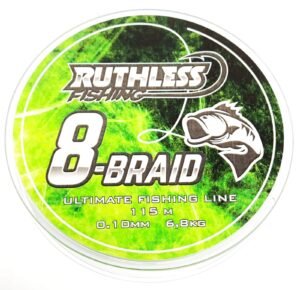 Ruthless 8-Braid braided line 115m19.90 €
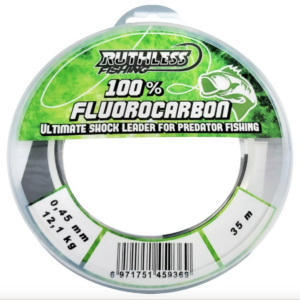 Ruthless Fluorocarbon LeaderPrice range: 12.90 € through 27.90 €

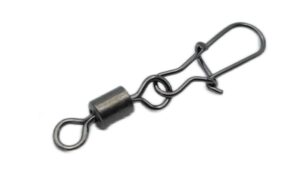 Ruthless Snap Lock swivel clip3.90 €
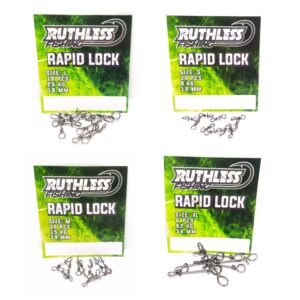 Ruthless Rapid Lock lure lock3.90 €


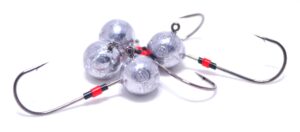 Ruthless Slim Keeper Jig Head 8g3.90 €
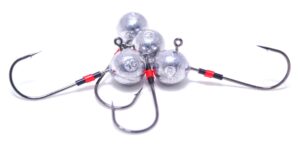 Ruthless Slim Keeper Jig Head 10g3.90 €
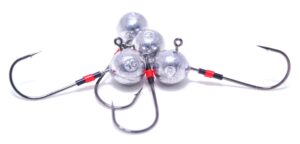 Ruthless Slim Keeper Jig Head 5g3.90 €
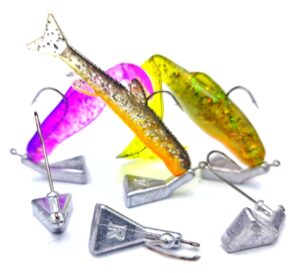 Stand Up Jig Head Ruthless 8g3.90 €
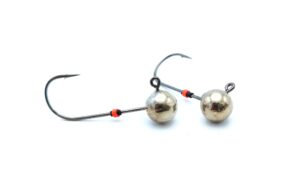 Tungsten Slim Keeper Jig Head 3g4.90 €


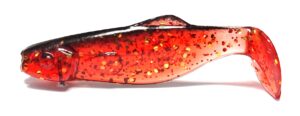 ORKA SHAD 3.5 CM4.90 €
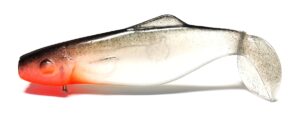 ORKA SHAD 4.5 CM4.90 €
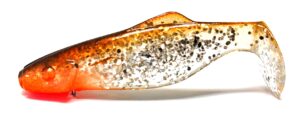 ORKA SHAD 5.5 CM4.90 €
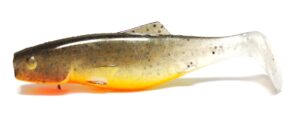 ORKA SHAD 7 CM4.90 €
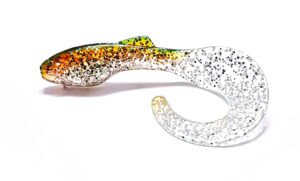 ORKA SHAD TAIL 10.5 CM5.90 €
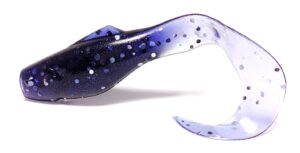 ORKA SHAD TAIL 5.5 CM4.90 €
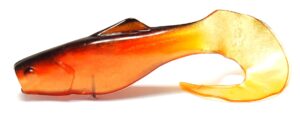 ORKA SHAD TAIL 7.5 CM4.90 €
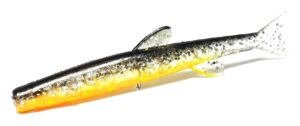 ORKA SMALL FISH 10 CM5.90 €
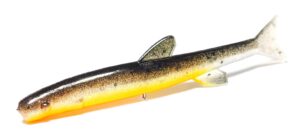 ORKA SMALL FISH 5 CM4.90 €
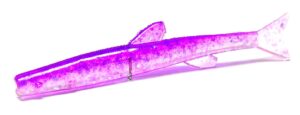 ORKA SMALL FISH 7 CM4.90 €


 BLACK FRIDAY – THE MOST ANTICIPATED SALE WEEK OF THE YEARNovember 6, 2026/0 Comments
 CHRISTMAS GIFT IDEAS FOR ANGLERS – DISCOVER OUR SELECTIONNovember 6, 2026/
 Ruthless Fishing Hard Lures for SummerJune 26, 2026/